
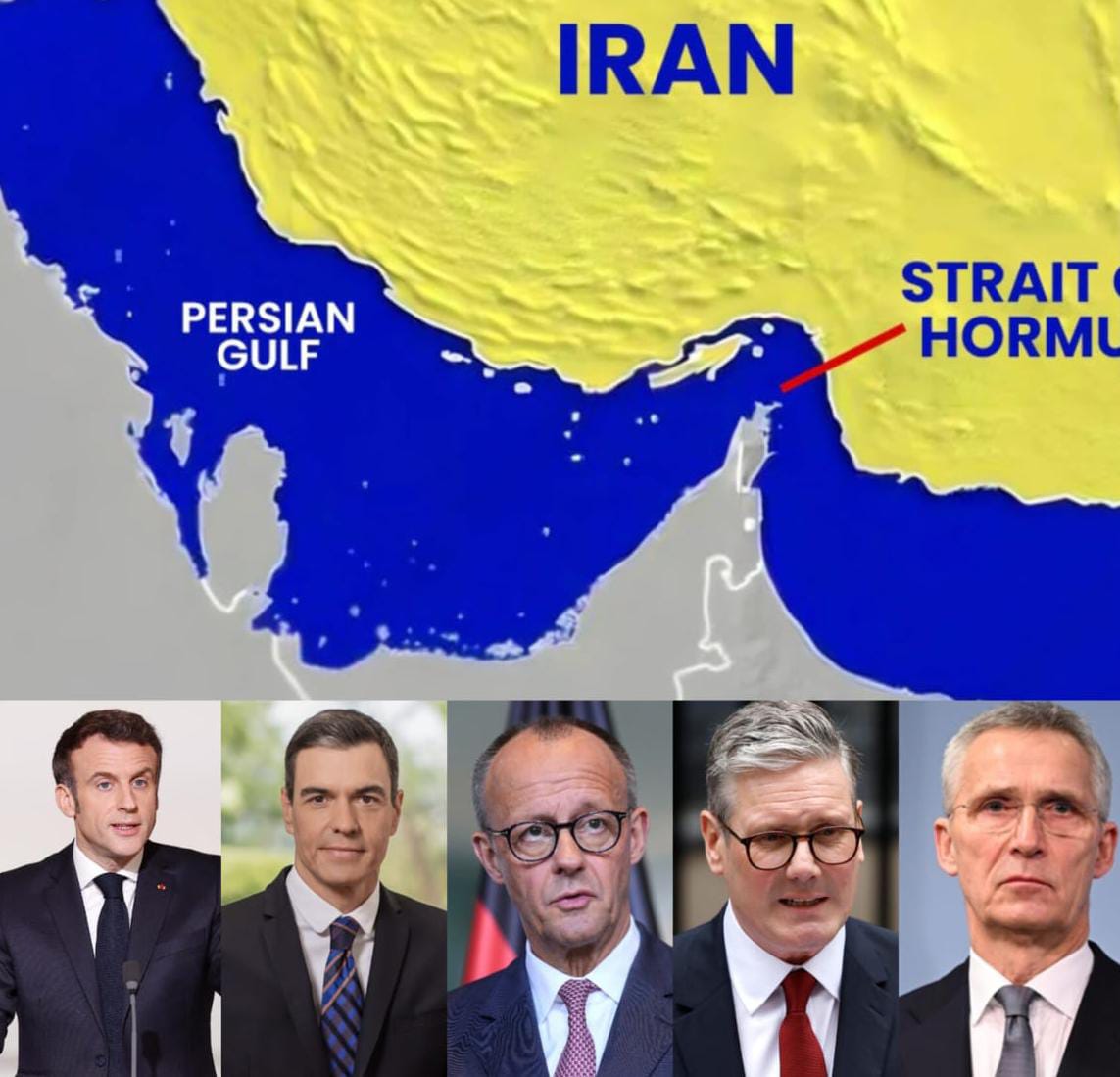
Several key allies of the United States include 5 Key Members of the North Atlantic Treaty Organization (NATO) have declined or hesitated to participate in proposed military operations to secure the vital Strait of Hormuz, highlighting growing international reluctance to become involved in the escalating conflict with Iran.
At least seven countries, including major Western powers and strategic partners, have so far resisted Washington’s request to deploy naval forces to the Gulf to protect oil shipments and counter Iranian threats in the narrow waterway.
Among the countries declining participation are Spain, Germany, Italy, and Greece, all members of the NATO alliance.
The United Kingdom has also stopped short of committing combat forces, indicating it may consider only limited technical assistance such as mine-clearing operations.
Outside Europe, Japan has said it is not planning to send warships to the region, while India has stated that it has not held discussions about joining any U.S. military mission in the Gulf.
The Strait of Hormuz is one of the world’s most critical maritime chokepoints. Roughly one-fifth of the global oil supply passes through the narrow channel each day, making it essential for global energy markets.
Recent attacks on oil tankers and rising tensions in the Gulf have raised fears that the shipping lane could be disrupted, potentially triggering sharp increases in global oil prices and economic instability.
Concerns Over Escalation
Diplomatic sources say many governments are reluctant to join military operations because they fear becoming directly involved in a widening war between Iran and the US–Israel alliance.
Some officials have also argued that the conflict is not an international mission endorsed by NATO or the United Nations, but rather a regional war that could quickly escalate if additional countries enter the battlefield.
A Diplomatic Challenge for Washington
The reluctance of several major allies represents a significant diplomatic challenge for Washington as it seeks to build a multinational coalition to secure the Gulf.
Countries such as Germany, Japan, the United Kingdom, and India are among the world’s largest economies and possess capable naval forces that could have contributed significantly to escorting oil tankers and protecting shipping lanes.
Analysts say their hesitation reflects both political caution and growing concern about the economic consequences of a broader war in the Middle East.
As tensions continue to rise, the question of whether the United States can assemble a broad international force to safeguard the Strait of Hormuz remains uncertain.