
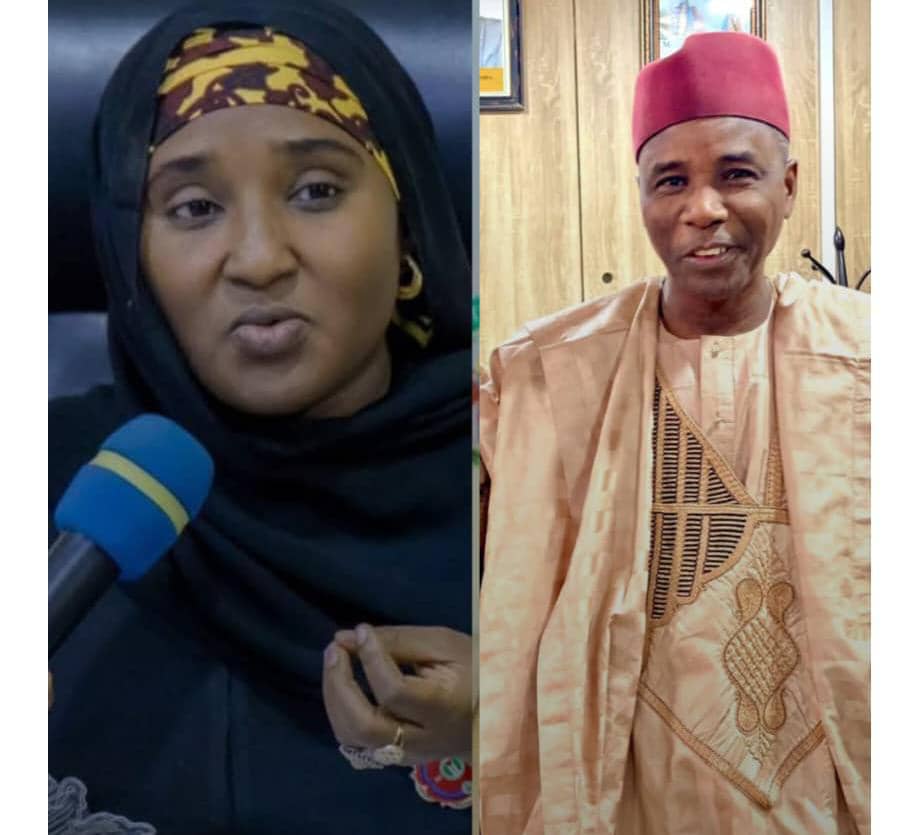
The Kano state commissioner of Education Gwani Dr. Ali Haruna Makoda has urged the minister of state for Education Dr. Suwaiba Ahmed (from Jigawa state) to fact-check Data available before making unfounded comments which portrayed Kano state as backward in education, insisting that her comments is inaccurate, unjustified and inconstant with Data available to the federal government of Nigeria.
The commissioner said the recent literacy and numeracy assessments conducted by the United Nation Children Emergency Fund (UNICEF) clearly placed Kano ahead of six states in the northwest in achievements at the foundational literacy and numeracy but the Minister decided to comment negatively on Kano for a reasons best know for her.
Makoda disclosed this in a statement sent to GLOBAL TRACKER in Kano on Saturday.
READ ALSO: SWOCHI Celebrates Children’s Day, Calls for Increased Immunisation Campaign in Kano
The statement reads in full “At two different occasions, during the National Council on Education (NCE) meeting in Akure Ondo state earlier November, the Honourable Minister of Education, ma’aruf Alausa, openly commended Kano State for its outstanding achievements in education reform and data management.
During the presentation session of State Reports/updates, and the review of States’ adherence to the National Policy on Education, the Honourable Minister highlighted two key areas where Kano serves as a national model:
1. Annual School Census/Data Reporting:
Kano was singled out by the honourable minister of education Maruf Alausa, as a leading example, being one of the few states despite its population size and system complexity to achieve 100% reporting on the DHIS2 portal for this year’s annual school census. This level of compliance demonstrates the state’s commitment to credible data, transparency and evidence-based planning.
The Minister also referenced Kano’s positive disposition to national education policies, describing the state as one that is proactive and responsive in aligning with federal guidelines.
These recognitions came even at moments when the NCE floor at Akure, turned into a robust debating arena between state commissioners and the federal ministry on critical national education reforms measures including WAEC CBT adoption, mother-tongue instruction and other policies of serious concern. Not once, during the meeting, did the Federal Ministry cited Kano as an example of poor practice.
It is therefore surprising that in a recent public statement, the Minister of State for Education, Dr. Suwaiba Sa’eed Ahmad, chose to make remarks that portrayed Kano State in a negative light, suggesting that the state is backward and that its teachers deliver lessons in the native language even at the highest secondary level.
This portrayal is inaccurate, unjustified and inconsistent, with the data available to the Federal Ministry itself.
The recent years of literacy and numeracy assessments conducted by UNICEF clearly place Kano ahead of all six states in the North-West in achievements at foundational literacy and numeracy.
* Kano:
Literacy: 9.6%
Numeracy: 11.2%
* National Average:
Literacy: 26.8%
Numeracy:25.3%
* Jigawa (State of the Minister of State)
Literacy: 0.8%
Numeracy:2.0%
the lowest in the North-West region.
* Other states, such as Sokoto, record:
Literacy: 10.8%
Numeracy: 6.4%
These figures not only confirm Kano’s relative strength in foundational learning but also contradict any narrative suggesting that the state lags behind its peers.
It’s disheartening to note that, this recent comment by the minister for State Suwaiba is not the first instance in which she cast Kano in an unfavourable light.
Earlier this year, during a national television interview, she publicly criticized the decision of Kano and Katsina States to adjust school timetables during Ramadan to allow students to fast comfortably.
While the minister for state was fully aware that decision was taken by the State Executive Council, in line with the cultural, social and religious realities of the communities involved of which she belongs.
As education remains on the Concurrent Legislative List, states have legitimate authority to make such context-specific decisions.
Given the facts on ground and the repeated misrepresentation of Kano’s policies and performance, it has become necessary to urge the Federal Ministry of Education to ensure:
1. Responsible, fact-based communication from all officials, especially those holding high national portfolios.
2. Respect for the autonomy and cultural context of states, as provided by the constitution.
3. Ensure Alignment between federal statements and official data, to avoid misleading the public and undermining the collaborative spirit required for national education reform.
Public statements by high-ranking officials should reflect the weight of the office they occupy, the sensitivity of intergovernmental relations and the collective interest for national development.
Kano State remains committed to it’s education reform which the Honourable minister of State was once part of. It’s also committed to cooperate with the Federal Government, adhering to national standards, and delivering quality, equitable education to all its children. This is one of the reason why his excellency the executive governor of Kano state Alhaji Abba Kabir Yusuf allocated 31% of the entire state budget to the sector.
However, such commitment deserves fairness, accuracy and recognition not mischaracterisation.