
As efforts towards improving values chain in agricultural sector deepen, stakeholders in the northwestern Nigeria and Gombe state has identified inconsistent government policies as a major obstacle facing farmers in Nigeria hindering value-chain and agricultural growth and development.
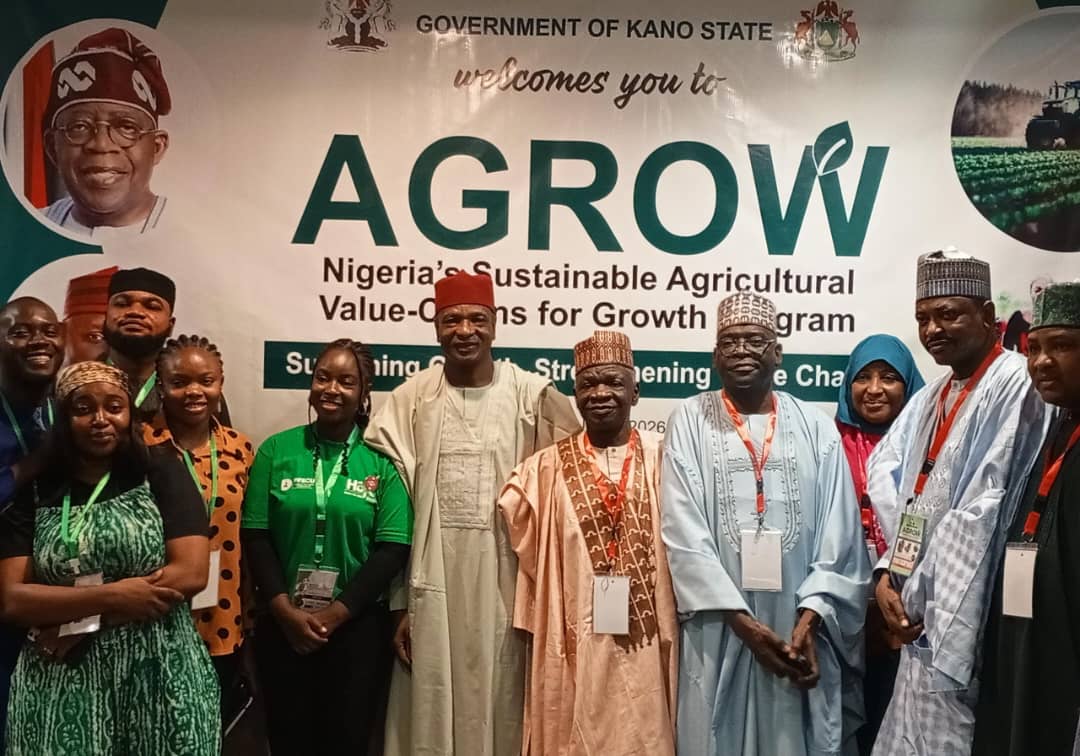
The Kebbi state commissioner for Agriculture and natural resources disclosed this at Nigeria’s sustainable Agricultural Value-chains for Growth (AGROW) program themed; Sustaining Growth, Strengthening Value Chains, the program which brought together stakeholders on agricultural sector held in Kano on Tuesday.
According to him, a lot of policies were brought together and before even reaching proper implementation stage, other policies were also introduced, the development threatening value chain, emphasizing the need for stable policies to boost productivity and ensure food security.
READ ALSO: Sassakawa Africa Association Signs $100,000 MOU with Jigawa state on Agricultural Value Addition
GLOBAL TRACKER reports that the training has in attendance commissioner and permanent secretarities from Kebbi, Sokoto, Zamfara, Gombe, Katsina and Kano state.
“From crop production to processing, transportation, and marketing, farmers and agribusiness stakeholders say structural weaknesses are preventing the region from fully harnessing its vast agricultural potential. Many farmers face difficulty accessing quality seeds, fertilizers, and modern farming equipment,” said the stakeholders during the program.
“Processing and value addition are also weak links in the value chain. Most agricultural produce in Northern Nigeria is sold in raw form because of limited agro-processing industries, high energy costs, and outdated equipment. This deprives farmers and local economies of higher income opportunities that come with processing and packaging finished products. Poor rural road networks increase the cost of moving goods from farms to markets, while delays often lead to spoilage and reduced quality. As a result, farmers rely heavily on middlemen, who dictate prices and benefit disproportionately from the trade,” said commissioners who attend the training.
“Seasonal gluts during harvest periods frequently lead to sharp price drops, while the lack of reliable market information leaves farmers with little bargaining power. Access to finance remains limited, with many small holder farmers unable to secure affordable credit or insurance to expand their operations, plus the security challenges across parts of Northern Nigeria have also disrupted the agricultural value chain,” they added.
Meanwhile, the federal government of Nigeria has reiterated its commitment to ensuring that farmers are actively involved in policy decisions aimed at boosting agricultural productivity and strengthening national food security.
Mr. Eniola Akindele, the Data Manager, Research and Impact Assessment at the Presidential Food Systems Coordinating Unit (PFSCU), office of vice president said the current administration is prioritising farmer-driven, market-oriented and results-based agricultural interventions, stressing that policies must respond to realities on the ground rather than follow a top-down approach.
The manager said AGROW focuses on strategic value chains including rice, wheat, tomato, sesame and sorghum, which are critical to Nigeria’s food security and economic development.
He noted that AGROW is a $500 million homegrown initiative led by Nigeria, co-created across the three tiers of government, and shaped in partnership with the private sector and development partners, with technical support from the World Bank.
Akindele explained that the past agricultural programmes were hindered by fragmented public spending, blanket input subsidies, government-driven implementation models, opaque land administration systems and multiple informal trade levies.
He said the AGROW framework introduces a new approach centred on state-level agricultural support, financial incentives tied to market outcomes and targeted public investment. Other pillars include institutionalised private sector engagement, transparent and secure land administration, as well as efficient and predictable interstate agricultural trade.
The PFSCU official added that the programme is built on three major components: strengthening private sector linkages with small holder farmers, modernising on-farm production systems, and effective project coordination, monitoring and evaluation.
The manager further outlined eligibility requirements for states seeking to participate in AGROW, including sustainable land-based investment processes, digital farmer registries, increased transparency in fees and levies for interstate trade, reduced reliance on input subsidies and stronger support for agricultural cooperatives.