
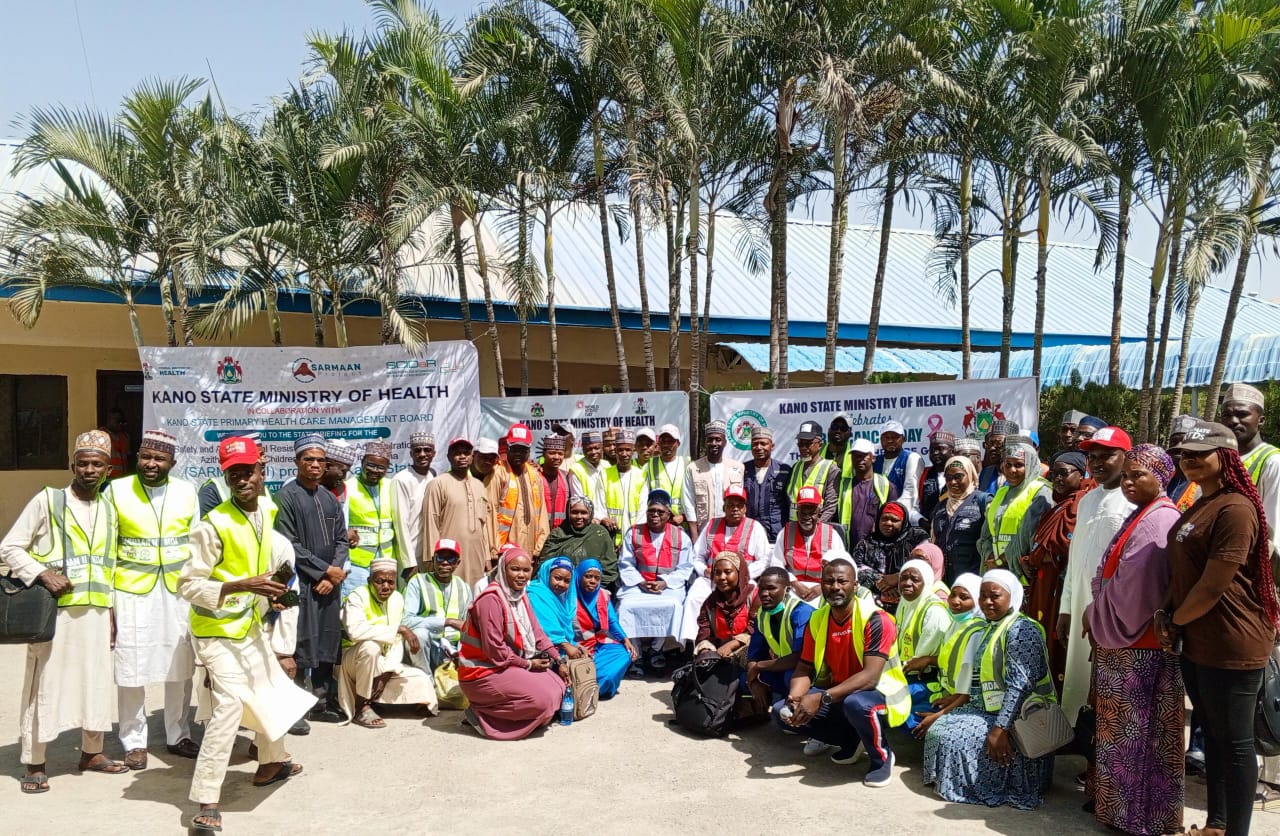
Kano State government has intensified its public health response through a series of strategic actions, aligning with global health observances and rolling out critical interventions aimed at protecting vulnerable populations, particularly children and underserved communities.
The Kano state commissioner of Health Dr. Abubakar Labaran Yusuf disclosed while briefing journalists to mark the commemoration of “2026 World Cancer Day“, “World Neglected Tropical Diseases (NTDs)”, “World Leprosy Day”, and the Flagging-off of “SARMAAN II Mass Drugs Administration” held at Emergency Operations Centre (EOC) in the Kano metropolis at the Weekend.
The Commissioner said these global health observances marked annually on 30th January (World NTDs Day), the last Sunday of January (World Leprosy Day), and 4th February (World Cancer Day) – serve as powerful reminders that preventable and treatable diseases continue to affect the most vulnerable populations, particularly women and children.
READ ALSO: Kano Ministry Hosts Abia Land Commissioner, Engages on Strategic Information Sharing
He said today’s gathering reflects Kano State’s unwavering commitment to equity, prevention, early detection, and universal access to quality healthcare, in line with national and global health priorities.
World Leprosy Day: Ending Stigma, Promoting Early Treatment
As part of activities marking World Leprosy Day 2026, observed annually on the last Sunday of January, Kano State reaffirmed its commitment to eliminating leprosy and combating the stigma associated with the disease. Health officials emphasized that leprosy is curable and that early detection and treatment remain the most effective tools for preventing disability and transmission.
The commemoration focused on public sensitization, community engagement, and advocacy for the dignity and inclusion of persons affected by leprosy. The state’s sustained leprosy control efforts reflect broader national and global targets to end discrimination and ensure access to free treatment for all patients.
World NTDs Day: Tackling Diseases of Poverty.
The 2026 Theme is; “Unite, Act, Eliminate: Towards the Achievement of Universal Health Coverage and the Sustainable Development Goals, the World Neglected Tropical Diseases Day NTD is observed every year on 30 January to raise awareness about NTDs, a set of preventable and treatable diseases affecting vulnerable populations globally.
The day which was promoted by the World Health Organization (WHO) is joined by many states natably Kano which joined the global community to spotlight World Neglected Tropical Diseases Day, observed on January 30, drawing attention to diseases that disproportionately affect poor and marginalized communities.
Health authorities highlighted the burden of NTDs such as lymphatic filariasis, schistosomiasis, Onchocerciasis, soil-transmitted helminths, trachoma, and leprosy, many of which remain endemic in parts of the state.
The commissioner stressed that these diseases are preventable and treatable, calling for improved sanitation, community participation, mass drug administration, and sustained political commitment to achieve elimination targets.
GLOBAL TRACKER checked shows the 13 NTDs are; Lymphatic Filariasis (Elephantiasis), Onchocerciasis (River Blindness), Schistosomiasis (Bilharzia),
Soil-Transmitted Helminthiasis, Trachoma, Leprosy (Hansen’s Disease), Buruli Ulcer, Yaws, Rabies, Human African Trypanosomiasis (Sleeping Sickness), Chagas Disease, Dengue Fever and the Dracunculiasis (Guinea Worm Disease).
World Cancer Day: Raising Awareness, Saving Lives
On World Cancer Day, marked annually on February 4, Kano State also supported awareness campaigns aimed at promoting early detection, prevention, and access to treatment.
Health experts used the occasion to educate residents on common cancers, risk factors, and the importance of regular screening, noting that early diagnosis significantly improves survival rates.
Civil society groups, health professionals, and community advocates collaborated to spread messages of hope, inclusion, and support for people living with cancer, while calling for stronger investment in cancer care services.
Flag-off of SARMAAN II: Protecting Children’s Lives
Beyond advocacy, Kano State moved decisively from awareness to action with the flag-off of the SARMAAN II implementation, a large-scale public health intervention targeting children aged 1–59 months.
“The programme builds on the success of round 1 of SARMAAN II project where over 1.9 million children were reached (reflecting 93% coverage) across 28 LGAs and is being implemented with strict safety protocols, strong pharmacovigilance, community engagement, and real-time monitoring,” said the commissioner.
“SARMAAN II project is safe, scientifically proven, and implemented in line with national and international guidelines, with the wellbeing of our children as the top priority,” he added.
The programme according to the Dr. Abubakar Labaran Yusuf involves the mass administration of Azithromycin to reduce childhood deaths from infections such as pneumonia, diarrhoea, and other bacterial illnesses.
The Commissioner said under the initiative, trained health workers conduct house-to-house drug administration across selected local government areas, ensuring that eligible children receive free, life-saving medication.
The programme is implemented in collaboration with federal health authorities, research institutions, and international partners.
Strengthening School Health Services
As part of its broader health agenda, Kano State has also reactivated School Health Services, through which 45 schools recently benefited from the distribution of essential drugs and teaching and learning materials.
The initiative supports early treatment of minor illnesses, health education, and improved learning outcomes among pupils.
The programme’s revival is expected to contribute to better health monitoring, early detection of common illnesses, improved hygiene practices, and enhanced educational participation, as healthier children are more likely to attend school regularly and perform better academically.
Authorities at the Kano state ministry of health have expressed determination to make the School Health Services a cornerstone of the public health strategy for children, in collaboration with education and community stakeholders, as part of broader efforts to advance preventive health and strengthen primary care delivery in Kano.
“School’s official are not doctors, they amined to gives first aid and take the students to hospital for proper examinations by health officials,” said Dr. Labaran.
He warned that all drugs given to school authorities are free and anyone found selling it would be arrested and prosecuted to the full weight of the law.
A Unified Health Agenda
Taken together, the commemoration of global health days, the rollout of SARMAAN II, and the strengthening of school health services underscore Kano State’s renewed commitment to preventive healthcare, disease control, and community wellbeing.
Dr. Labaran further sad the Kano State Government remains committed to providing free essential health services, including: Free MNCH services, Free malaria treatment, Free HIV, TB, Leprosy and NTD services, Support for cancer, sickle cell disease and diabetic patients, Free emergency, eye care, and accident services.
He appreciates development partners namely; WHO, UNICEF, SOLINA CHAI, Gates Foundation, KNCV, HANDS, Dangote Foundation,, and many others for their continued technical and financial support.