
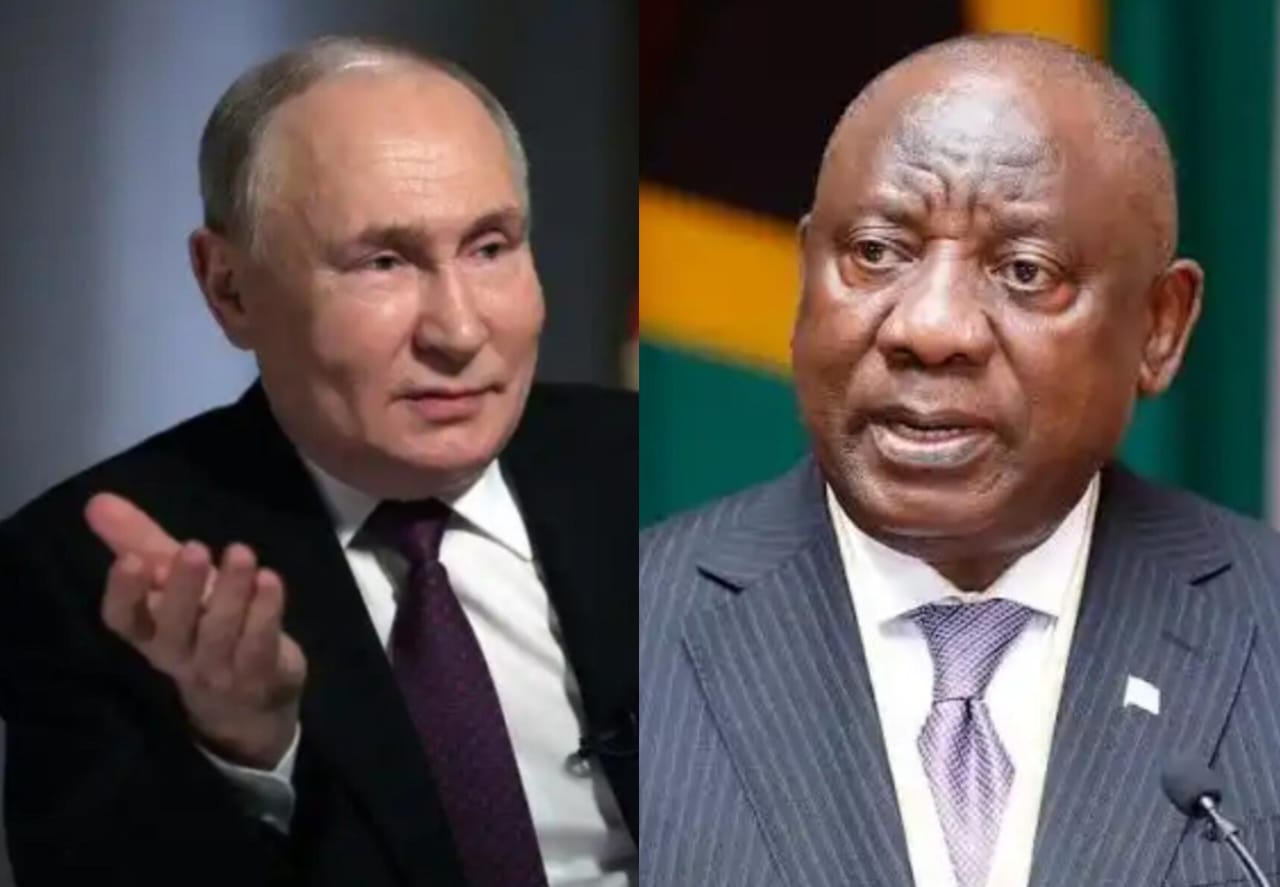
South African President Cyril Ramaphosa reaffirmed his government’s support for diplomatic and peaceful solutions to the ongoing war between Russia and Ukraine during a phone call with Russian President Vladimir Putin on Tuesday, underscoring Pretoria’s commitment to a negotiated end to the conflict.
In the February 10 telephone conversation, Ramaphosa reiterated that lasting peace can only be achieved through negotiations and a diplomatic settlement, in line with South Africa’s longstanding position on international conflicts.
The call followed years of South African efforts to encourage dialogue between Moscow and Kyiv to end the full‑scale war that began in February 2022.
“The President expressed South Africa’s ongoing support to diplomatic and peaceful efforts aimed at ending the Russia–Ukraine conflict,” stated a report issued by the South African presidency.
Putin briefed his counterpart on the situation in Ukraine and reaffirmed Russia’s commitment to pursuing a diplomatic solution.
Ceasefire and Peace Advocacy
While neither side announced specific new ceasefire terms, South Africa has consistently called for a comprehensive and unconditional ceasefire as a precursor to meaningful talks, a stance reflected in previous actions by President Ramaphosa.
Earlier diplomatic missions saw South African leadership push for ceasefire commitments from both Moscow and Kyiv, and Ramaphosa has frequently emphasised that all wars only end through negotiation, not force.
South Africa’s approach aligns with Pretoria’s non‑aligned foreign policy, which seeks engagement with all parties rather than siding explicitly with Western calls for punitive measures against Moscow.
Despite international pressure, South Africa has avoided condemning Russia outright and has repeatedly abstained from certain United Nations resolutions critical of Moscow’s conduct in Ukraine, viewing Russia as a “valued ally” while promoting peace.
International Cooperation: BRICS and G20
The discussion also touched on broader international cooperation. Both leaders discussed ways to strengthen cooperation within multinational platforms such as BRICS (Brazil, Russia, India, China, South Africa) and the G20, reflecting shared interests in shaping global economic and political agendas.
South Africa currently holds the rotating G20 presidency, providing it with an influential platform to advocate for conflict de‑escalation and multilateral engagement on global challenges.
The call with Putin reinforces Pretoria’s diplomatic strategy of using such forums to promote comprehensive peace and development, while also advancing shared economic interests.
Repatriation of South African Nationals
In a notable development, the leaders also pledged support for efforts to repatriate South African citizens believed to be fighting alongside Russian forces in Ukraine. Russian authorities agreed to assist in the process, and bilateral teams will continue working toward the return of 17 South African nationals who reportedly joined the conflict under misleading circumstances.
Implications for Global Diplomacy
Analysts note that South Africa’s ongoing engagement with both Moscow and Kyiv places it in a unique position among emerging economies balancing pressure from Western nations to take a firmer stand while promoting multilateral dialogue platforms as avenues for peace.
The recent talks with Putin come amid broader global concerns about the war’s humanitarian and economic impact, and the role of emerging powers in shaping post‑conflict realities.
As diplomatic efforts continue, Pretoria’s focus remains on fostering conditions conducive to an agreed ceasefire, a step it views as essential for effective negotiations and long‑term stability in Eastern Europe.