
Technical colleges in Kano State are undergoing a major transformation from conventional learning institutions into production-driven and innovation hubs, as part of sweeping reforms aimed at strengthening vocational and technical education.
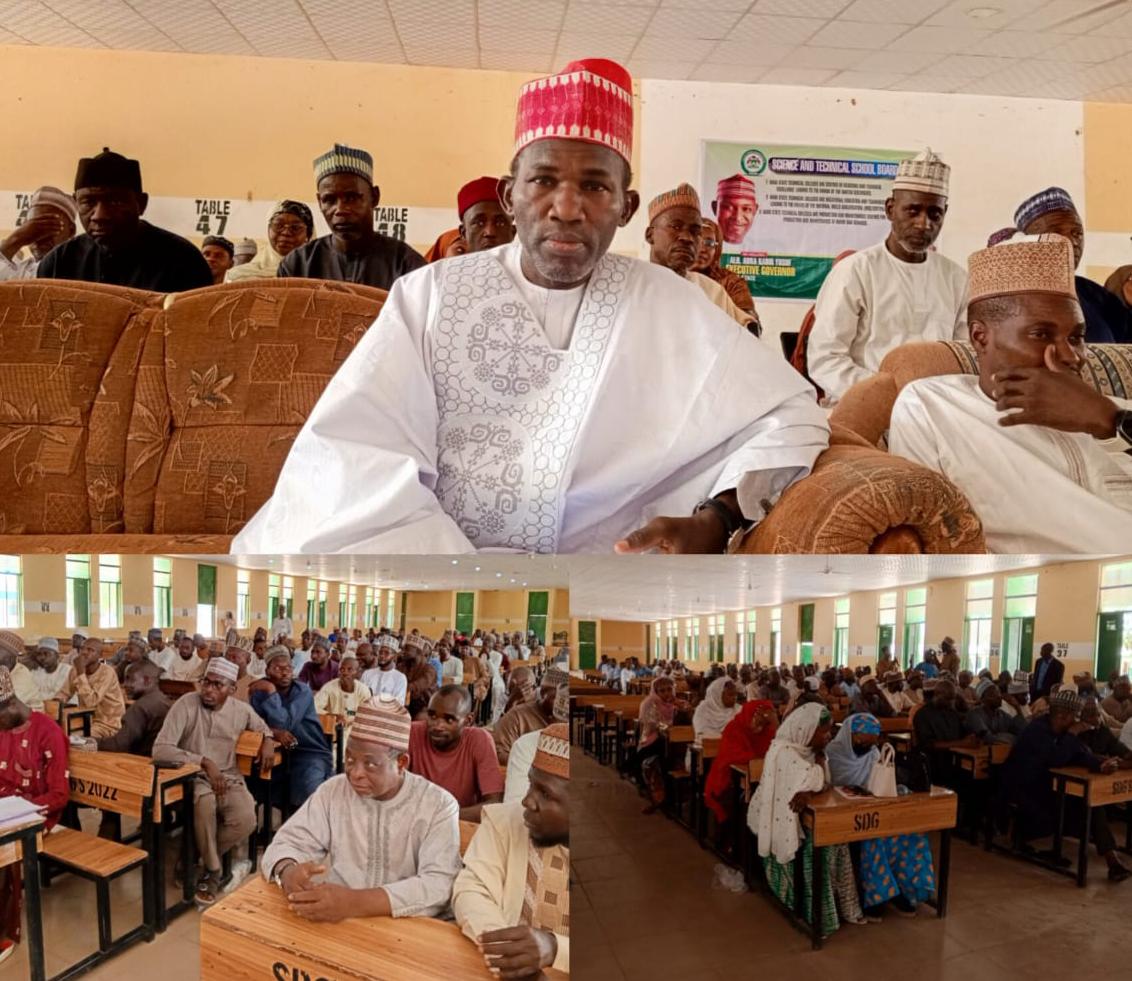
The Executive Secretary of the Kano State Science and Technical Schools Board (STSB), Professor Dahiru Sale Mohammed, disclosed this in a program organized by STSB as part of engagement between the management of the board and head of departments aimed at Strengthening skilled based teaching and learning at all the science and technical schools across the board held at Sani Bello Science College Dawakin Kudu on Monday.
According to professor Dahiru, the colleges are now being repositioned to serve as centres of production, maintenance, and renewable energy innovation, including the conversion of electrical appliances to solar-powered systems.
He explained that the transformation is designed to enhance the technical knowledge and practical skills of both students and teachers, ensuring that graduates are better equipped with hands-on skills and entrepreneurial competence.
According to him, the reform has redefined the structure of technical colleges in the state into three key functional areas.
“Kano State technical colleges are now centres of academic and technical excellence leading to the award of certificates by the National Business and Technical Examinations Board (NABTEB),” he said.
“They are also vocational education and training centres leading to the award of the National Skills Qualification (NSQ) certificate, and equally serve as production and maintenance centres for goods and services.”
Professor Dahiru noted that the integration of production into the education system is aimed at bridging the gap between theory and practice, while also promoting innovation, self-reliance, and job creation among young people.
He further said students of Government Technical College Danbatta has been enrolled into Technical and Vocational Education and Training (TVET) which focuses on practical skills and hands-on experience needed for specific trades, crafts, and careers.
“As I am talking to you now, the students Will soon started benefitting allowance from the program,” said Executive Secretary.
He further revealed that the transition to solar-powered systems across the colleges is part of efforts to ensure sustainable energy use, reduce operational costs, and provide stable power supply for training and production activities.
As part of efforts to drive the initiative, the STSB boss challenged Heads of Department across technical colleges to act as the “engine-room” of production, urging them to lead innovation and ensure that their departments actively contribute to the new production-oriented system.
In recognition of early successes, the Executive Secretary commended the principals of Government Science and Technical College Mairo Tijjani and Government Science and Technical College Ja’oji for leading their schools to produce various goods, which were showcased at the Kano State Trade Fair.
He described their efforts as a practical demonstration of the reform agenda, noting that such initiatives reflect the growing capacity of technical colleges to contribute to economic development through production.
Professor Dahiru also praised the Governor of Kano State, Abba Kabir Yusuf, for his commitment to revitalizing the sector, particularly for the recovery of long-leased workshops at Government Technical College Kano.
He said the move has restored critical infrastructure needed for hands-on training and production activities, enabling students and instructors to fully utilize the facilities for skill development.
The STSB Executive Secretary emphasized that the ongoing reforms are part of a broader vision to reposition technical colleges in Kano as centres of excellence, innovation, and economic productivity, capable of producing skilled manpower for both local industries and the wider economy.