
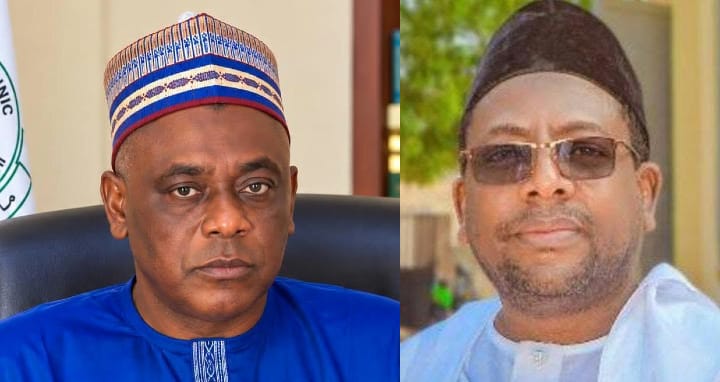
The controversy surrounding the appointment of a new Registrar at Kano State Polytechnic has deepened following the reported return of the institution’s substantive Registrar, Alhaji Mukhtar Ibrahim Bello, and a subsequent decision by the Governing Council to query the new appointee, Malam Magaji Rabi’u Garun-Danga, over alleged misconduct.
The development has raised questions about the administrative authority, appointment procedures and institutional governance of one of Kano State’s major tertiary institutions, particularly over the circumstances that led to the announcement of a new Registrar and the subsequent return of the former office holder.
The latest twist reportedly emerged during the 20th meeting of the Polytechnic’s Governing Council, where members considered issues relating to administrative conduct and accountability, including allegations against Garun-Danga concerning the Office of the Registrar.
According to Bello, the Council queried Garun-Danga over allegations bordering on fraud, impersonation, insubordination and other acts of misconduct, particularly in connection with his alleged presentation of himself as Registrar despite the existence of a substantive office holder.
However, the allegations remain subject to the Polytechnic’s disciplinary procedures and should not be interpreted as proof of wrongdoing until the process is concluded and a formal decision is communicated.
The controversy dates back to September 2026, when the Kano State Government announced Governor Abba Kabir Yusuf’s approval of Garun-Danga’s appointment as Registrar of the Polytechnic.
The appointment, conveyed through a letter signed by the Secretary to the State Government, Alhaji Umar Farouk Ibrahim, was initially scheduled to take effect from September 16, 2026.
Garun-Danga, who previously served as Deputy Registrar in charge of Human Resources, was presented as an experienced administrator expected to contribute to the institution’s administrative development and ensure continuity in its operations.
The Polytechnic’s Public Affairs Unit subsequently announced the appointment, while the Rector, Dr Abubakar Umar Farouk, FCA, was quoted as welcoming the decision on behalf of the Governing Council, management, staff and students.
The announcement also acknowledged Bello’s service to the institution and wished him success in his future endeavours, suggesting that his tenure had come to an end.
However, the situation reportedly took a different turn shortly afterwards when Bello returned to the position, creating uncertainty over the status of Garun-Danga’s appointment and the authority under which administrative responsibilities were being exercised.
The reported return of Bello has become particularly significant because, according to him, the Governing Council had renewed his tenure as substantive Registrar and Secretary to the Council.
This has brought the Polytechnic’s Governing Council into the centre of the controversy, as questions emerge over whether the initial appointment announcement was consistent with the Council’s decisions and the applicable provisions governing the institution.
The Registrar’s office is one of the most important administrative positions in a tertiary institution, with responsibilities that extend beyond routine paperwork and correspondence.
As Secretary to the Governing Council, the Registrar plays a central role in council administration, institutional records, academic administration, staff and student affairs, as well as the implementation of decisions taken by the institution’s governing authorities.
Consequently, uncertainty over the legitimate occupant of the office could create administrative complications, particularly where official correspondence, institutional decisions and responsibilities depend on the recognised authority of the Registrar.
The Governing Council’s reported decision to query Garun-Danga has therefore introduced a disciplinary dimension to what initially appeared to be a routine change in administrative leadership.
Nevertheless, important details remain unclear, including the specific evidence supporting the allegations, the precise circumstances surrounding Bello’s reported tenure renewal, the formal status of Garun-Danga’s appointment and the response of the new appointee to the query.
These questions are central to determining whether the controversy resulted from an administrative misunderstanding, conflicting institutional decisions or a failure to follow established procedures.
In an effort to obtain further clarification, The Historica Nigeria reportedly sought an interview with the Rector, Dr Abubakar Umar Farouk, to hear his account of the appointment and the subsequent developments.
The newspaper visited the Rector to obtain his position on the matter, particularly regarding the initial announcement of Garun-Danga’s appointment, Bello’s return to office and the Governing Council’s decision to issue a query.
However, the Rector declined the request for an interview, leaving the publication without his direct explanation of the circumstances surrounding the controversy.
Although the refusal to grant an interview does not establish wrongdoing, the Rector’s account would have provided important insight into the management’s position on the administrative developments.
The Kano State Government, which announced Garun-Danga’s appointment, also has an important role in clarifying the circumstances surrounding the decision and explaining how the subsequent developments relate to the Polytechnic’s governing framework.
For an institution responsible for training thousands of students and producing skilled manpower, clarity in administrative leadership is essential to maintaining institutional stability, accountability and public confidence.
The controversy also underscores the importance of clearly defining the respective responsibilities of the state government, the Governing Council and the management in appointments and administrative transitions within tertiary institutions.
Observers would expect the Polytechnic’s authorities to provide a transparent explanation of the events, establish the formal status of both officials and ensure that the disciplinary process against Garun-Danga is conducted fairly and in accordance with the institution’s regulations.
Ultimately, the unfolding Registrar controversy has become a test of administrative order and institutional accountability at Kano State Polytechnic.
What was initially announced as the appointment of a new Registrar has developed into a dispute involving the reported return of the former substantive office holder and a disciplinary query against his successor.
Until the Governing Council, Polytechnic management and Kano State Government provide a clear account of the appointment, tenure arrangements and subsequent actions, questions surrounding the leadership of the Registrar’s office are likely to persist.