
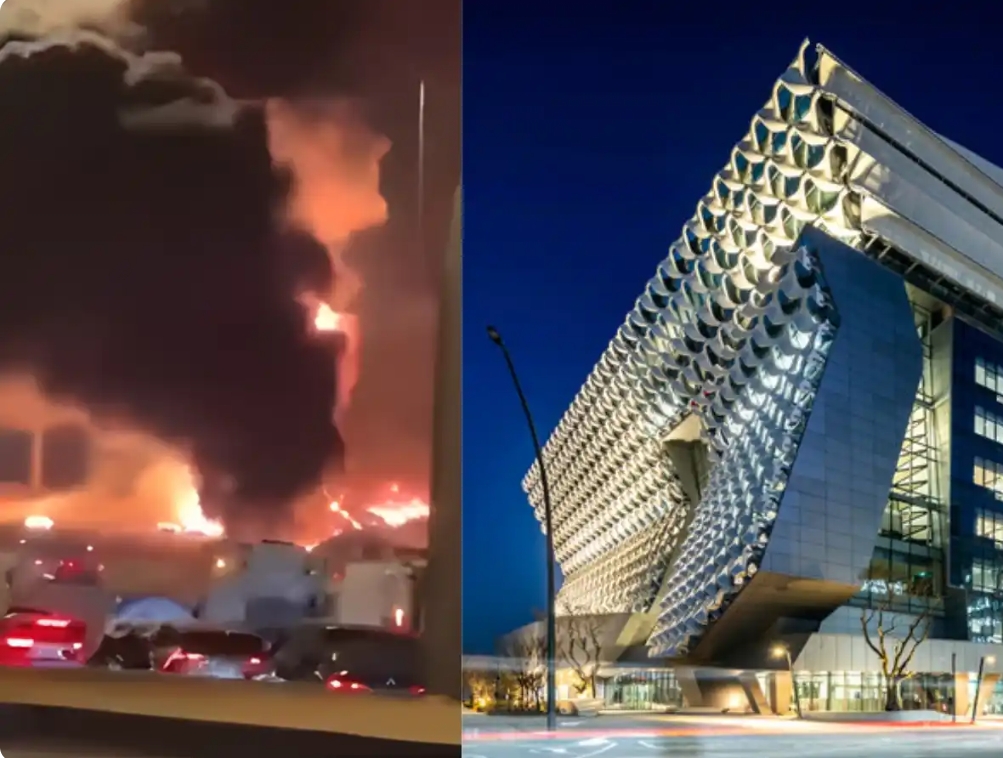
The Islamic Republic of Iran has launched a direct attack on the United States Embassy in Riyadh in the Saudi Arabian capital late Monday night, marking one of the most serious breaches of diplomatic immunity in decades.
The assault coincided with a widening regional war following U.S. and Israeli strikes on Iranian territory.
Saudi authorities confirmed that two Iranian drones struck the U.S. Embassy compound, resulting in a limited fire and minor material damage to the building in the diplomatic quarter of Riyadh.
There were no reported casualties inside the embassy, which was largely unoccupied at the time, but the incident triggered urgent security alerts and safety orders.
In response to the attack, the US Mission to Saudi Arabia issued a “shelter in place” alert for Riyadh and nearby cities, including Jeddah and Dhahran, and restricted non-essential travel to military sites across the kingdom.
American citizens were urged to stay indoors and avoid public areas as authorities assessed further threats.
The drone strike on the embassy came amid a series of retaliatory attacks by Iran across the Gulf region, following joint US–Israeli military operations that struck Iranian strategic and military sites.
Iranian forces have targeted U.S. bases, military installations and allied territories in at least eight countries across the Middle East, including Saudi Arabia, the United Arab Emirates, Qatar, Kuwait, Jordan, Iraq, Oman and Bahrain.
Saudi Arabia’s Foreign Ministry condemned the attack and summoned Iran’s ambassador, emphasizing Riyadh’s firm rejection of violations of its sovereignty and warning it would take all necessary measures to protect national security.
Regional Reaction and Security Measures
The assault on the embassy — a symbol of US diplomatic presence in the Gulf has heightened fears of further spillover.
Gulf Cooperation Council (GCC) states have rallied in condemnation of what they describe as Iranian aggression and violations of regional sovereignty, even as they prepare to defend shared strategic interests.
Saudi air defenses also intercepted several other Iranian drones and missiles aimed at key infrastructure, including oil facilities, amid broader strikes across the region.
US Strategic and Political Implications
The direct targeting of a U.S. diplomatic mission represents a serious escalation.
While earlier Iranian strikes focused on military and energy sites, the attack on the embassy raises concerns about the safety of diplomatic personnel and international norms protecting embassies under the Vienna Convention.
U.S. officials have not yet detailed a formal response, but President Donald Trump has suggested that Washington is reviewing options, and military and diplomatic channels are coordinating with Saudi counterparts on security and next steps.
The attack in Riyadh adds to a broader pattern that has already disrupted global energy markets, prompted evacuations of civilians and diplomats, and raiseUsd defense alerts from Europe to Asia Pacific. It underscores how what began as localized operations between Iran, Israel and the United States has expanded into a multi-front regional crisis with international implications.