
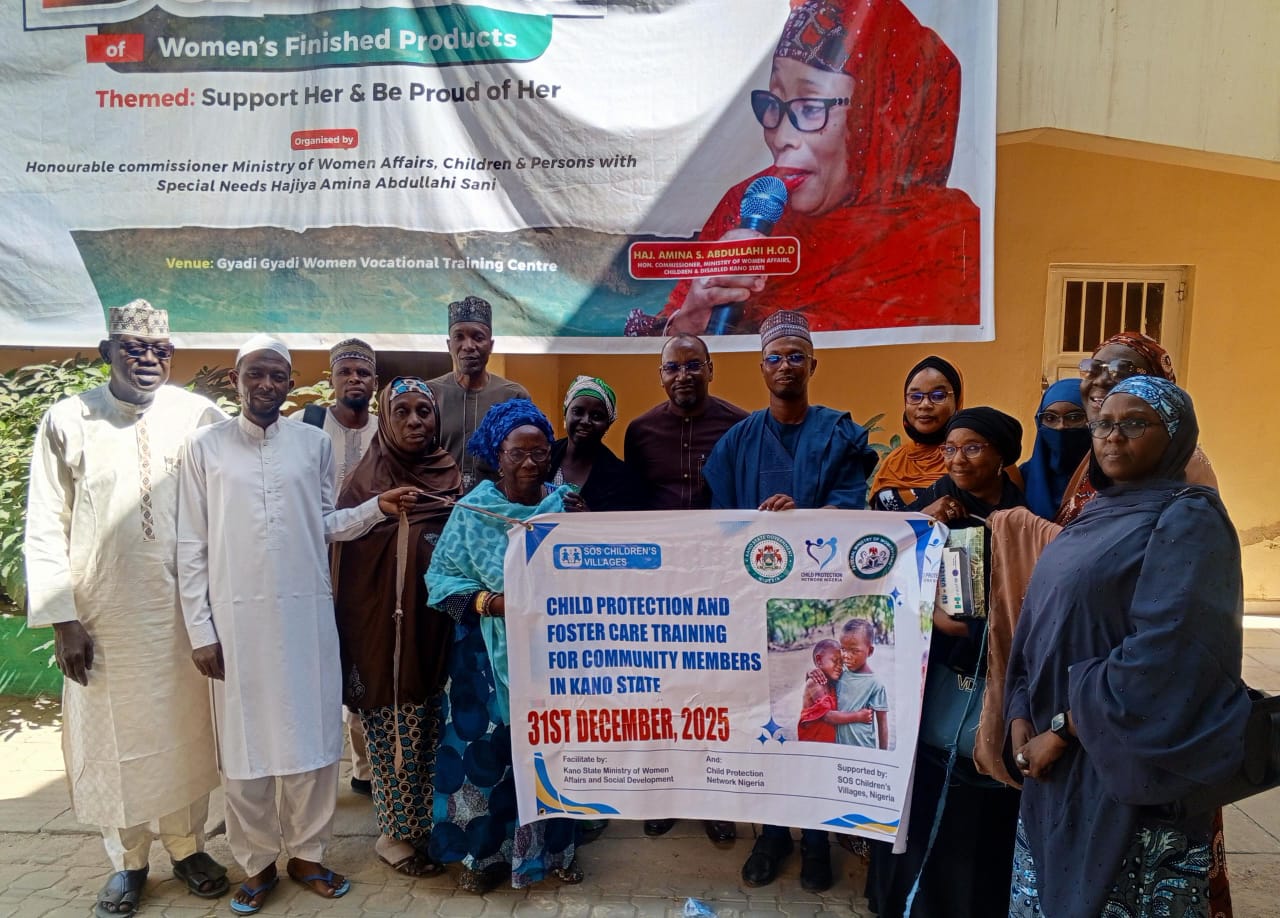
The Child Protection Network (CPN) is advocating for the establishment of a Family Court and Child Protection Committee in Kano state as part of efforts to strengthen child protection mechanisms and ensure justice for vulnerable children in the state.
Muhammad Ali Mashi, the Kano state chairman of the CPN disclosed this at one-day stakeholders training and capacity building on the importance of implementation of Child Rights Law 2023, the creation of family courts as well as establishment of strong committee saddle with responsibility of protecting vulnerable children in the society, the training held in Kano on Monday.
Mashi said the training focused on improving access to justice for children, the adoption/implementation of the Child Rights Law and ensuring that children are not traffic-out of the country.
“We are advocating three key things in Kano, the creation of Family Court (which will make us less dependent on absolute Juvenile court Laws), the establishments of strong child protection and implementation committee and establishments of safe places/centers for children,” said Mashi.
According to him, the training is aimed at strengthening members of the network on does and don’t, the importance and techniques of “Fostering” and to building their capacity and standard way of fostering as well as lay solid foundation on it.
“If We have a formidable committee who will monitor how these children are being fostered to good people, it would ensure these children are not being fostered into wrong hands and they should not fall under the traffickers hand, by so doing they will be safe in good hands,” said Mashi.
The Kano state child protection law passed by the Kano State House of Assembly in 2023 and subsequently signed by the governor, provides a comprehensive framework aimed at safeguarding children from abuse, exploitation, neglect, and other harmful practices. Its enactment has been widely welcomed by child-rights advocates, development partners, and civil society organisations.
According to lawmakers, the Child Protection Law is designed to align Kano State with national and international child-rights standards, including principles contained in the United Nations Convention on the Rights of the Child (UNCRC).
The law establishes clear responsibilities for parents, guardians, communities, and government institutions in ensuring the welfare and development of children.
Key objectives of the legislation include the protection of children from physical, sexual, and emotional abuse, the promotion of free and compulsory basic education, and improved regulation and oversight of orphanages, care homes, and child-focused institutions within the state.
The law also seeks to address long-standing challenges such as child neglect, exploitation, and the growing number of out-of-school children.
Stakeholders note that the law introduces stronger penalties for offences committed against children, signaling the state government’s intention to deter violations of children’s rights and promote accountability.
In a paper presentation, Dr. Samir Halliru of center for gender studies, Bayero university Kano who discussed extensively on “Child Protection for Foster Training to Community Members” said global forces have created something whose outcomes subjected the families and communities to very difficult positions, the development which caused many crises and the child became victims of such incidentals.
Dr. Samir said based on the law signed by the Kano state government in 2023, a powerful committee should be set up containing hardworking and people of integrity who would handle the affairs, management and good implementation of child protection laws.
According to him, the implementers should be drowned from the real community not everyone else, saying “because there is always the power of proximity and the more you get closer to the people, the more you solve their problems”.
“While setting the committee stakeholders should note that members of the committee should be the people from the grassroots to avoid communications gaps and lack of synergy between members of the community and the committee, because if the committee is not connected with the real community, the whole aims and purpose will be defeated,” added Dr. Samir.
He urged governments, stakeholders, nongovernmental organizations and media to ensure the integrity, financial stability, character and person with good background before being allowed to foster any children so as to avoid putting children into the wrong hands.
The training is in attendance, the different nongovernmental organizations, judiciary representatives, directors from Kano state ministry of women affairs, children and disabled, National Agency for the Prohibition of Trafficking in Person (NAPTIP) and the journalists.