
The number of people mostly Palestinians killed by Israel’s genocidal war in Gaza has now surpassed 75,000 since October 7, 2023, according to reporting by the Al Jazeera Media Network and independent mortality research cited in its coverage.
The staggering figure underscores the immense human cost of Israel’s military campaign in the besieged enclave, a toll that continues to rise despite ceasefire agreements and mounting international concern.
Recent reporting highlighted new peer-reviewed mortality surveys suggesting that earlier official counts from Gaza’s Health Ministry long used as the baseline by international media and aid agencies likely undercounted violent deaths.
Researchers estimate that more than 75,000 violent deaths occurred between October 2023 and early 2025, with thousands more potentially unrecorded due to collapsed infrastructure, buried bodies, and inaccessible areas.
While Israeli officials have previously questioned casualty figures, even Israeli military sources have in recent months acknowledged death tolls in the tens of thousands.
However, there remains no comprehensive breakdown distinguishing civilians from combatants, and humanitarian organizations continue to warn that the majority of the victims are civilians, including women and children.
A Humanitarian System in Collapse
Beyond the raw death toll, Gaza faces what aid groups describe as one of the worst humanitarian crises in recent history.
Hospitals operate at a fraction of capacity. Medical supplies remain scarce. Thousands of wounded Palestinians require evacuation for treatment unavailable inside Gaza, yet border crossings including Rafah have been restricted.
According to Al Jazeera’s reporting, only a small percentage of those needing urgent medical transfer have been allowed to leave.
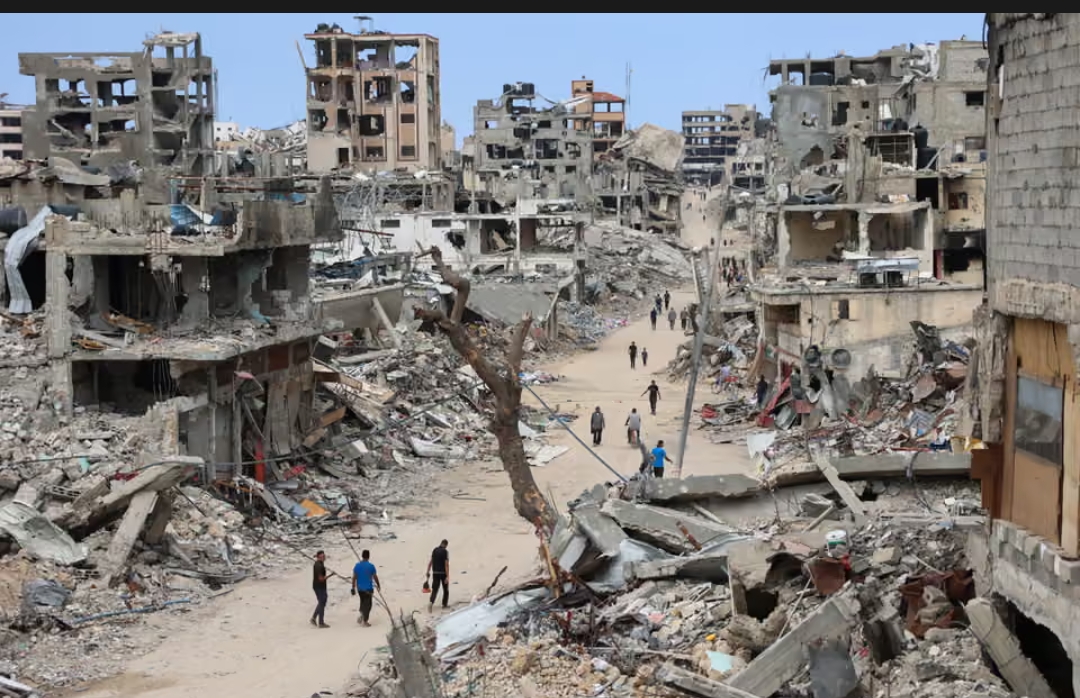
Entire neighborhoods lie in ruins. Critical infrastructure water networks, sanitation systems, electricity grids has been severely damaged or destroyed. Food insecurity is widespread, and aid delivery remains inconsistent amid security restrictions and damaged roads.
Humanitarian agencies warn that indirect deaths from disease, malnutrition, dehydration, and untreated injuries may significantly add to the already devastating confirmed fatality figures.
Ceasefire Under Strain
Although a ceasefire agreement took effect in October 2025, violence has not fully subsided. Al Jazeera has documented repeated Israeli airstrikes and ground operations in Gaza following the truce, with Palestinian casualties continuing to be reported in the months after its implementation.
Palestinian officials have accused Israel of violating the ceasefire hundreds of times through air raids, artillery fire, and restrictions on humanitarian access. Israeli officials, for their part, have accused Palestinian armed groups of breaching the agreement, citing rocket fire and security threats.
The fragile truce has done little to alleviate the humanitarian emergency, as reconstruction remains stalled and displacement persists across much of the territory.
Global Response Under Scrutiny
As the death toll climbs past 75,000, critics argue that the international response has failed to halt the violence.
Mass protests have taken place across Europe, North America, and parts of the Global South, with demonstrators calling for permanent ceasefire enforcement, accountability for violations of international humanitarian law, and expanded humanitarian access.
Yet diplomatic efforts have repeatedly stalled. UN resolutions have faced political divisions. Arms transfers and military support to Israel have continued from some Western governments, drawing criticism from human rights advocates who argue that stronger leverage could have prevented further loss of life.
Human rights organizations continue to call for independent investigations, accountability mechanisms, and urgent steps to prevent further civilian harm.
A War Without End in Sight
More than two years after the war began, Gaza’s population remains trapped in a cycle of destruction, displacement, and mourning.
With over 75,000 reported dead and potentially many more uncounted the scale of loss has reshaped nearly every family in the territory.
Whether the fragile ceasefire can hold, whether humanitarian corridors can expand, and whether global powers will act decisively to end the violence remain open questions.
For Gaza’s civilians, however, the statistics are not abstract. They represent homes destroyed, families fractured, and futures uncertain.