
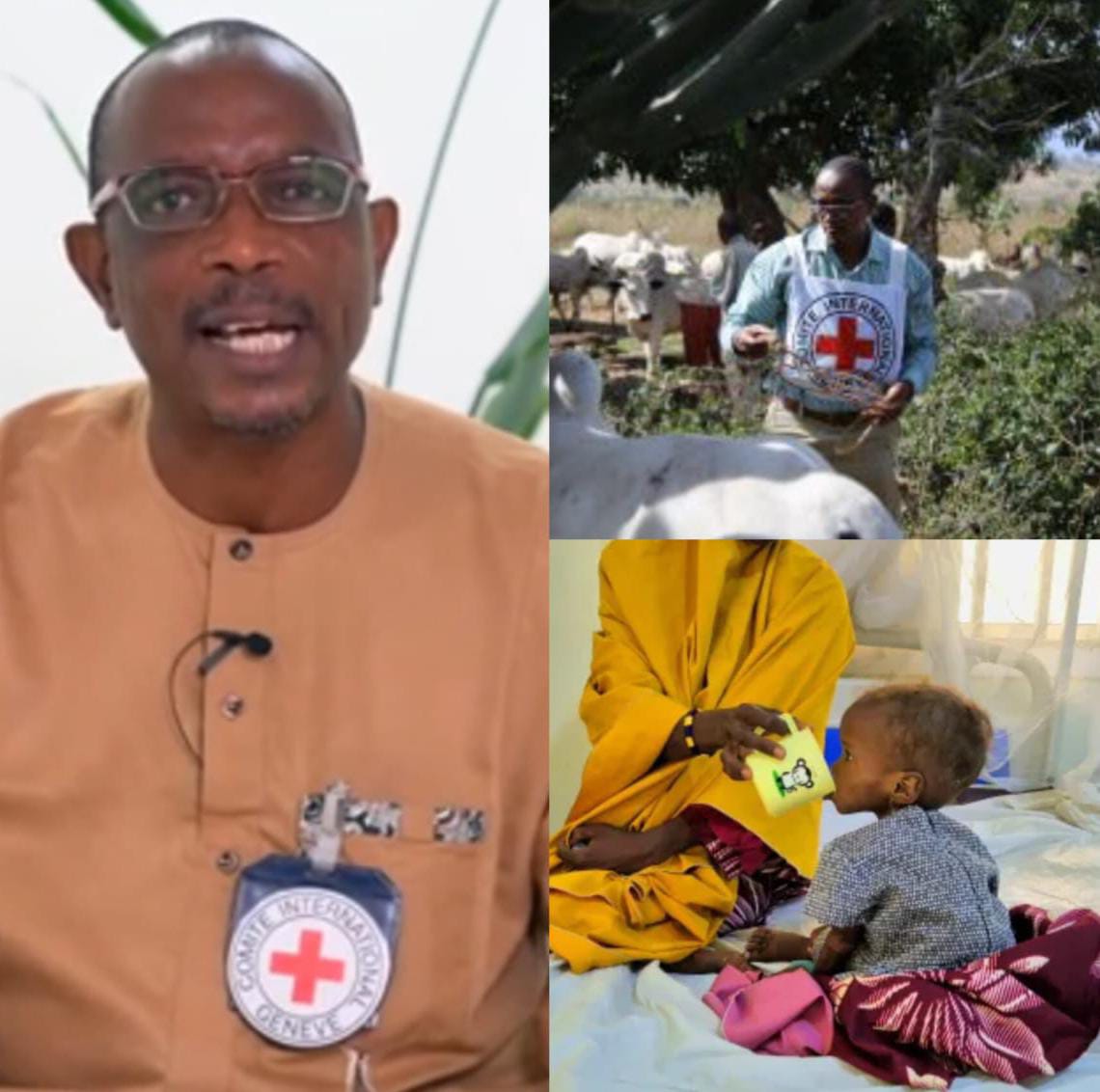
The International Committee of the Red Cross (ICRC) has expressed deep concern over the escalating malnutrition crisis in northern Nigeria, warning that millions of children are at risk of starvation and disease due to prolonged armed conflict and disrupted livelihoods.
Speaking exclusively with GLOBAL TRACKER correspondent, Aliyu Dawobe, Communications Officer of the ICRC Abuja Delegation, said the organization is “very alarmed by the catastrophic high rate of malnutrition affecting children across northern Nigeria,” with about 6.4 million children under the age of five currently suffering from acute malnutrition.
“The situation is particularly severe for young children, pregnant women, and lactating mothers, who are the most vulnerable in conflict-affected areas,” Dawobe emphasized, highlighting the urgent need for coordinated humanitarian intervention.
The malnutrition emergency is most severe in the north-east, north-west, and north-central regions, where years of armed conflict have disrupted farming, displaced families, and limited access to healthcare.
To respond to the crisis, the ICRC supports nutrition stabilization centres in key towns, including Maiduguri (Borno State), Damaturu (Yobe State), and Mubi (Adamawa State).
These centres treat children suffering from severe acute malnutrition with medical complications, providing therapeutic feeding, medical care, hydration, and continuous monitoring. Mothers and caregivers stay with their children and receive guidance on feeding practices and nutrition.
In 2025, more than 348,000 people including over 16,000 children under five and 19,000 pregnant or lactating women received treatment at ICRC-supported facilities.
Community-Based Nutrition Programmes
The ICRC also implements community-based nutrition interventions to detect and prevent malnutrition early. Using mid-upper arm circumference (MUAC) measuring tapes, mothers and caregivers can monitor their children’s nutritional status at home and refer them promptly for treatment when necessary.
The programmes also include infant and young child feeding education and training on preparing nutritious meals using local ingredients, helping families build resilience against malnutrition.
During the 2025 lean season, over 17,000 vulnerable families received three rounds of cash assistance to purchase food and meet urgent needs.
To restore food security, the ICRC has also supported over 168,000 farmers with climate-smart seeds, solar-powered irrigation systems, and agricultural inputs, helping families grow their own food and rebuild livelihoods. Women, in particular, receive training to produce nutritious meals from local crops while being supported financially to cultivate their land.
Recognizing the link between poor sanitation and malnutrition, the ICRC distributed hygiene kits to 26,000 people to prevent disease outbreaks and improve living conditions in vulnerable communities.
Dawobe urged humanitarian organizations, civil society groups, and all parties to the conflict to increase support for affected communities. He also reiterated the ICRC’s call for all actors in armed conflicts to respect International Humanitarian Law, ensuring that civilians, aid workers, and medical facilities are protected.