
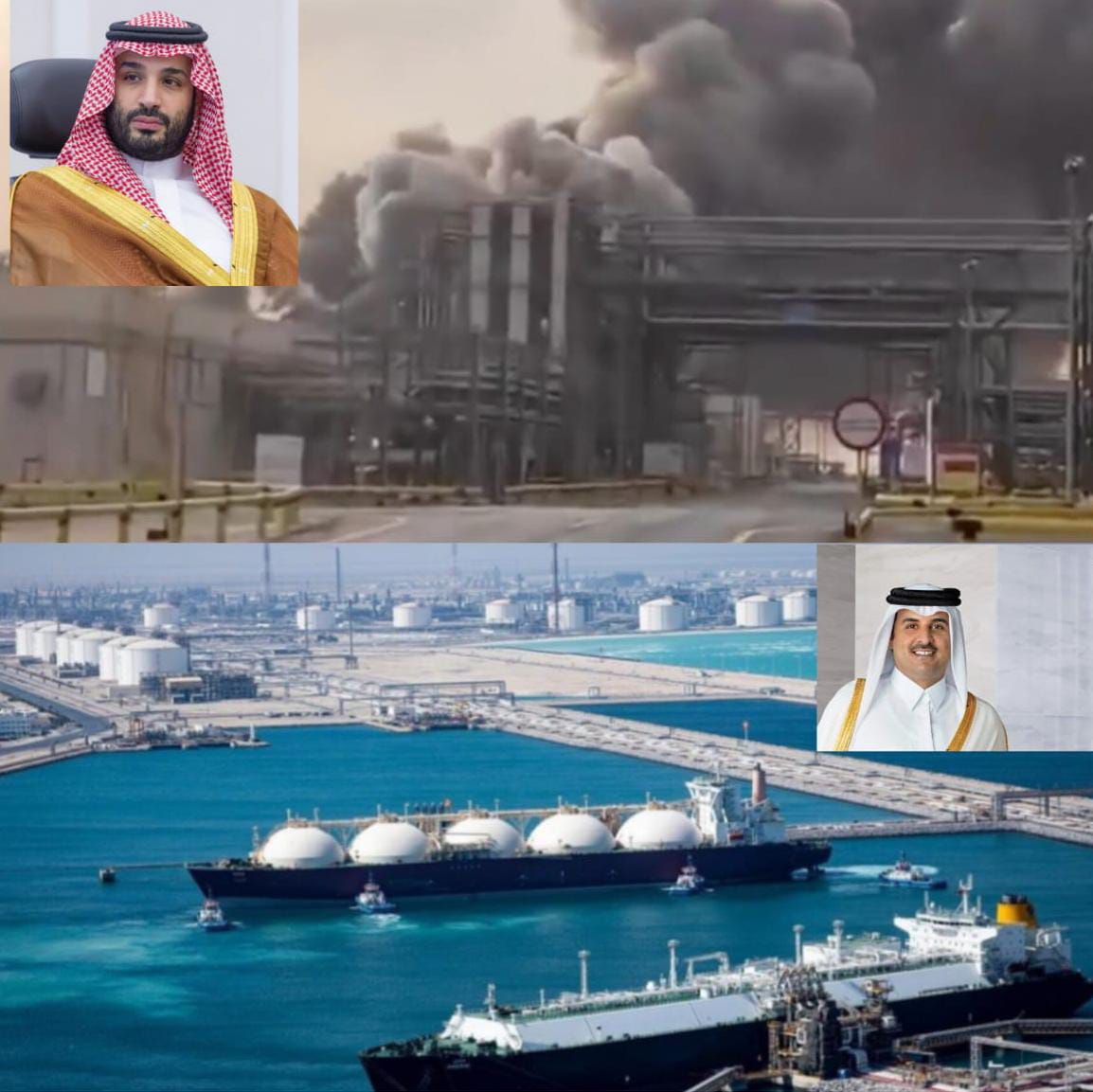
Iranian missile and drone attacks on Gulf energy infrastructure have forced both Saudi Aramco and QatarEnergy to stop operations at key facilities, escalating the regional conflict into a major global energy crisis.
The unprecedented halt in oil refining and liquefied natural gas (LNG) processing marks one of the most serious disruptions to international energy supply in recent years, with immediate financial consequences for Saudi Arabia and Qatar, and ripple effects across global markets.
Aramco Halts Oil Processing After Strike
Following Iranian drone strikes near critical Saudi oil infrastructure, Saudi Aramco suspended operations at major processing facilities, including capacity linked to the strategic Ras Tanura hub.
The stoppage affects an estimated 550,000 barrels per day in refining capacity. At an average oil price of $80 per barrel, this translates into roughly $44 million per day in potential revenue exposure.
A week-long halt could therefore approach $300 million in delayed or disrupted output.
Oil revenues account for nearly two-thirds of Saudi government income. Even temporary interruptions strain fiscal planning, increase defense expenditures, and create pressure on development projects under the Kingdom’s long-term economic reform program.
While higher oil prices triggered by supply fears may offset some losses, prolonged disruption could widen budget deficits and slow diversification efforts.
Qatar LNG Processing Stops at Ras Laffan
In a parallel development, QatarEnergy halted LNG production at facilities within Ras Laffan Industrial City after Iranian projectiles targeted areas near the industrial zone.
Ras Laffan is central to Qatar’s LNG exports, which account for nearly 20% of global LNG supply.
The suspension of operations removes a significant volume of gas from international markets, particularly affecting Europe and Asia.
For Qatar, each day of halted LNG production represents tens of millions of dollars in export revenue.
More broadly, the stoppage has: Driven sharp increases in European and Asian gas prices
- Heightened concerns over energy security
- Increased shipping and insurance costs in Gulf waters
- Contributed to volatility in global financial markets
Global Economic Consequences
The dual halt of Saudi oil refining and Qatari LNG processing represents a direct economic escalation of the conflict.
1. Energy Prices Surge
Oil and gas benchmarks climbed immediately following confirmation of operational suspensions, reflecting fears of prolonged supply constraints.
2. Inflation Risks Resurface
Higher fuel costs increase transportation, manufacturing, and food prices globally, threatening to reignite inflationary pressures.
3. Market Volatility Intensifies
Stock markets in energy-importing nations reacted nervously, while currencies in fuel-dependent economies faced renewed pressure.
4. Strategic Vulnerability Exposed
The targeting of energy hubs highlights the fragility of infrastructure that powers a large portion of the global economy.
A Conflict Expanding Beyond the Battlefield
By striking facilities operated by Aramco and QatarEnergy and triggering operational halts, Iran has shifted the confrontation beyond military engagement into the economic domain.
If the shutdowns remain short-lived, Saudi Arabia and Qatar may absorb losses estimated in the hundreds of millions.
However, extended suspensions could push losses into the billions and deepen instability in already fragile global energy markets.
The halt of operations at two of the world’s most critical energy suppliers underscores a stark reality: the Gulf conflict now carries consequences not only for regional security, but for the stability of the global economy itself.