
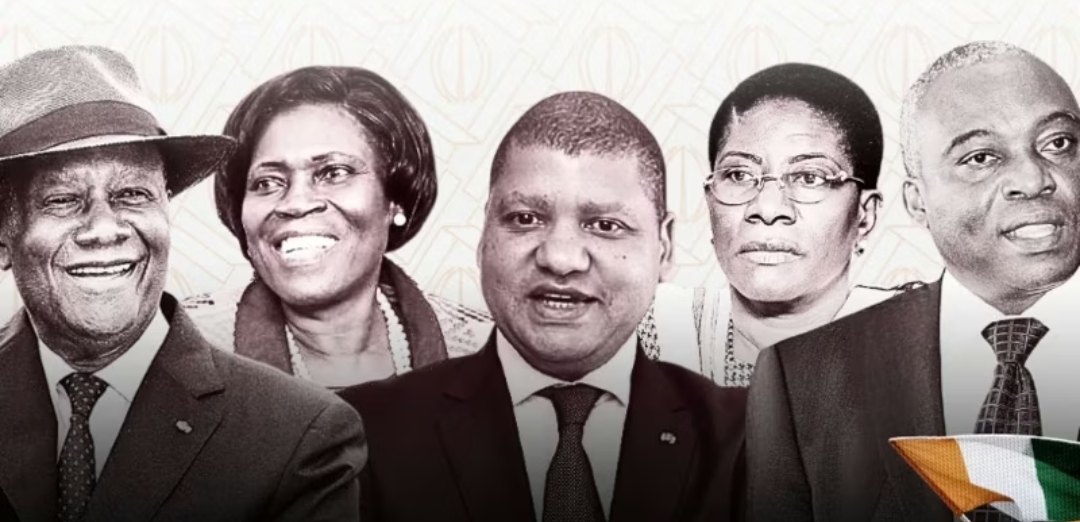
Voters in the Ivory Coast are casting ballots for president with incumbent Alassane Ouattara the overwhelming favourite to win controversial fourth term after two major opposition figures ware banned from contesting.
Nearly nine (9,000,000.00) million Ivorians will vote on Saturday from 8am to 6pm (08:00 to 18:00 GMT), choosing from a field of five contenders.
Strong opposition heavyweights, however namely Former President Laurent Gbagbo and former Credit Suisse CEO Tidjane Thiam have been barred from standing.
READ ALSO: Why Did Rumors of Military Coup in Ivory Coast Trend on Social Media and Mainstream News?
Laurent Gbagbo is facing criminal conviction and Tidjane Thiam for acquiring French citizenship.
Critics said the exclusion of key candidates has given Ouattara, 83, an unfair advantage and essentially cleared the way for his fourth term.
None of his four rivals represents an established party nor do they have the reach of the ruling Rally of Houphouetistes for Democracy and Peace (RHDP).
Agribusinessman and former Trade Minister Jean-Louis Billon, 60, hopes to rally backers from his former party, the Democratic Party, while former first lady Simone Ehivet Gbagbo, 76, is looking to garner votes from supporters of her ex-husband.
The election results are expected early next week, and observers forecast Ouattara to win the more than 50 percent needed to secure victory in the first round.
The octogenarian has wielded power in the world’s top cocoa producer since 2011 when the country began reasserting itself as a West African economic powerhouse.
Under the constitution, presidents may serve a maximum of two terms. Ouattara argues a major constitutional change implemented in 2016 “reset” his limit.
The decision has angered detractors. Opposition and civil society groups also complain of restrictions on Ouattara’s critics and a climate of fear.
About 44,000 security forces were deployed across the country to keep protests in check, especially in opposition strongholds in the south and west.
Some 8.7 million registered citizens aged above 18 will be eligible to vote this time, but the country has a low average voter turnout. In the 2020 elections, only 53 percent turned up at the polls.
The winning candidate must take an absolute majority of the votes; a second round will take place if no one clears a majority in the first.