
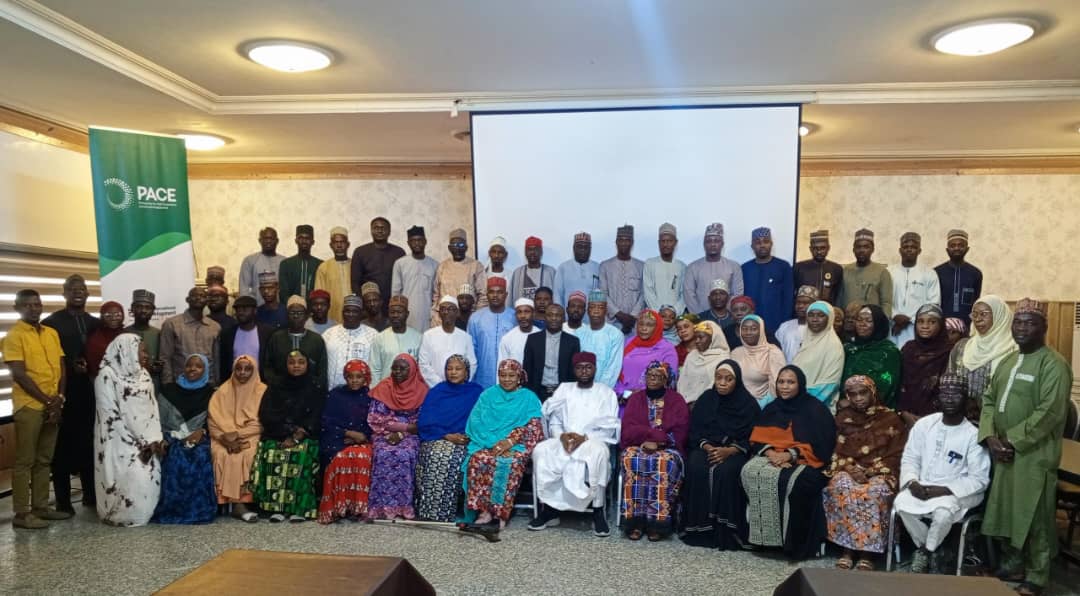
The Kano state government in collaboration with the Partnership for Agile Governance & Climate Engagement (PACE) project funded by the United Kingdom is currently engaging with stakeholders so as to review the just concluded climate change policy into bills that can be transmitted to Kano state house of assembly for laws.
The Kano state commissioner for Environment and Climate change Dr. Dahiru Muhammad Hashim while addressing stakeholders during a two-day workshop organized by PACE said the training will be focused on reviewing the Kano state climate change policy into a bill that will be communicated to Kano state house of assembly so as to make laws that will mitigate the climate change laws in the state.
According to the commissioner, Kano is already experiencing the realities of climate change through flooding, land degradation, waste pressures, urban heat, and growing stress on infrastructure and livelihoods.
READ ALSO: Kano Govt, FCDO Develop Actionable Plan to Integrate Climate Resilience in Health Policies
He said responding to these challenges requires more than projects or policies; it requires a clear legal framework that assigns responsibility, guides action across sectors, and ensures continuity and accountability over time.
“In January this year, Kano State took an important step with the approval of the Kano State Climate Change Policy. That policy sets out our vision, priorities, and strategic direction. We have since developed an Implementation Plan to translate that vision into coordinated actions across MDAs, local governments, and non-state actors. What we are doing here now is the next and most critical step: anchoring those commitments in law,” said Dahiru.
The Dr. Dahiru said it is essential to move climate action in Kano from intention to duty, from coordination to compliance, and from short-term interventions to long-term institutional practice.
“This is also why stakeholder engagement is central to this process. Climate action cuts across agriculture, transport, waste management, energy, land use, finance, and social inclusion. A law that does not reflect the operational realities of these sectors will not be implementable. By bringing MDAs, technical experts, legal practitioners, and partners together, we are ensuring that the obligations being drafted are realistic, context-appropriate, and enforceable.
During the workshop, stakeholders engagement included identifying sector-specific commitments and actions in line with the state’s climate policy and plan, examining climate enablers for different sectors, and proposing draft provisions on duties, obligations, responsibilities, and standards for inclusion in the Bill.
The Kano State Climate Change Policy, which provides the framework for the proposed legislation, was officially launched on 29 July 2025.
Discussions at the workshop focused on aligning the Bill with the state policy, as well as national and international climate frameworks, while addressing Kano’s specific environmental challenges and strengthening institutional arrangements to promote climate resilience, environmental management, and sustainable development.
Also, the Director of Climate Change at the Kano State Ministry of Environment and Climate Change Dr. Umar Saleh Anka said the proposed Bill would provide a clear statutory framework defining roles, responsibilities, and accountability for climate action across all relevant MDAs.
Anka explained that the legislation would establish sector-specific obligations, requiring MDAs to integrate climate change considerations into their core mandates, including mitigation, adaptation, and resilience measures in sectors such as agriculture, energy, transport, urban development, health, waste management, and education.
He added that the Bill would mandate the mainstreaming of climate change into planning and budgeting processes, requiring MDAs to incorporate climate risk assessments, emissions considerations, and resilience measures into policies, programs, annual work plans, and budget proposals.
Public investments, he noted, would be expected to align with the state’s climate priorities and long-term development objectives.
Anka further highlighted provisions for monitoring, reporting and compliance, noting that MDAs would be required to generate and submit climate-related data, report on implementation progress, and comply with standards issued by the designated climate authority.
“These measures, he said, would enhance transparency, improve data quality, and strengthen accountability across government. The central objective of the Kano State Climate Change Law is to protect climate action from policy discontinuity caused by political changes,” he said, adding that the Bill would establish permanent institutional arrangements, including a dedicated climate authority, to ensure continuity, technical oversight, and institutional memory beyond electoral cycles,” said the director.
He explained that by embedding long-term planning and statutory obligations, the Bill would make climate responsibilities, reporting requirements, and financing mechanisms legally binding, ensuring that successive administrations sustain and build upon existing climate actions.
Meanwhile, the State Team Lead of the UK foreign, Commonwealth and Development Office (FCDO) Mallam Auwal Hamza, underscored the importance of enacting a climate change law rather than relying solely on policies or regulations.
He noted that laws enforce compliance, impose penalties, and ensure continuity beyond political changes.
“Funding and institutional structures are more likely to be sustained where there is a law rather than regulations.
Auwal Hamza said “Environmental regulations are often sector-specific, but a climate change law integrates all climate actions under a single legal framework, preventing fragmentation”.
He outlined the legislative process, explaining that stakeholder engagement is the first step to gather perspectives, data, and review existing state policies and laws.
“A draft bill is then developed and reviewed by the Ministry of Environment and Climate Change, followed by a second draft presented at a plenary session for validation by a broad range of stakeholders.
“After adoption, the Bill is submitted to the State Executive Council for ratification, forwarded to the Ministry of Justice for drafting as an Executive Bill, and subsequently presented to the State House of Assembly for legislative considerations and passed into law.”
According to Hamza, the law will clarify which agencies citizens should engage with on climate-related issues, define government budgetary provisions for climate action, and establish rules to prevent violations.
On his part, the Technical Lead for the development of the Kano State Climate Change Bill, Mr. Huzi Mshelia Ishaku, said the proposed legislation places strong emphasis on transparency, monitoring, enforcement, and inclusive governance, adding that the proposed Bill would provide for clear mechanisms for monitoring and reporting climate-related activities and mandates designated authorities to undertake public awareness, engagement, and dissemination of climate information.
He added that the Bill would require the submission of an annual report to the state Executive, which the Kano State House of Assembly could rely on for oversight, including its investigative powers over public expenditure.
Mr. Huzi also noted that the proposed Bill would guarantee access to information by placing obligations on relevant authorities to make such information available upon request.
He said the composition of the governing body under the Bill would include representatives from different segments of society to ensure inclusiveness and broad participation in decision-making.
He stressed the need to avoid unintended consequences in creating new institutions that could generate additional challenges rather than address existing gaps.
While noting that some states have largely domesticated the National Climate Change Act of 2021, Mr. Huzi said the Kano State Climate Change Bill would be deliberately tailored to reflect the state’s local circumstances and peculiarities, guided by its climate change policy.
However, a representative of the private sector, Mr. Najeeb Yunusa Hassan, General Manager, Agricultural Services, Dantata Foods & Allied Products Company Ltd, raised concerns about the timing of the Bill.
According to him, since the launch of the State Climate Change Policy, insufficient information has been disseminated to farmers and the general public.
He said many stakeholders struggle to distinguish between climate change, mitigation and adaptation, noting that most private sector actors, particularly in agriculture, require practical alternatives before being asked to change existing practices.
“For instance, if farmers are asked to reduce the use of synthetic agrochemicals and fertilizers, what alternatives are being provided?” he asked.
“Currently, the state does not offer reliable or affordable substitutes for these products.”
Stakeholders at the event worked with a shared commitment to refine the proposed Bill in a manner that balances strong legal obligations with practical implementation realities, ensuring effective and inclusive climate governance for Kano State.