
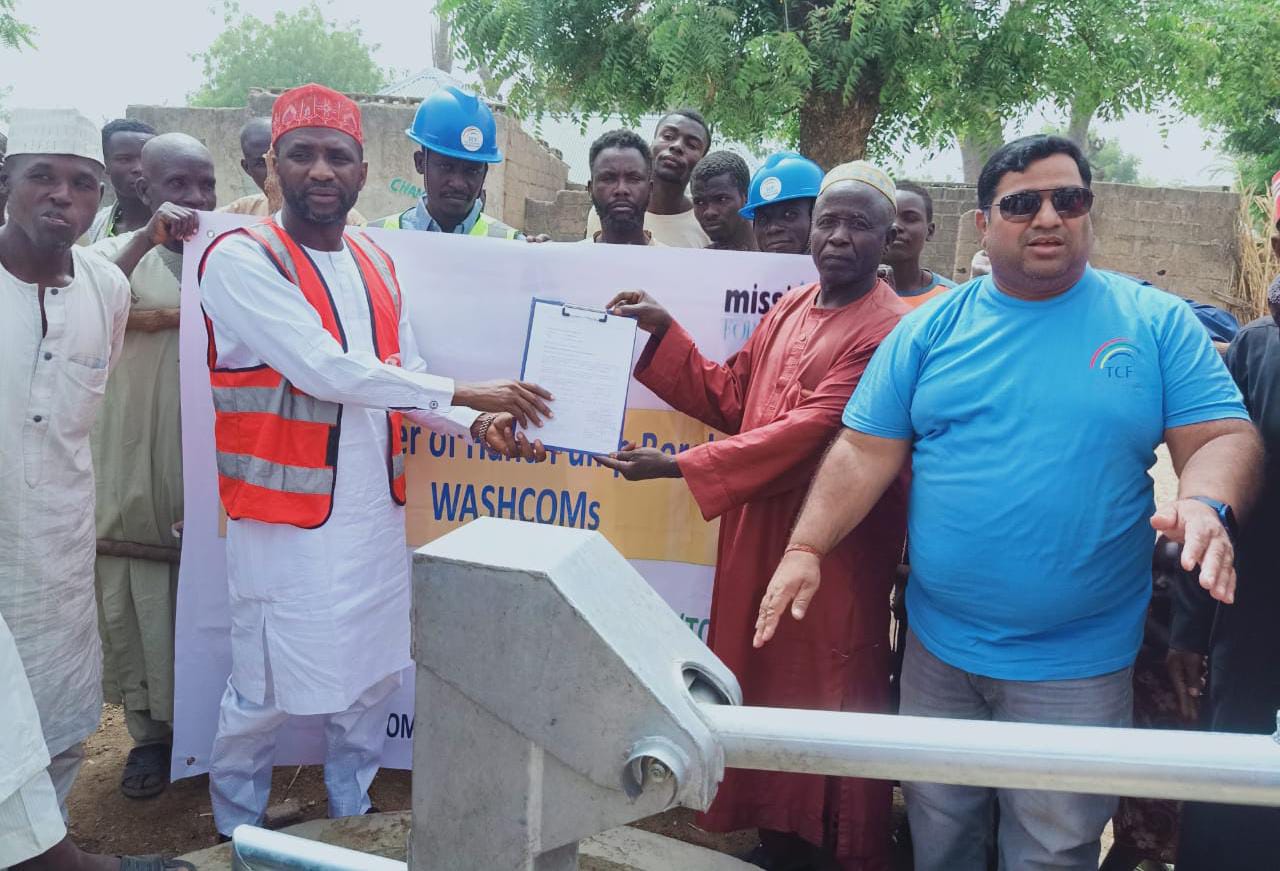
The Kano State Rural Water Supply and Sanitation Agency (RUWASA) has decommissioned ten hand pump boreholes in Takai and Madobi Local Government Areas of Kano State, previously reactivated by the Indian-based Tulsi Foundation, and formally handed them over to community leaders and residents.
The boreholes, which had been non-functional for years, were restored to working condition through the Tulsi Foundation’s intervention, providing essential potable water to residents in the affected communities.
The Managing Director of RUWASA, Engineer Shamawilu Abdulqadir Isah, personally led the handover ceremony in Jalaba Community, Takai Local Government Area, commending the foundation for its contribution.
“We appreciate the Tulsi Foundation for reactivating these boreholes and ensuring residents have access to clean water. Their intervention demonstrates a strong commitment to improving rural water supply,” Engineer Isah said.
He further assured that the Kano State Government has budgeted funds in 2026 for the construction of new boreholes, aiming to expand access to safe water across rural communities.
“The handover of these boreholes to community leaders ensures proper local management, while the state government remains committed to constructing additional boreholes in 2026 as allocated in the budget,” he added.
Speaking at the ceremony, Santosh Kumar Sahoo, Officer in Charge at the Tulsi Foundation, reaffirmed the organization’s commitment to providing water and sanitation services to rural communities.
“Our aim is to supply hygienic drinking water to communities in Takai and Madobi and ensure residents have access to safe and reliable water. We will continue our humanitarian efforts across the state,” Sahoo said.
Community leaders and residents expressed gratitude, noting that local ownership of the boreholes will help ensure proper maintenance and sustainability. Women and children, often most affected by water scarcity, particularly welcomed the renewed access.
RUWASA emphasized that collaboration between government agencies and non-governmental organizations like the Tulsi Foundation is critical in addressing rural water challenges and achieving long-term community benefits.