
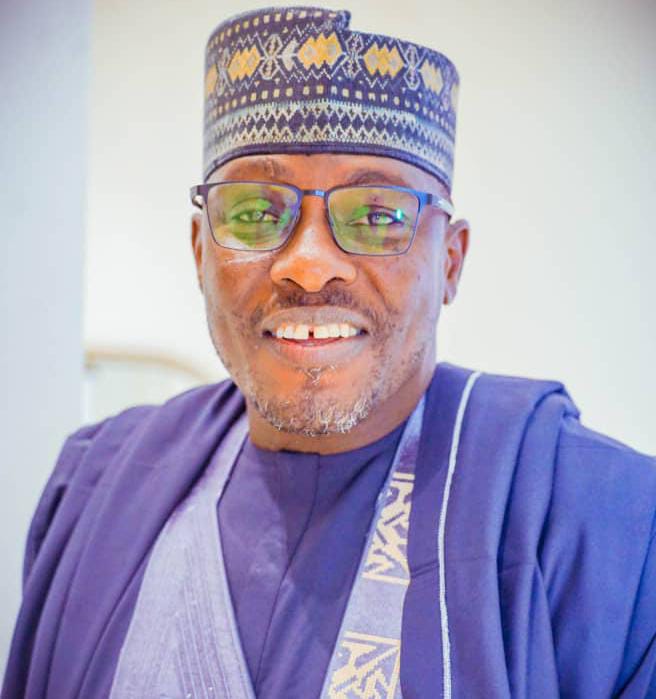
BY: DR. HUSSAIN JARMA
Truth has a way of attracting tension. In every society, institutions built on discipline and direction inevitably face doubt, distortion, and deliberate distraction. As a Hausa proverb wisely reminds us, the wind may blow fiercely, but the rock remains resolute. It is within this context that I choose to speak about Maryam Abacha American University of Nigeria (MAUN), Kano.
Today, MAUN stands as one of Nigeria’s most structured and reputable private universities not by accident, but through a consistent commitment to quality, discipline, and character.
I have followed the university’s growth closely, and I consider it necessary to state clearly that the recent attempt to drag the institution into controversy is neither innocent nor accidental.
The matter in question began as an internal disciplinary issue involving a female student and some lecturers, following a clear breach of established university regulations. MAUN responded strictly in line with its rules and procedures.
Unfortunately, what was meant to serve as a corrective process was manipulated into a public spectacle. A selectively edited video was circulated, carefully crafted to provoke outrage rather than present the truth.
When the issue reached Professor Adamu Gwarzo, the founder of MAUN, he was outside the country. Yet distance did not diminish responsibility.
He returned promptly, constituted a committee, and invited all affected parties lecturers, parents, and students to ensure that every perspective was heard. This response reflects a principle I strongly believe in: education without justice is hollow, and authority without fairness is fragile.
What deeply concerned me, however, was the subsequent decision to submit a petition to the Kano State Public Complaints Commission. I state this without hesitation: the petition is deeply political and driven by a hidden agenda.
This concern is further reinforced by the fact that a competent court in Kano State had already restrained the commission from interfering in the matter, having declared the case sub judice. When legal clarity is ignored, motives deserve scrutiny.
Beyond this controversy, I feel compelled to testify to aspects of Professor Gwarzo’s leadership that are often overlooked. This is a man who does not merely speak about educational development he actively finances it. I know, as a matter of fact, that he has personally sponsored the education of numerous students from his own resources, without publicity or any expectation of praise.
I am also aware of cases involving orphans children who lost their fathers whom he took under his direct responsibility to ensure that their education did not end with their parents’ passing. In another instance, some students were forced to suspend their studies after the Kano State Government demolished rental shops they depended on for income. When these students approached Professor Gwarzo, he did not delay action.
He immediately assumed responsibility for their tuition and ensured their return to MAUN, where they were already enrolled.
This pattern of generosity is consistent. Recently, Professor Gwarzo supported the establishment of a French language learning centre, offered free of charge, to broaden the intellectual and international exposure of young Nigerians. I often say and I repeat it here that when you build language, you build thought; and when you build thought, you build society.
Despite these visible commitments, attempts persist to obscure the university’s image. Yet truth does not retreat in the face of propaganda. MAUN has reached a stage where it cannot be shaken by political petitions, edited videos, or calculated conspiracies.
History, in my view, does not record noise; it records contribution. By every meaningful measure, MAUN has moved beyond this moment. Those seeking to damage its reputation have arrived late to a journey already defined by progress and purpose.
This is my testimony. And I stand by it.