
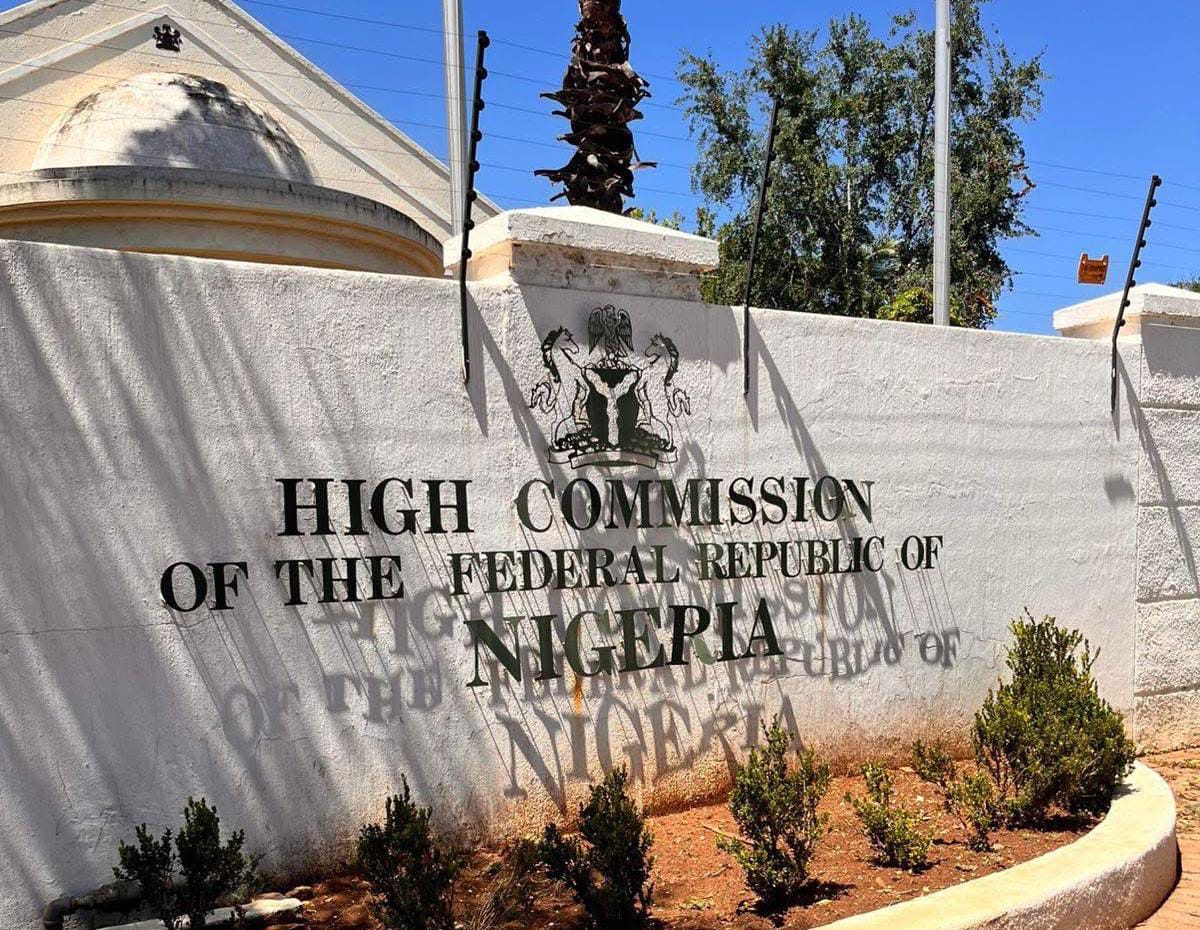
The Nigerian High Commission in Pretoria, South Africa, was disconnected from electricity by the City of Tshwane over unpaid utility bills, drawing public attention to financial management issues within Nigeria’s foreign missions.
The disconnection was confirmed by the Executive Mayor of Tshwane, Nasiphi Moya, who announced the development in a post on her verified social media handle.
According to her, the action followed the High Commission’s failure to settle outstanding electricity charges owed to the municipality.
Mayor Moya said the move was carried out under the city’s #TshwaneYaTima campaign, a debt-recovery initiative targeting individuals, businesses, and institutions with unpaid municipal service bills.
She noted that the Nigerian High Commission was treated like any other debtor under the policy.
“The City has disconnected electricity at the High Commission of the Federal Republic of Nigeria due to unpaid utility bills,” the mayor stated, sharing an image of the premises to underscore the enforcement action.
The development sparked reactions both in South Africa and Nigeria, with many expressing concern that a diplomatic mission could be subjected to such a public utility shutdown.
Observers noted that while municipal authorities are within their rights to enforce payment, such incidents can affect diplomatic operations and national image.
In a follow-up post, Mayor Moya later confirmed that electricity supply had been restored after the Nigerian mission settled its outstanding debt.
She thanked the High Commission for complying and said reconnection was carried out in line with standard municipal procedures.
The temporary blackout has reignited calls for improved financial oversight of Nigerian embassies and high commissions abroad.
Analysts argue that regular payment of utilities, rent, and local obligations is essential to maintaining the dignity and effectiveness of Nigeria’s diplomatic presence.
Experts have urged the Federal Government of Nigeria, through the Ministry of Foreign Affairs, to strengthen monitoring mechanisms for foreign missions, ensure timely release of operational funds, and establish automated payment systems to prevent similar occurrences.