
BY: UMAR IDRIS SHU’AIBU, KANO
In every thriving democracy, communication remains the vital bridge between the government and the governed. A visionary administration understands this and invests not only in physical infrastructure and policies but also in credible, professional media management.
Competent media managers are essential to shaping narratives, clarifying intentions, and safeguarding an administration’s image against misinformation and public misinterpretation.
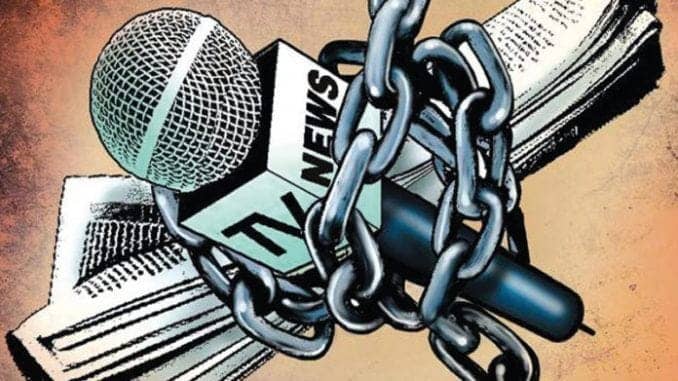
Recent developments in Kano have once again brought this issue into sharp focus, particularly following the arrest and interrogation of popular broadcast journalist, Ibrahim Ishaq, widely known as Dan’uwa Rano.
The journalist was reportedly questioned over alleged defamation and the operation of an online television channel without a valid license from the National Broadcasting Commission (NBC).
The episode was uncalled for, as it created unnecessary tension within Kano’s media space and raised legitimate concerns about press freedom and the government’s handling of criticism. Instead of fostering dialogue and responsible engagement, the decision to subject a journalist to police grilling appeared reactive and heavy-handed, an avoidable situation if a robust communication framework were in place.
Equally, the entire scenario was uncolourful, a distraction that did little to boost public confidence in the administration. In a digital era where perception influences governance as much as performance, the absence of proactive communication can easily lead to reputational damage that even well-intentioned policies cannot undo.
Governments must therefore recognize that the media is not an adversary but a critical partner in nation-building.
A competent media manager interprets government policies clearly, communicates decisions responsibly, and provides accurate information swiftly by ensuring that facts are not overtaken by rumours or propaganda.
The issue of defamation allegedly raised against the journalist brings a more fundamental question, did the alleged act truly occur, or is this an attempt to silence accountability?
According to an earlier report by Daily Nigerian, the Independent Corrupt Practices and Other Related Offences Commission (ICPC) recovered over ₦1.1 billion from Abdullahi Ibrahim Rogo, the Director-General of Protocol at the Kano State Government House, as part of its investigation into alleged misappropriation of public funds.
The Economic and Financial Crimes Commission (EFCC) is also said to be probing related transactions linked to fictitious contracts and alleged diversions of public funds through corporate and personal accounts.
However, the Kano State Government has strongly denied these corruption allegations, describing them as politically motivated.
In a statement signed by the Governor’s spokesman, Sanusi Bature Dawakin Tofa, the government dismissed the reports as “a work of fiction aimed at tarnishing the image of government officials.”
The situation now rests in the court of public opinion. Citizens, who are ultimately the judges of governance, will continue to assess those entrusted with managing public affairs, measuring words against actions, and promises against performance.
The unfolding episode in Kano offers a vital lesson for all levels of government, as the need for strategic communication and competent media management cannot be overstated.
Professional media handlers not only manage crises but also prevent them. They uphold transparency, maintain trust, and build bridges between leadership and the people.
Lastly, governance thrives not only on policies and projects but also on the confidence born out of clear, honest, and timely communication. When governments fail to manage information effectively, they risk losing both credibility and the trust of those they are meant to serve.
Umar Idris Shuaibu is the publisher ‘The Historica Nigeria’ and writes from Kano.
The views expressed in this article are the author’s own and do not in anyway or necessarily reflect the view of GLOBAL TRACKER.