
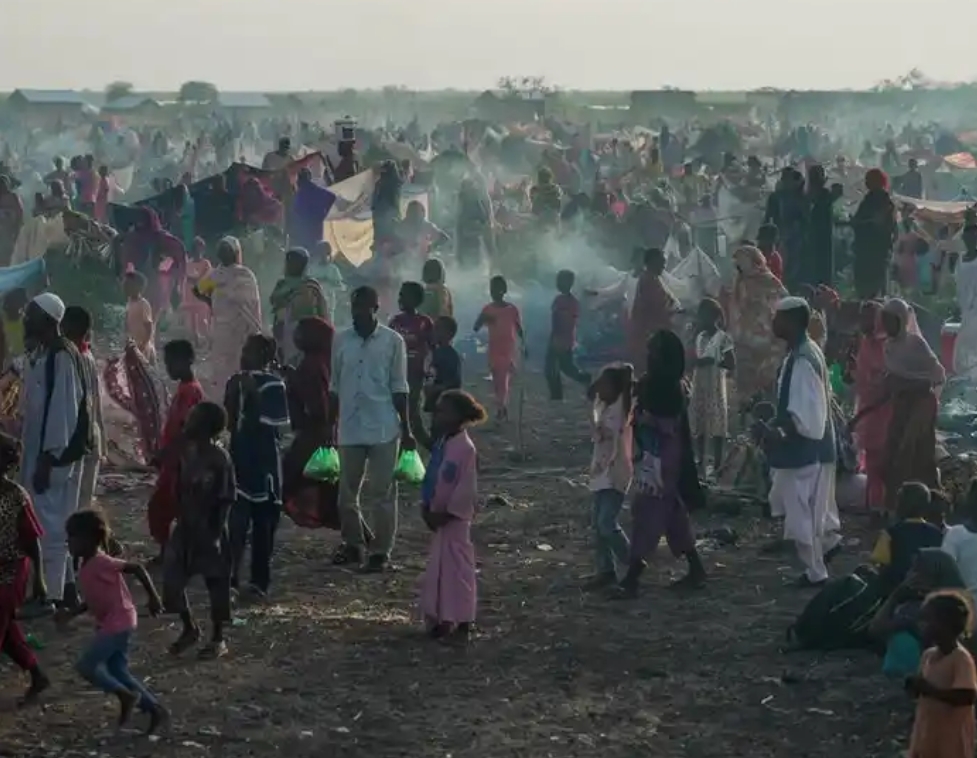
Sudan is facing a severe humanitarian crisis, with over 33 million people, approximately two-thirds of the population, requiring assistance.
The ongoing conflict has resulted in massive displacement, with nearly 13.6 million people uprooted, including 9.3 million internally displaced and 4.3 million seeking refuge in neighboring countries.
The conflict, which began in April 2023, pits the Sudanese Armed Forces (SAF) against the paramilitary Rapid Support Forces (RSF), former allies who turned on each other in a violent struggle for power following the collapse of Sudan’s fragile political transition.
READ ALSO: European Union Airlifts 8 Plane Loads of Aid as Humanitarian Crisis Looms in Sudan
Despite repeated international mediation efforts, no lasting ceasefire has been achieved, and fighting continues across large parts of the country.
In recent weeks, clashes have intensified in Darfur and parts of Kordofan, where civilians have borne the brunt of the violence.
Reports from humanitarian groups and church-linked agencies indicate that more than 100 people were killed in a single week of attacks in Darfur alone, with entire communities forced to flee amid shelling, looting, and ethnic violence.
The human cost of the war is staggering. According to UN agencies, more than 33 million people — over two-thirds of Sudan’s population — now require humanitarian assistance.
Displacement has reached Unprecedented Levels.
Around 13.6 million people have been uprooted from their homes, making Sudan the largest displacement crisis in the world of these, more than nine million are internally displaced, while millions more have sought refuge in neighboring countries such as Chad, South Sudan, Egypt, and Ethiopia.
Sudan’s health system has all but collapsed.
Over a third of medical facilities are no longer functioning, and outbreaks of cholera, malaria, and measles are spreading in overcrowded displacement camps.
Women and children are especially vulnerable, with the UN warning that female-headed households are suffering disproportionately from hunger and lack of access to basic services.
Parts of the conflict, particularly in Darfur, have been marked by widespread atrocities.
Human rights groups have documented mass killings, sexual violence, and ethnically targeted attacks, raising renewed fears of crimes reminiscent of the Darfur genocide of the early 2000s.
Politically, the situation remains fragile.
Sudan’s internationally recognized authorities have made a symbolic return to Khartoum after operating from Port Sudan for more than two years, but their control remains limited and contested.
Meanwhile, reports of new arms supplies to the Sudanese army underscore concerns that the conflict may become further entrenched rather than resolved.
International aid agencies warn that their efforts are being hampered by insecurity, bureaucratic restrictions, and funding shortfalls.
Humanitarian corridors are frequently blocked, and access to populations most in need remains severely constrained.