
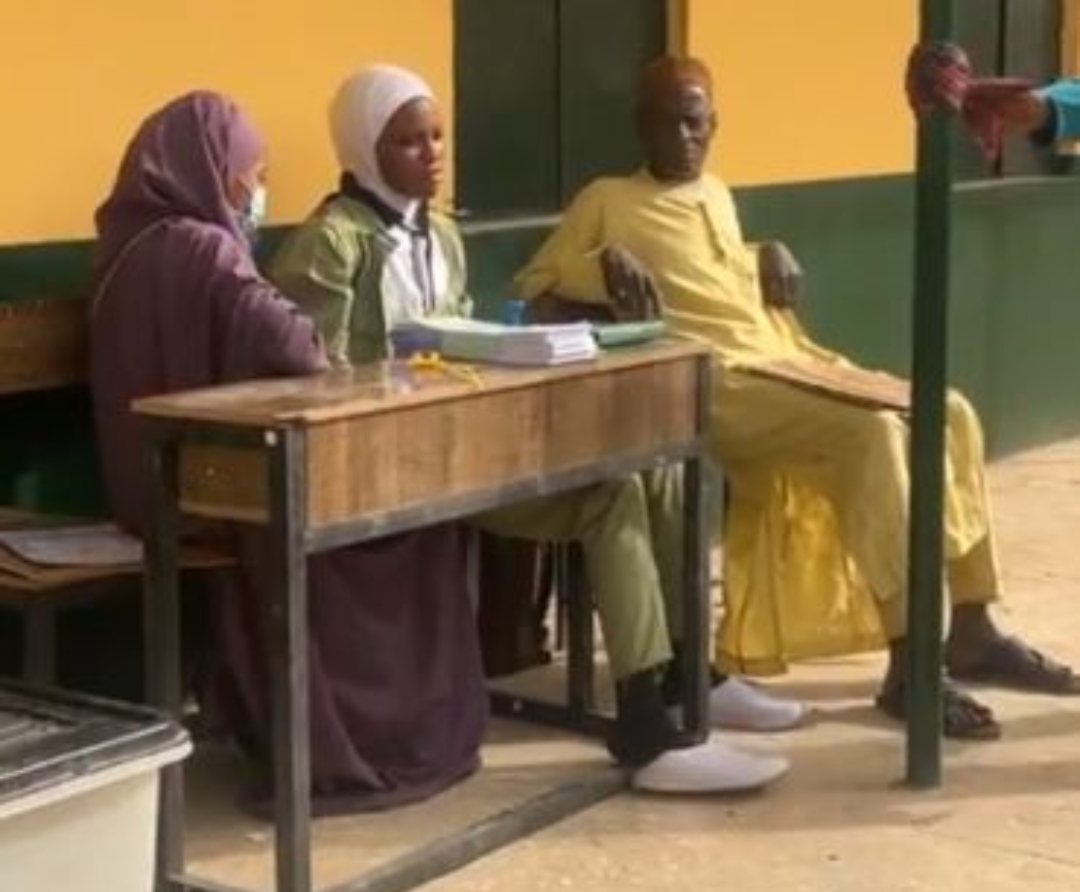
Voter apathy was on full display today at 010 Kankarofi Polling Unit in Kano municipal local government area of Kano State, where just 9 out of 478 registered voters exercised their franchise in the ongoing House of Assembly by-election.
The extremely low turnout has raised concerns among political analysts, civil society groups, and residents of the area about voter engagement and the effectiveness of electoral sensitization.
By mid-afternoon, accredited Presiding Officers at Kankarofi confirmed that only 9 citizens had cast their votes, a turnout of less than 2 percent of the total registered voters in the unit.
READ ALSO: INEC Picks Feb 20, 2027 for Presidential Election
The figure stands in stark contrast to expectations, especially given the effort by the Independent National Electoral Commission (INEC) and security agencies to ensure a peaceful and credible election.
Multiple voters interviewed cited reasons ranging from limited awareness of the by-election’s importance, ongoing Ramadan observances, to concerns over movement restrictions and lack of incentives to participate.
“I came around late thinking a lot of people would be here,” said one registered voter who declined to give his name. “But I saw few people and felt there was no energy here today.”
Similarly, Umar Uba Ali, who voted at the Kankarofi polling unit around 9:00 a.m., noted that only a few voters were present at the time.
“When I arrived to vote, there were very few of us,” Ali said. “The process was smooth and peaceful, but the turnout was extremely low compared to what we normally expect.”
In Ungogo Local Government Area, low voter turnout was widely attributed to the boycott by major political parties, including the New Nigeria Peoples Party (NNPP) and the Peoples Democratic Party (PDP).
Across several polling units in Ungogo, only a small number of voters were observed exercising their civic rights.
Residents said the absence of key political parties significantly dampened enthusiasm, as supporters of the boycotting parties chose to stay away from the polls.
At Jangaro polling unit in Ungogo, turnout was described as average. A voter, Sadiq Salisu, said some residents arrived early to vote but acknowledged that participation in other areas was affected by the boycott.
Local party agents and observers at the unit described the turnout as disappointing. A representative of one political party, speaking on condition of anonymity, said that while by-elections often attract lower turnouts than general elections, the situation at Kankarofi was unusually poor.
“We expected more citizens to take interest in shaping the representation of their community,” the agent said. “This level of turnout reflects deeper issues about political awareness and community engagement.”
Civil society groups monitoring the election echoed the sentiment, noting that similar low participation had been reported in several other units across the state.
“Election stakeholders and civic educators have to step up their efforts,” said a representative of a civic organisation. “Voters need to understand that every seat matters, especially in shaping local governance.”
INEC and Security Measures
INEC officials at the unit confirmed the turnout figures but said reports from other units were still being collated as voting continues across the state. Security personnel assured residents that the environment was safe for voting, but acknowledged that voter attendance in Kankarofi was significantly lower than expected.
“We are here to ensure that the election proceeds peacefully,” a security officer at the unit stated. “However, we have noticed lower voter attendance in this location compared to previous elections.”
Broader Implications for Kano Politics
Today’s by-elections, taking place in selected constituencies across Kano, were intended to fill vacancies in the Kano State House of Assembly. With elections happening amid a religious period and tight security measures, concerns have grown that voter turnout across the state may remain subdued.
Political analysts suggest that if low turnout persists, it could raise questions about public trust in elected institutions and the effectiveness of voter mobilization strategies ahead of the 2027 general elections.
Meanwhile, Residents and stakeholders alike are calling for renewed educational campaigns and community engagement initiatives to ensure greater participation in future electoral processes.