
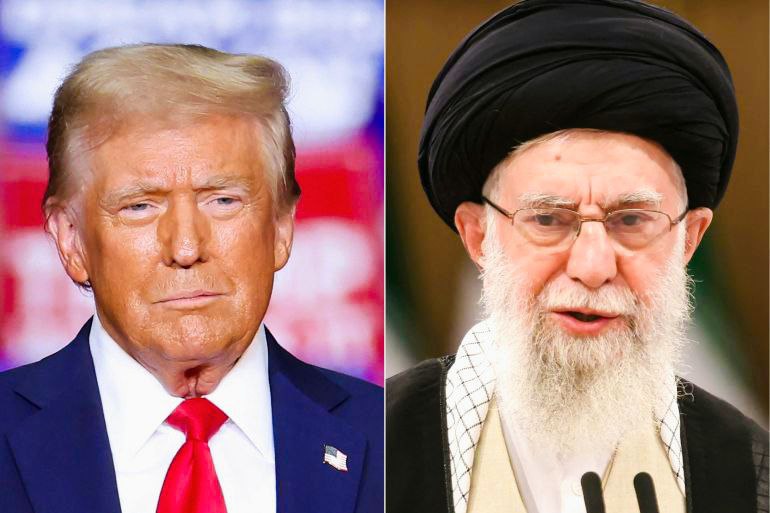
Talks between the United States of America and the Islamic Republic of Iran have effectively collapsed, deepening an already dangerous standoff marked by military threats, regional warnings and a growing risk of wider conflict.
According to officials familiar with the negotiations, the planned diplomatic discussions between senior US and Iranian officials were suspended after sharp disagreements over the format, agenda and location of the talks.
The breakdown comes amid heightened tensions following US President Donald Trump’s hard-line rhetoric toward Tehran and Iran’s ongoing crackdown on nationwide protests.
READ ALSO: Iran Issues Stark Warning to Gulf States as US – Tehran Tensions Spike
Iran has since suspended direct communication between its foreign minister, Abbas Araqchi, and US Special Envoy Steve Witkoff, signaling a serious freeze in diplomatic engagement.
While neither side has formally declared diplomacy dead, officials on both sides acknowledge that negotiations are at their most fragile point in years.
Iran Issues Regional Warnings
As talks faltered, Iran issued stark warnings to Gulf Arab states hosting US military forces, making clear that American bases in the region would be considered legitimate targets if the United States attacks Iran.
Tehran has cautioned that future retaliation would not resemble past, carefully calibrated strikes designed to avoid casualties, raising fears among Gulf governments of being drawn into a broader war.
Several Gulf states, including the United Arab Emirates, have publicly ruled out allowing their territory or airspace to be used for any attack on Iran, reflecting deep concern about potential retaliation.
Qatar, which hosts the largest US military base in the Middle East, has also emphasized de-escalation and diplomacy.
The United States maintains a substantial military presence across the Middle East, with an estimated 40,000 to 50,000 troops stationed in the region.
Major bases include Al Udeid Air Base in Qatar, home to U.S. Central Command’s forward headquarters; Naval Support Activity Bahrain, which hosts the U.S. Navy’s Fifth Fleet; and key installations in Kuwait, the UAE, Saudi Arabia, Iraq and Jordan.
Military analysts warn that this widespread footprint, while intended as a deterrent, also creates multiple flashpoints if hostilities erupt.
Experts caution that a direct US and Iran conflict would almost certainly expand beyond bilateral strikes. Iranian-aligned militias in Iraq and Syria, Hezbollah in Lebanon, and Houthi forces in Yemen could all become involved, opening multiple fronts across the region.
Shipping through the Strait of Hormuz, a vital artery for global oil supplies could be disrupted, sending energy prices soaring and shaking global markets.
The humanitarian consequences would also be severe as civilian populations across the region could face displacement, infrastructure damage and prolonged instability, while Iran itself is already under strain from economic crisis and domestic unrest.
Despite the collapse of the latest talks, diplomatic channels have not been fully severed. Regional mediators, including Oman and other Gulf states, are reportedly exploring ways to revive dialogue.
However, with rhetoric hardening and military postures intensifying, analysts warn that the margin for miscalculation is shrinking rapidly.
For now, Washington and Tehran remain locked in a tense standoff one where diplomacy is faltering, deterrence is being tested, and the consequences of failure could reverberate far beyond the Middle East.