
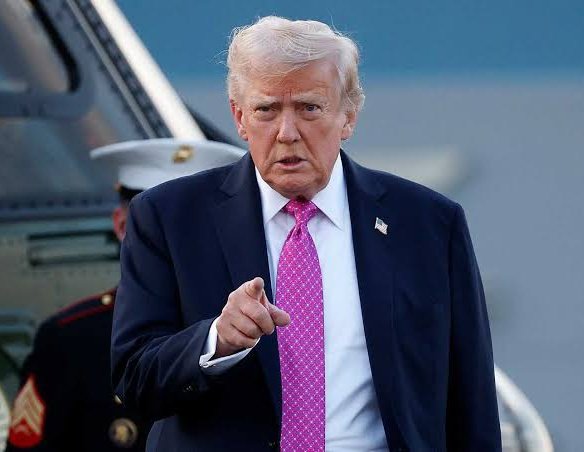
Several of the United States’ closest allies have declined to participate in President Donald Trump’s newly launched “Board of Peace,” an international body he says is designed to oversee efforts to end the war in Gaza and promote broader global conflict resolution.
Among the countries that have publicly refused or distanced themselves from the initiative are France, the United Kingdom, Germany and Spain, underscoring a growing divide between Washington and key European capitals over the structure and legitimacy of the new body.
Spain was the most explicit in its rejection.
READ ALSO: BREAKING: Hamas Confirms Death of Its Armed Wing Spokesperson, Gaza Chief
Spanish Prime Minister Pedro Sánchez confirmed that Madrid would not join the Board of Peace, saying Spain supports peace efforts in Gaza but prefers to work through established multilateral institutions such as the United Nations rather than a new, U.S led framework.
The United Kingdom also declined to sign the board’s founding charter.
British officials cited concerns over governance, transparency and the participation of countries with controversial records, stressing that London remains committed to diplomacy conducted through the UN and other traditional alliances.
In France, government officials said Paris supports a ceasefire and humanitarian relief in Gaza but has no intention of joining an initiative that could duplicate or undermine existing international mechanisms.
French diplomats have emphasized the primacy of the UN Security Council in managing international peace and security.
Germany has taken a similarly cautious stance, neither signing the charter nor committing to future participation.
German officials have expressed reservations about the board’s legal authority and its long-term role, signaling reluctance to endorse a structure operating outside established international norms.
Other European nations, including Italy, Norway, Sweden and Slovenia, have also remained outside the initiative, while several have indicated they were never formally consulted before its launch.
However, about 18 countries have indicated interest of joining the board.
They are Argentina, Armenia, Azerbaijan, Bahrain, Bulgaria, Hungary, Indonesia, Jordan, Kazakhstan, Kosovo, Mongolia, Pakistan, Paraguay, Qatar, Saudi Arabia, Turkey, United Arab Emirates, Uzbekistan and Morocco.
Meanwhile, the reluctance of major Western powers contrasts sharply with Trump’s claim that the Board of Peace has secured backing from dozens of countries, primarily from the Middle East, Eastern Europe, Central Asia and parts of the Global South.
Critics argue that the absence of key NATO and EU members raises questions about the board’s credibility and effectiveness.
Supporters, however, say the initiative reflects frustration with existing institutions and represents an alternative path to conflict resolution.
As fighting and humanitarian crises continue in Gaza, the diplomatic split highlights deeper disagreements over who should lead peace efforts and how those efforts should be structured in an increasingly fragmented global order.