
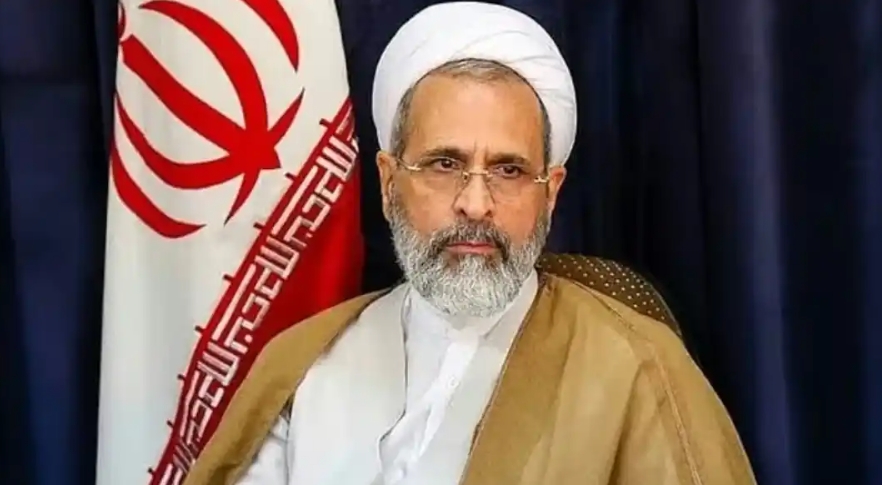
In the wake of the confirmed death of Ali Khamenei, Iran has swiftly appointed Alireza Arafi as the interim Supreme Leader, placing him at the center of the country’s leadership during an extremely volatile period.
Arafi now heads a temporary leadership council tasked with steering the nation through crisis until a permanent successor is chosen.
READ ALSO: BREAKING: Iran Confirms Death of Supreme Leader Ayatollah Ali Khamenei
Ayatollah Alireza Arafi, a 67-year-old senior cleric, was born in Meybod in central Iran’s Yazd province and has spent most of his life within the heart of the country’s religious establishment.
He comes from a clerical family with deep roots in the Islamic Republic’s leadership structure, and his appointment reflects his long-standing integration into Iran’s theocratic system.
Before assuming the interim supreme leadership role, Arafi held several influential posts:
Member of the Guardian Council: the powerful constitutional body that vets legislation and screens political candidates.
Member of the Assembly of Experts: the clerical body responsible for selecting the Supreme Leader.
Head of Iran’s seminaries (hawzas): placing him at the center of religious education and clerical training.
Former President of Al-Mustafa International University, a major institution for Islamic scholarship.
His career trajectory shows a blend of theological prestige and administrative experience that positioned him as a trusted figure within Iran’s clerical hierarchy.
Observers say Arafi was already considered a possible contender for top leadership even before the recent crisis due to his deep institutional integration and longstanding ties to the regime’s power structures.
Interim Leadership in a Time of Crisis
Under Article 111 of Iran’s constitution, when the office of Supreme Leader becomes vacant, a three-member interim leadership council assumes authority until the Assembly of Experts elects a permanent successor.
Arafi has been chosen as the clerical jurist on this council, which also includes: President Masoud Pezeshkian and Chief Justice Gholam-Hossein Mohseni-Ejei.
Although the council shares leadership responsibilities, Arafi’s status as the sole senior cleric gives him a unique symbolic and practical authority in Iran’s theocratic system, where religious legitimacy remains central to state power.
Arafi’s interim leadership comes at an intensely unstable moment.
Iran is reeling from escalating conflict with the United States and Israel, with military strikes and retaliations marking one of the most dangerous confrontations in decades.
The new interim leader must navigate: National security and military command decisions amid ongoing hostilities, Internal political stability, as protests and factional tensions simmer across Iranian society.
International diplomacy; with global powers closely watching the transition.
His deep establishment credentials may help preserve continuity, but analysts caution that the coming weeks will be critical as the Assembly of Experts prepares to elect a permanent Supreme Leader, a decision with far-reaching consequences for Iran’s direction, both domestically and abroad.
Iran now faces a delicate balance between stability and transformation. As interim ruler, Arafi’s mandate is to maintain order and continuity.
However, with the Assembly of Experts set to convene to choose a permanent successor, Iran’s political landscape could shift in unpredictable ways especially as it deals with external threats, internal dissent, and immense international pressure.