
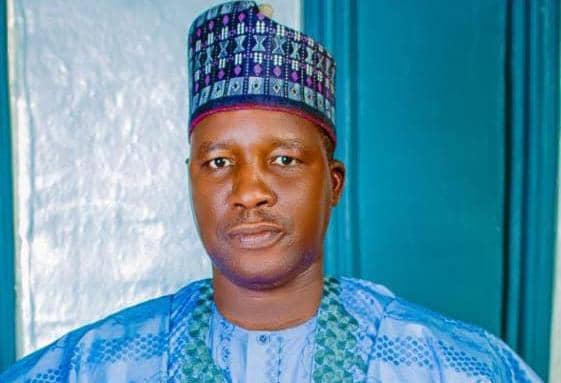
BY: DR. USMAN MUHAMMAD SHANAWA
For decades, Nigeria’s healthcare system has faced a familiar set of challenges: inadequate infrastructure, limited access to specialised medical services, weak primary healthcare facilities, shortages of healthcare personnel and the rising financial burden of treatment on ordinary Nigerians.
Against this backdrop, the Federal Government under President Bola Ahmed Tinubu has pursued interventions across different levels of the healthcare system, ranging from primary healthcare and general hospitals to specialised tertiary facilities, digital health, emergency care and healthcare financing.
For Dr. Usman Muhammad Shanawa, a Consultant Obstetrician and Gynaecologist and specialist in Gynaecological Oncology with more than two decades of experience in clinical practice and healthcare management, the interventions deserve to be examined as part of a broader attempt to strengthen Nigeria’s healthcare architecture.
READ ALSO: “Arewa Fully Ready To Re-elect Tinubu in 2027” — Kwankwaso
Dr. Shanawa’s assessment moves across the three levels of healthcare delivery, ranging from primary, secondary and tertiary, while drawing particular attention to diagnostics, maternal healthcare, hospital infrastructure, health insurance and the growing role of technology.
For him, the real significance of healthcare reform lies not simply in the announcement of new projects, but in whether the changes improve access to quality medical care for Nigerians.
Zamfara: A local window into the reforms
Dr. Shanawa’s assessment begins from Zamfara State, where he says federal support and collaboration with state authorities have provided a local perspective on the changing healthcare landscape.
He recalled that financial constraints had historically affected the implementation of several healthcare projects at the state level.
According to him, increased federal financial support and policy interventions under the Tinubu administration created room for renewed investment, with 2025 emerging as a particularly significant period for healthcare development in the state.
He views the experience as an illustration of how government intervention can translate into improved access to healthcare when funding, policy and implementation converge.
At the top: Expanding tertiary healthcare
At the apex of Nigeria’s healthcare system are tertiary institutions, where patients with complex medical conditions are expected to receive specialised treatment and advanced diagnostic services.
Yet these institutions have historically faced technological and infrastructural gaps.
Dr. Shanawa identifies improved diagnostic capacity as one of the areas requiring sustained attention.
He points to technologies such as Computerised Tomography (CT) scanners and Magnetic Resonance Imaging (MRI) as critical tools for modern medical practice.
For a specialist in gynaecological oncology, the issue carries particular weight.
Cancer care, he explains, depends heavily on timely and accurate diagnosis. The availability of sophisticated diagnostic and oncology services closer to patients can reduce the need for long-distance travel in search of specialised treatment.
He also points to the development of oncology facilities in states such as Katsina, Enugu and Edo as examples of efforts to expand specialised cancer services beyond traditional medical centres.
The broader implication, in his assessment, is that advanced healthcare should not remain concentrated in only a few locations.
The missing link: Strengthening secondary healthcare
Between the primary healthcare centre and the highly specialised tertiary hospital lies another crucial layer, that is the secondary healthcare.
For Dr. Shanawa, general and state hospitals remain an indispensable part of the healthcare chain.
These facilities often receive patients referred from primary healthcare centres and provide services beyond the capacity of frontline facilities, while also serving as important points for emergency treatment.
He particularly highlights emergency obstetric care.
For women experiencing complications during pregnancy or childbirth, he argues, the availability of properly equipped secondary hospitals and effective referral systems can be critical.
This makes the strengthening of general hospitals more than an infrastructure issue. It is also a question of how quickly the healthcare system can respond when lives are at risk.
Primary healthcare: Rebuilding from the foundation
If tertiary healthcare represents the peak of the system, primary healthcare is its foundation.
And this, according to Dr. Shanawa, is where one of the most important aspects of the current reforms lies.
Nigeria’s healthcare system has historically been characterised by patients bypassing weak or poorly equipped primary healthcare centres and seeking treatment directly at secondary and tertiary institutions.
The result has been pressure on higher-level hospitals, with facilities already handling complicated cases also having to deal with conditions that could have been managed closer to patients’ communities.
Dr. Shanawa sees the renewed emphasis on primary healthcare as an attempt to reverse this pattern.
He argues that strengthening the base of the healthcare pyramid while maintaining improvements at the tertiary level is essential to creating a more functional system.
The Federal Government has reported the deployment of National Health Fellows and Public Financial Management Officers across all 774 local government areas under the health-sector renewal programme, alongside the revitalisation of primary healthcare facilities in priority areas.
For Dr. Shanawa, the importance of such interventions lies in bringing healthcare closer to the people before illnesses become more complicated.
Maternal mortality: The doctor’s particular concern
For an obstetrician, the discussion inevitably returns to maternal health.
Dr. Shanawa describes maternal mortality as one of Nigeria’s most persistent public-health challenges, one that has affected generations of Nigerian women.
He argues that strengthening primary healthcare, improving referral systems, expanding the frontline health workforce and ensuring access to emergency obstetric care are essential to addressing pregnancy-related complications.
The Federal Ministry of Health has reported improvements in maternal and newborn health indicators in areas targeted under its intervention programmes.
For Dr. Shanawa, however, the importance of such interventions ultimately comes down to whether a pregnant woman can obtain appropriate care at the time she needs it.
The journey from pregnancy to safe delivery, he suggests, depends on the strength of the entire healthcare chain, from community-level services to emergency and specialist hospitals.
Healthcare Needs People, Not Just Buildings
Infrastructure may be the visible face of healthcare investment, but Dr. Shanawa stresses that facilities cannot function without the professionals who operate them.
Doctors, nurses, midwives, community health workers, laboratory scientists, pharmacists and other healthcare professionals are central to translating infrastructure and equipment into actual medical services.
The Federal Government has reported recruitment and retraining initiatives for frontline and community-based health workers as part of its health-sector renewal efforts.
But Recruitment is Only One Part of the Challenge.
For the reforms to be sustained, healthcare workers must also be retained, properly deployed and supported with the equipment and working environment required to provide quality care.
The Cost of Getting Sick
Another dimension of Nigeria’s healthcare challenge is affordability.
For many families, the question is not only whether a hospital exists, but whether they can afford the treatment available there.
Dr. Shanawa therefore places health insurance and healthcare financing alongside infrastructure and medical technology in his assessment of the reforms.
He points to the Basic Health Care Provision Fund and broader efforts to expand health insurance coverage as mechanisms that could reduce the financial burden on patients.
The Federal Ministry of Health has reported significant increases in health insurance enrolment, while also acknowledging that out-of-pocket expenditure remains high.
This presents one of the central tests for healthcare reform: expanding services while ensuring that the people who need those services are not priced out of the system.
Healthcare Goes Digital
The transformation is also taking place beyond hospital walls.
Digital health and electronic medical records are increasingly becoming part of the effort to modernise Nigeria’s healthcare system.
Dr. Shanawa highlights electronic medical records and health-information exchange systems as important tools for improving the management and continuity of patient care.
The Federal Government’s Nigeria Digital in Health Initiative is intended to improve interoperability between healthcare facilities and facilitate the secure sharing of health information.
For a healthcare system spread across a vast country, better digital connectivity could help bridge some of the gaps between facilities and levels of care.
Measuring the Tinubu Health Reset
For Dr. Shanawa, the ultimate measure of healthcare reform is not the number of projects announced or facilities commissioned.
It is what happens to the patient.
Can a woman access skilled care when she needs it ?
Can a patient obtain an accurate diagnosis without travelling hundreds of kilometres ?
Can an emergency case receive timely treatment ?
Can a family afford the cost of care ?
Can healthcare professionals work with the equipment, personnel and systems they require?
These questions bring the debate back to the heart of healthcare delivery.
The Federal Government has reported progress across areas including infrastructure, digital health, primary healthcare, workforce development and maternal-health interventions.
But sustaining such gains will require continued financing, effective implementation, maintenance of infrastructure, retention of skilled professionals and stronger coordination among federal, state and local authorities.
For Dr. Shanawa, Nigeria’s healthcare system cannot be transformed by focusing on only one level.
The primary healthcare centre, the general hospital and the specialist tertiary institution must function as parts of the same system.
That, ultimately, is the test of the health reset, and whether the reforms can move beyond policy and infrastructure to create a healthcare system in which quality, affordable and accessible medical care is closer to the Nigerian who needs it most.