
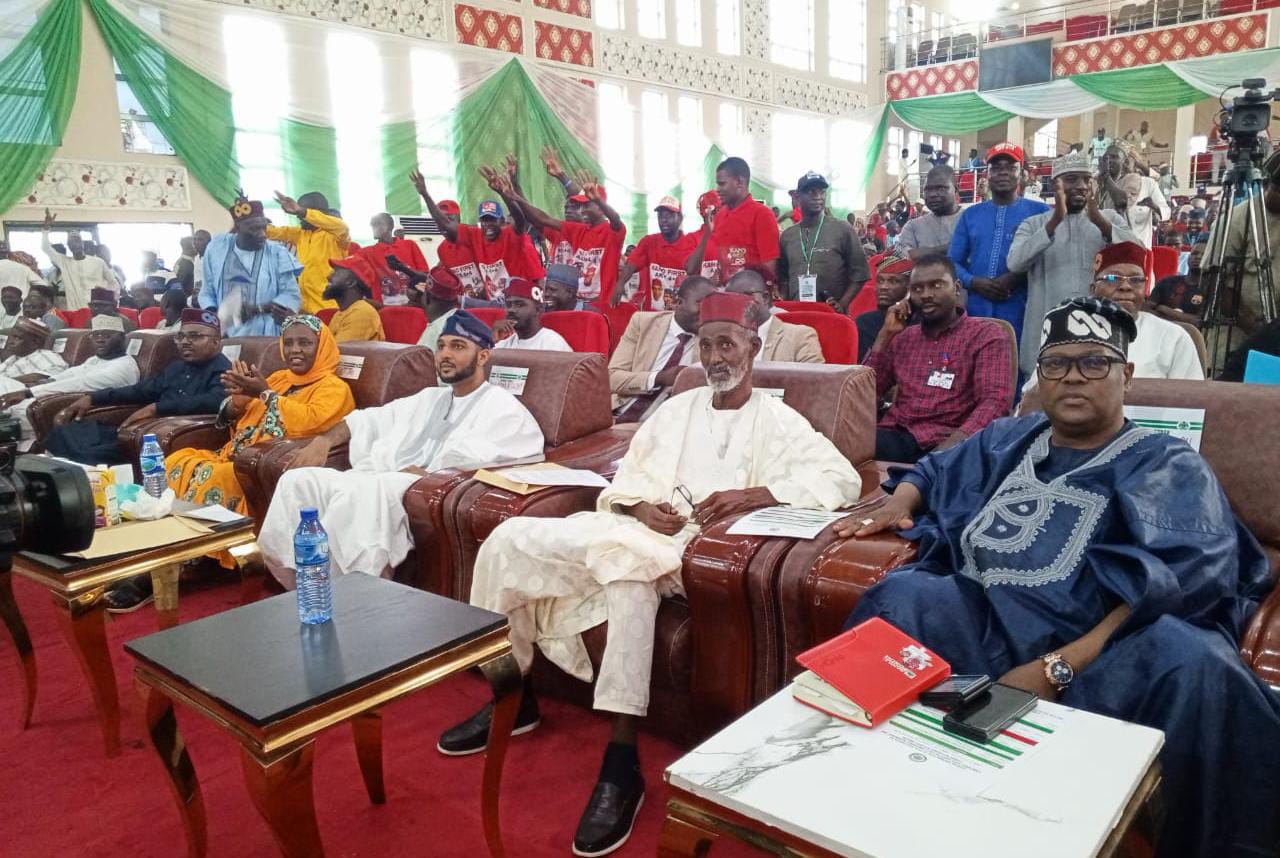
The Kano State Government has allocated plots of land to more than 1,000 young people (APC Marshals) drawn from the 44 Local Government Areas of the state, as part of its stated policy of expanding land ownership, youth empowerment, housing development and economic opportunities.
The beneficiaries, according to the state government, include young people who have contributed to their communities through various activities, including serving as APC Marshals, volunteers and members of community-based security groups.
The development forms part of a series of land-allocation exercises undertaken by the administration of Governor Abba Kabir Yusuf, with previous allocations involving political appointees and polling agents. Recent reporting put the number of youths covered by the latest exercise at 1,000, bringing beneficiaries of the administration’s recent land-allocation exercises to about 3,500.
Governor Yusuf, represented at the event by the Secretary to the Kano State Government, Alhaji Umar Faruk Ibrahim, described the occasion as an important day for the administration and the beneficiaries.
He said the government decided to allocate the land because many young people needed meaningful assets around which they could build their future.
According to him, land could become a home, business premises, family security or an asset that could eventually create wealth for beneficiaries and their children.
The Governor therefore urged the beneficiaries not to treat the allocation documents as ordinary pieces of paper, but as opportunities that should be protected and developed.
“Today, we are giving you land because land can change the life of a person. It can become a home. It can become a business. It can become security for a family. And with time, it can become wealth that you leave for your children,” he said.
He charged the beneficiaries to make productive use of their allocations, warning them against selling their future cheaply.
“Use it well. Protect it. Develop it. Let it become the beginning of something better in your life,” he added.
Governor Charges Youths Against Violence
Governor Yusuf also appealed to the beneficiaries to use their energy and influence positively, particularly in their respective communities.
He urged them to help guide young people away from violence, unnecessary conflicts and activities that could undermine their future.
“The strength and energy of our young people must be used for something positive,” the Governor said.
He called on the beneficiaries to promote initiatives capable of creating jobs, improving education and housing, and expanding opportunities for residents.
He further urged them to explain government programmes to their communities, help address misunderstandings and assist in calming tensions whenever they arise.
Garko: Land Allocation Will Drive Economic Activities
Earlier, the Commissioner for Land and Physical Planning, Alhaji Abduljabbar Muhammad Umar Garko, described the latest exercise as another milestone in what he said was the administration’s deliberate use of land as an instrument of empowerment, housing development and economic inclusion.
Garko said the administration had made land allocations to different categories of citizens and stakeholders, including more than 500 Senior Special Reporters/Senior Special Assistants, Special Assistants and Personal Assistants, grassroots supporters from the 44 LGAs, more than 1,500 polling agents known as “Yan Dangwale,” and more than 100 youths drawn from across the state.
He said the allocation to more than 1,000 young people was a continuation of the same policy.
According to him, the objective is to provide beneficiaries with tangible assets that they can develop, build upon and use to improve the economic security of their families.
The Commissioner said the economic impact of land allocation goes beyond individual beneficiaries because development of the plots creates a chain of economic activities.
He listed surveyors, architects, draftsmen, masons, carpenters, electricians, plumbers, welders, labourers and transporters among those who could benefit from construction activities generated by the development of the allocated plots.
He added that businesses supplying cement, blocks, roofing materials, doors, windows and other building materials would also benefit as development takes place.
“What started as a plot of land gradually becomes a house, a shop, a workshop, a rental property or another productive asset,” Garko said.
He said such development could contribute to economic activity, urban growth and the stability of communities.
Govt Promises Planned Communities
The Commissioner also said the administration was determined to ensure that land allocations were accompanied by proper physical planning and basic infrastructure.
He said government layouts were expected to provide facilities such as roads, drainage systems, schools, health facilities, markets, mosques and open spaces, stressing that the objective was not to create settlements that could become future problems.
“We want communities that are properly planned, secure and capable of supporting economic activity,” he said.
Garko further linked the land programme to broader government interventions in education, healthcare, roads, water supply, agriculture, power, housing and urban development.
He explained that improved infrastructure could increase access to land and enhance the value and usability of properties, while electricity and water supply could create a better environment for businesses to operate.
‘Don’t Dispose Of Your Allocation Carelessly’
The Commissioner advised the beneficiaries to treat the land as a long-term asset rather than something to be disposed of for immediate financial gain.
He urged them to develop their allocations into homes, businesses, workshops, rental properties or other productive ventures.
“To the beneficiaries, I want to say this very clearly: what you are receiving today is more than an allocation paper. It is an opportunity to join the productive economy of Kano State and you should under no condition dispose of it carelessly,” Garko said.
He urged beneficiaries to use the allocations to improve their lives and those of their families, while supporting development initiatives in their communities.
He said the real measure of the programme would not simply be the number of plots distributed, but what eventually emerged from them.
“Our hope is that some years from now, when we look back at these allocations, we will not only count the number of plots that were given out.
“We will see houses. We will see businesses. We will see stronger families. And we will see communities that are more peaceful because young people have been given something meaningful to own, to develop and to protect,” he said.
Governor Links Programme To Wider Development Agenda
In his address, Governor Yusuf said the land allocation should be viewed as part of the administration’s wider development agenda.
He listed education, healthcare, roads, water supply, agriculture, power, housing, urban development and youth empowerment among areas he said the government was prioritising.
He said investment in education was aimed at improving access and strengthening schools, while healthcare interventions were intended to improve hospitals, health facilities, medicines and healthcare systems.
On infrastructure, the Governor said roads were necessary to improve movement and connect communities, while investment in water was aimed at ensuring residents had access to clean water.
He also said agriculture remained important to Kano’s economy because of its potential to strengthen farmers’ livelihoods, create jobs and improve food security.
The Governor said investment in power and economic infrastructure was also necessary to create an environment where businesses could grow.
He described the land allocation programme as part of the same vision of improving the everyday lives of families and creating opportunities for young people to own assets.
‘Make Something Out Of What Government Has Given You’
While congratulating the beneficiaries, Governor Yusuf challenged them to ensure that the opportunity translated into tangible improvements in their lives.
“Do not waste this opportunity. Do not sell your future cheaply. Make something out of what the Government has given you,” he said.
He also urged the beneficiaries to become positive examples in their communities and to support efforts aimed at promoting peace, development and opportunities for young people.
The Governor said he hoped that when the history of the programme was eventually written, attention would not focus only on the number of plots allocated.
Rather, he said, the lasting legacy should be seen in new homes, businesses, stronger families and more peaceful communities created from the land.