
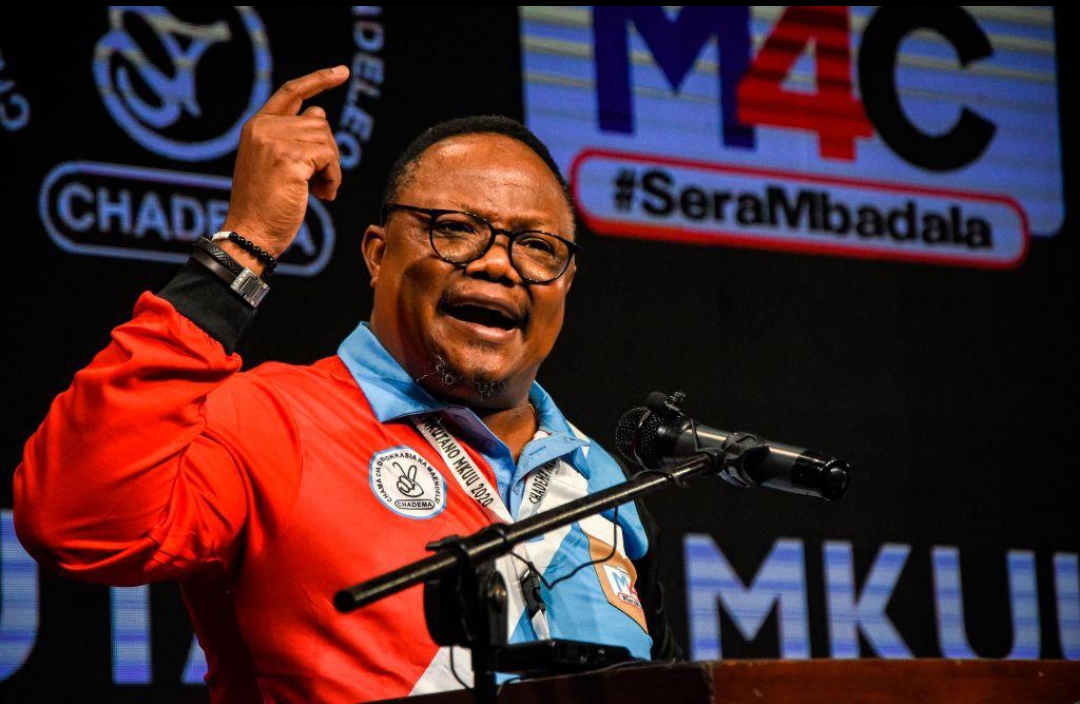
Tanzania’s High Court has acquitted the country’s main opposition leader, Tundu Lissu, of treason but convicted him of the lesser offence of incitement, in a high-profile judgment that has renewed concerns over political freedom, democracy and the rule of law in the East African nation.
The judgment was delivered today Friday, November 6, 2026, by a three-member panel of the High Court in Dar es Salaam, led by Justice Dunstan Ndunguru.
The court ruled that prosecutors failed to establish that Lissu intended to intimidate the government, as required to prove the treason charge, but found sufficient evidence to convict him of incitement.
Lissu, chairman of the opposition party Chama cha Demokrasia na Maendeleo (CHADEMA), was arrested in April 2025 following a speech at the party’s headquarters in which prosecutors alleged that he urged supporters to “block the election” and “mobilise rebellion” ahead of the October 2025 general election. He denied wrongdoing throughout the proceedings, insisting that his statements were part of a legitimate political campaign for electoral reforms.
Reacting during the proceedings, Lissu questioned the basis of the original treason charge, saying he had spent 577 days in detention facing an offence that could attract the death penalty, only to be convicted of the lesser offence of incitement.
He described the prosecution as political persecution and argued that the case was an attempt to punish him for his political positions and criticism of the government.
The case has generated considerable political tension within Tanzania, particularly among CHADEMA members and supporters who regard Lissu’s prosecution as part of a wider pattern of restrictions on opposition activities. The party’s exclusion from the 2025 general election, alongside the arrest of its chairman, contributed to protests and a period of serious political unrest.
The October 2025 election violence further intensified domestic and international scrutiny of Tanzania’s political environment. A commission appointed by President Samia Suluhu Hassan reported that at least 518 people died during the unrest, blaming protesters for the violence. However, human rights organisations have raised allegations of excessive force by security agencies, which the government has rejected.
International concern over Lissu’s prosecution had also been expressed before the judgment. The United Kingdom, in a statement delivered on November 5, raised concerns about Tanzania’s human rights situation, citing a United Nations assessment that described Lissu’s detention as arbitrary and raised questions about fair-trial standards. Britain also called for transparent investigations into election-related violence and an end to prolonged pre-trial detention.
The European Parliament had earlier criticised the arrest and prosecution of Lissu, calling for his release and urging Tanzanian authorities to respect democratic freedoms, due process and the rights of opposition politicians. Meanwhile, United States Ambassador to Tanzania William Trachman had said Washington was closely monitoring the trial and its implications for the rule of law. These statements preceded Friday’s verdict and should not be mistaken for official reactions to the final judgment.
The conviction has therefore placed Tanzania’s democratic institutions under renewed international scrutiny, with concerns focusing on whether opposition politicians can freely criticise government policies, organise political activities and participate in elections without facing criminal prosecution. The government, however, has previously rejected allegations that it is persecuting political opponents.
Although the court cleared Lissu of the treason charge, his conviction for incitement leaves his legal and political future uncertain. The proceedings on Friday included his mitigation submissions, but the final prison sentence was not independently confirmed in the reports available at the time of writing. The case is expected to remain a major issue in Tanzania’s domestic politics and its relations with international partners.