
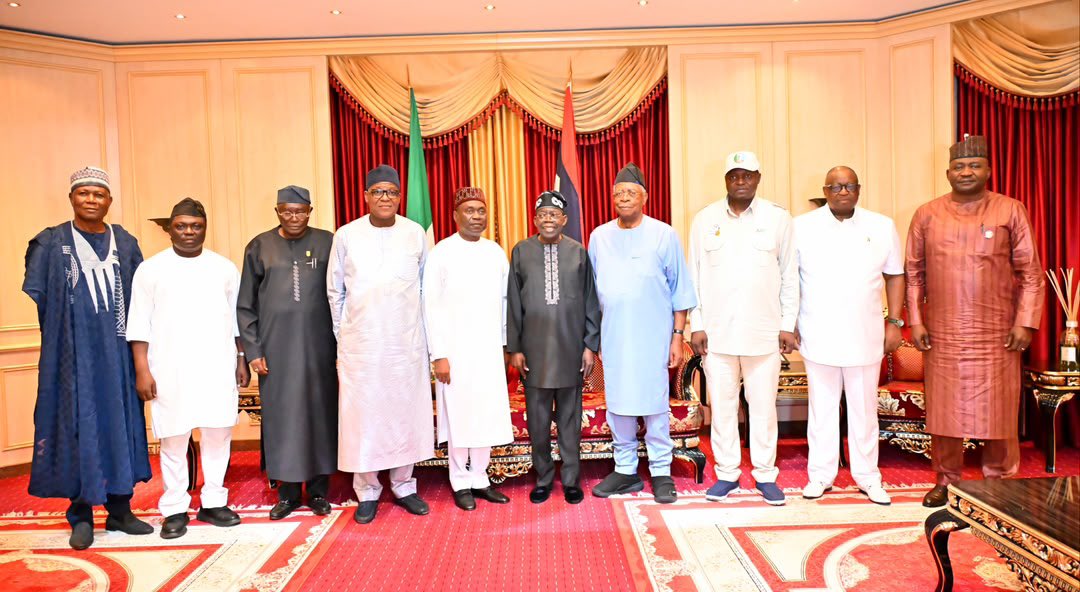
The Former Minister of Defence and elder statesman, General Theophilus Yakubu Danjuma (retd.), has led a high-powered delegation of prominent Middle Belt and North-Central leaders to meet President Bola Ahmed Tinubu at the Presidential Villa, Abuja, as political consultations intensify ahead of the 2027 general elections.
The meeting, which took place at the State House on Thursday, November 5, brought together serving governors, the Minister of Defence, former military chiefs, a former Speaker of the House of Representatives and other influential figures from the two regions.
The visit was disclosed in a social media post attributed to Bayo Onanuga, Special Adviser to the President on Information and Strategy, on his verified X handle, formerly Twitter.
Among those who attended were Minister of Defence, General Christopher Musa; Plateau State Governor, Caleb Manasseh Mutfwang; Taraba State Governor, Agbu Kefas; former Speaker of the House of Representatives, Hon. Yakubu Dogara; former Chief of Army Staff, General Ishaya Bamaiyi; businessman Thomas Etuh; and Dr Poju Bitrus.
The discussions reportedly centred on political cooperation, security challenges, development and issues affecting communities across the Middle Belt and North-Central regions, with the delegation expressing solidarity with the Tinubu administration and discussing ways to mobilise support for the President ahead of the 2027 elections.
Speaking to State House correspondents after the meeting, Dogara said the delegation visited to demonstrate solidarity with the President and explore ways of strengthening support for his administration.
He said the leaders also discussed matters affecting their communities and how they could contribute to mobilising support for the President, whom he credited with making contributions to their regions.
Dogara also expressed optimism about what he described as improvements in the country’s security situation, particularly along routes and in areas previously affected by insurgency, banditry and kidnapping.
He cited the Abuja-Kaduna corridor as an example, recalling the period when travellers faced serious security threats, including the attack on a moving passenger train.
Although he acknowledged that security challenges remained in some locations, the former Speaker maintained that there had been a noticeable decline in incidents in parts of the North-East and North-Central regions.
He also called for sustained government interventions, expressing confidence that continued efforts and strategic appointments of people familiar with local security challenges could help consolidate the gains.
Plateau State Governor, Caleb Mutfwang, who also attended the meeting, highlighted ongoing efforts to rebuild trust and promote reconciliation among communities divided by ethnic and religious differences in his state.
Mutfwang said leaders at different levels were working together to restore confidence and encourage peaceful coexistence, adding that the unity being demonstrated by political and community leaders was gradually influencing people at the grassroots.
He particularly noted that young people from different ethnic and religious backgrounds were beginning to engage in conversations and initiatives aimed at promoting understanding without necessarily waiting for government intervention.
The governor described the development as encouraging and expressed hope that sustained dialogue and cooperation would help overcome longstanding divisions and create a more peaceful and stable future for Plateau State.
The meeting comes as political activities and consultations begin to gather momentum ahead of the 2027 general elections, with political leaders and stakeholders across the country engaging in discussions over alliances, governance and electoral support.
It also provides an opportunity for leaders from regions facing persistent security and development challenges to engage the Presidency on issues affecting their communities.