
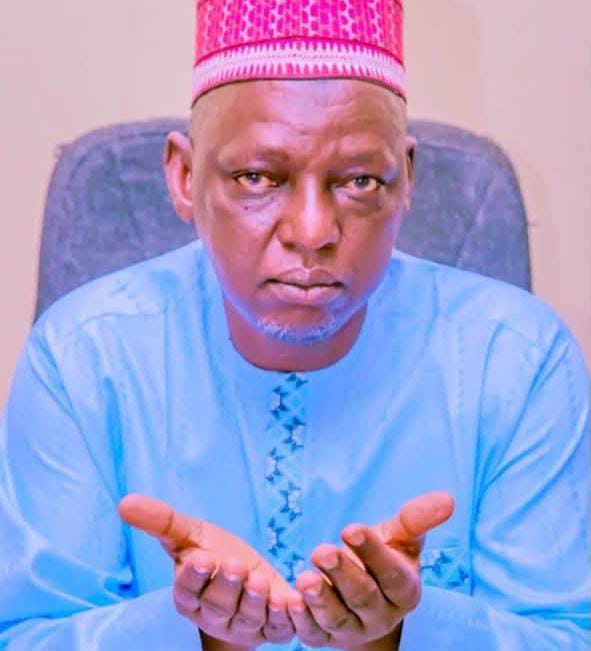
The Rector of Kano State Polytechnic, Dr. Abubakar Umar Faruk, FCA, has highlighted extensive administrative, academic, infrastructural and institutional reforms recorded under his leadership, including the establishment of new schools, introduction of postgraduate programmes, expansion of student enrolment, construction and rehabilitation of facilities, and improved staff and students’ welfare.
The achievements, presented by the Rector’s administration, cover several areas of the institution’s operations, with particular emphasis on strengthening academic standards, expanding access to technical and vocational education, improving institutional administration and repositioning the polytechnic for greater productivity.
In the area of general administration, the management said it had established a harmonious working relationship with staff and their unions through an inclusive administrative approach and the provision of a more conducive working environment.
READ ALSO: EDITORIAL: KANOPOLY Cannot Afford Leadership Uncertainty, Kano Government Must Act Now
One of the administration’s notable initiatives was the inclusion of Chief Lecturers in the institution’s administrative structure and their representation at Polytechnic Academic Board meetings, which the management described as a first in the history of the institution.
The administration also reported strengthening its relationship with the Kano State Government, Ministry of Higher Education, National Board for Technical Education (NBTE), Joint Admissions and Matriculation Board (JAMB), National Youth Service Corps (NYSC) and other sister institutions within and outside the state.
It further established the Central Laboratories and Workshops Coordination Unit (CLWCU) to coordinate the institution’s laboratories and workshops, promote practical learning and encourage collaboration with external organisations.
Through the unit, the polytechnic reportedly conducted the 2024 Nigerian Police Force examination and JAMB examination for 150 candidates, while also collaborating with the Kano State Consumer Protection Council on sample analysis.
The unit facilitated the repair of the Kord 1 offset printing machine at the Central Printing Workshop and introduced policies requiring the domestication of printing jobs and the production and binding of students’ final-year projects within the institution’s facilities to improve practical skills and maximise available resources.
The administration also secured collaborations with the Federal Ministry of Communications and Digital Economy, through the National Information Technology Development Agency (NITDA), to establish an Applied Learning Centre under the Three Million Technical Talent (3MTT) programme. It also signed an agreement with the IDEAS project of the Federal Ministry of Education for digital skills training.
Another partnership was established with Dangote Cement Plc for a one-year internship programme for outstanding students of Civil Engineering and Building Engineering Technology. The collaboration also led to the establishment of a Block Makers Academy at the polytechnic.
In academic development, one of the major reforms was the establishment of the School of General and Remedial Studies, which began in December 2023 as the Centre for Basic and Remedial Studies before its subsequent restructuring.
The school was created to provide Pre-ND and remedial programmes for candidates with deficiencies in their O-Level or JAMB results who wish to pursue higher education.
Its programmes cover Social Sciences, Management Sciences, Sciences and Engineering.
The first batch of 1,372 students was admitted in February 2024. At the end of the first academic session, 1,177 students, representing 85.7 per cent, reportedly passed their Pre-ND examinations and were placed in various National Diploma programmes across the institution.
The successful candidates included 176 from Social Sciences, 185 from Management Sciences, 756 from Sciences and 60 from Engineering.
In December 2024, the Centre for General Studies and School for Basic and Remedial Studies were merged to form the School of General and Remedial Studies following a recommendation by the NBTE. The school currently has more than 2,000 students enrolled in its remedial programmes, according to the management.
The administration also upgraded the former Continuing Education Centre to the School of Continuing Education and Postgraduate Studies, introducing postgraduate diploma programmes in areas including accounting and finance, business administration, entrepreneurship, public administration, procurement and supply chain management, computer science, physics, chemistry, microbiology, biochemistry, engineering, architectural technology and statistics.
The restructuring was also aimed at utilising the institution’s PhD holders more effectively, expanding part-time education and strengthening the school’s revenue generation capacity.
The management reported that enrolment for National Diploma and Higher National Diploma part-time programmes increased from 1,580 to 2,752 students, who were matriculated in September 2024.
Other improvements included increased allowances for resource persons from ₦800 to ₦1,000 per hour and responsibility allowances from ₦20,000 to ₦60,000, alongside the provision of examination materials, maintenance of learning facilities, renovation of dilapidated buildings and simplification of registration procedures.
Another major development was the establishment of the School of Vocational and Technical Education after the Governing Council approved the upgrading of the Department of Technical Education at the School of Technology.
The programmes underwent accreditation by the National Commission for Colleges of Education in October 2025, according to the administration. The school is expected to expand opportunities for technical and vocational training in areas including woodwork, metalwork, electrical and electronic technology, automobile technology and building technology.
The polytechnic also established a Skills Development Centre in compliance with NBTE directives and the National Skills Qualification Framework. Six lecture halls at the School of Management Studies were designated for training in tailoring and garment making, hospitality and catering, carpentry and joinery, welding and fabrication, electrical installation and maintenance, and computer hardware and electronics.
The management said the facilities had undergone renovation and conversion into specialised workshops, with equipment and training materials procured for the proposed trades. Registration with the NBTE and some other operational arrangements were still in progress.
In another initiative, the administration established a Career Service Centre to improve graduate employability through career counselling, mentoring, professional development and partnerships with private companies and government organisations.
The centre reportedly secured approval for a ₦75 million TETFund intervention, organised a two-day capacity-building workshop and established a partnership with Nestlé Nigeria Plc, which led to career sessions attended by more than 700 students.
It also facilitated employment opportunities for four National Diploma graduates with Nestlé, while creating career desk officers across the institution’s schools and establishing communication platforms for students.
The administration also restructured the Academic Department and established a separate Examinations and Records Department in December 2023 to improve the processing of results, transcripts and academic records.
According to the management, the Examinations and Records Department facilitated the release of results for 8,961 regular students and 1,992 part-time students, alongside the prompt processing of academic transcripts, successful conduct of summer examinations and improved documentation of students’ records.
The Polytechnic Academic Board also conducted 11 successive regular meetings, from its 96th to 106th sittings, while its business committees held meetings covering regular and part-time academic programmes.
The restructured Academic Department also secured approval for several new programmes, including HND Library and Information Sciences, HND Computer Engineering Technology, HND Mechatronics Engineering Technology, ND Railway Engineering Technology, ND Food Science and Technology, ND Nutrition and Dietetics, ND Health Information Management, ND Public Health and ND Community Health Extension Worker programmes, among others.
The administration further reported timely commencement of lectures and examinations, improved compliance with the academic calendar, prompt processing of certificates and the payment of claims to external moderators.
Beyond academic reforms, the institution expanded its consultancy activities through training programmes, multimedia production, online registration services and professional capacity-building engagements.
The Consultancy Service Department reportedly collaborated with Society for Family Health and other organisations to conduct auxiliary social work training, while the Kano State Government, through the Ministry of Local Government and Chieftaincy Affairs, sponsored training of social workers across the state’s 44 local government areas.
Other activities included training sponsored by Green Posture, professional workshops, training for the 2023/2024 academic session, PLS-SEM training and the establishment of car wash services.
The institution also strengthened its relationship with professional bodies, including the Institute of Chartered Accountants of Nigeria, Chartered Institute of Taxation of Nigeria and Chartered Institute of Bankers of Nigeria, to improve professional development and service delivery.
In the area of infrastructure, the administration said it had utilised Internally Generated Revenue (IGR) and TETFund interventions to execute projects across the institution’s campuses.
Among the completed TETFund projects listed by the management are the construction of a students’ hostel and academic building at the School of Management Studies, procurement of furniture for the hostel and academic building, supply of classroom and auditorium furniture, studio equipment, rehabilitation of the Mechatronics and Autotronics Department, construction of a perimeter fence at the School of Environmental Studies in Gwarzo and installation of 30KVA solar power systems.
The institution also reported completion of the rehabilitation of one block containing five lecture halls at the School of Management Studies under the 2024 special intervention, as well as the procurement of additional equipment and computers.
However, the construction and furnishing of the central library under the 2024 annual intervention was listed as 40 per cent completed, while male and female toilet projects were each recorded as 50 per cent completed.
Other infrastructural projects included rehabilitation of the Architecture Department, construction of skills acquisition facilities, staff offices and a 500-capacity theatre at the Centre for General Studies, as well as ongoing construction of staff offices at the School of Technology.
Through IGR and other interventions, the management also reported renovation of the Polytechnic Central Clinic, Consultancy Service Department, Management Information System Department, Security Department and main entrance gate of the Central Administration.
The projects further included renovation of the Banking and Finance Department, provision of potable water across various schools, renovation of more than 150 staff and students’ toilets, provision of a female staff common room, clearing of waste and bushy areas, and procurement of vehicles for the Polytechnic Microfinance Bank and Consultancy Department.
The administration also reported the provision of solar power at strategic locations, procurement of library books and furniture, rehabilitation of academic facilities and renovation of the School of Technology through the state Ministry of Works and Housing.
On staff welfare, the Rector’s administration said it maintained regular promotions for teaching and non-teaching employees, prompt payment of responsibility and peculiar earned allowances, and sponsorship of staff for master’s and doctoral programmes within and outside Nigeria through TETFund interventions.
Staff members were also sponsored to attend workshops, conferences and seminars, while support was provided for professional certifications.
One of the welfare measures highlighted was the increase in monthly allowances for casual workers from between ₦7,000 and ₦10,000 to ₦30,000.
For students, the management said it strengthened engagement between lecturers and learners through regular interactive sessions, timely release of results and prompt mobilisation of eligible graduates for the National Youth Service Corps scheme.
It also established a Central Sports Unit and provided for the procurement of modern sporting equipment, while sponsoring students’ participation in the KASHIGA and NIPOGA sporting competitions.
The institution further maintained its support for student activities and secured the Dangote Cement internship scheme for 10 outstanding engineering students.
In addition, the management reported the successful take-off of a new campus at Gwamai town in Dawakin Tofa Local Government Area, successful accreditation of the Students’ Industrial Work Experience Scheme (SIWES) Department by NBTE, revival of the Entrepreneurship Education Directorate and organisation of national and international academic conferences.
The institution also organised the first convocation ceremony of its Innovation and Vocational Enterprise Institute (IVEI), marking another milestone in its vocational and entrepreneurial education programmes.
Despite the extensive list of achievements presented by the administration, the institution continues to face the responsibility of sustaining the reforms, completing ongoing projects and ensuring that new academic programmes and facilities meet the required regulatory standards.
The NBTE’s digital register, as at November 2, 2026, listed Kano State Polytechnic with 70 accredited programmes, of which 56 were marked active and 14 expired, underscoring the importance of continued accreditation monitoring and compliance.
The institution has also acknowledged infrastructure challenges involving some abandoned and deteriorating projects, with its management recently seeking government intervention to facilitate their completion.
Ultimately, the administration’s reported achievements present a broad programme of academic expansion, institutional restructuring, infrastructure development and welfare improvements. Their long-term impact will depend on sustained implementation, transparent project monitoring, quality assurance and measurable improvements in teaching, learning and graduate employability.