
The Kano State Government has recovered approximately 1,400 acres of farmland, demarcated 1,270 kilometres of cattle routes to address farmers-herders clashes and implemented several agricultural development projects within the past three years and more.
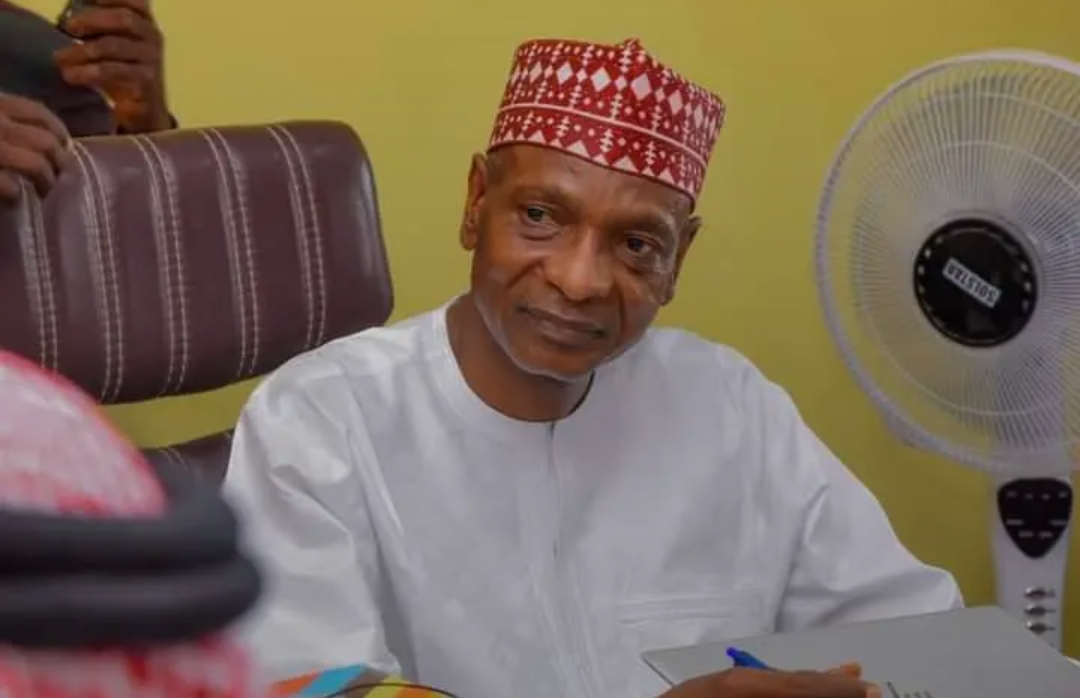
The Commissioner for Agriculture and Natural Resources, Dr. Danjuma Mahmud disclosed this while briefing journalist on the ministry’s scorecard in the last three years and more held in Kano on Tuesday.
Mahmud said the interventions were part of Governor Abba Kabir Yusuf’s administration’s efforts to improve agricultural productivity, strengthen food security, promote peaceful coexistence between farming and pastoral communities and create employment opportunities across the state.
Speaking on the government’s agricultural achievements, the commissioner explained that the rehabilitation of major irrigation canals at Charman Baka and Kadawa in Garun-Malam Local Government Area, alongside Bunkure A and Bunkure B, had helped recover approximately 1,200 acres of farmland for agricultural activities.
He further disclosed that the state government, in collaboration with the Islamic Development Bank-supported ATAPS Project and the Kano State Ministry of Agriculture, had recovered another 200 acres of farmland, which was ready for irrigation, bringing the total recovered land to approximately 1,400 acres.
On efforts to address recurring farmers-herders conflicts, Mahmud said the government had demarcated approximately 1,270 kilometres of cattle routes to provide designated corridors for livestock movement and reduce encroachment on farmlands.
According to him, the initiative has helped reduce clashes between farmers and herders to the barest minimum, while promoting peaceful coexistence and protecting agricultural investments in rural communities.
The commissioner also highlighted the Dansoshiya Giant Irrigation Project in Kiru Local Government Area, describing it as a major intervention expected to expand irrigation farming and increase agricultural production.
He said the dam stretches approximately two kilometres, has an official projected water capacity of three billion cubic litres and is expected to provide irrigation for about 500 hectares, equivalent to 1,250 acres of farmland.
Mahmud disclosed that construction of the dam had reached approximately 40 per cent completion, adding that Governor Abba Kabir Yusuf had approved the construction of a 14-kilometre access road to the project site because of difficulties in accessing the area. He said the road had been completed.
The commissioner further announced that the Kano State Executive Council had approved the establishment of 11 mini irrigation sites and earth dams across 11 local government areas. He identified Kibiya, Albasu, Sumaila, Doguwa, Bichi, Shanono, Dawakin Kudu, Dawakin Tofa, Ungogo and Rogo among the benefiting areas.
He said the Ministry of Agriculture had commenced compensation payments to affected farmers in five local government areas, while some contractors had already mobilised to project sites, particularly in Albasu, to begin construction.
According to Mahmud, the projects are expected to provide an additional 2,000 acres of cultivable farmland for irrigation upon completion, creating employment opportunities, improving rural livelihoods and discouraging migration to urban centres in search of jobs.
On agricultural mechanisation, he said the state government, working with development partners, had procured tractors, forklifts, harvesters, combine harvesters, solar-powered irrigation pumps, planters and transplanters, among other farming equipment.
He added that the government had also provided small- and medium-scale rice mills to support farmers, explaining that smaller mills were intended primarily for women farmers, while larger facilities were targeted at registered farmers’ cooperatives.
The commissioner said the state government intended to support the cooperatives by providing agricultural processing equipment free of charge to improve their operations and strengthen local rice production.
In the livestock sector, Mahmud highlighted an empowerment programme involving 7,800 cows intended for members of the public to support cattle rearing, fattening and commercial livestock activities.
He explained that beneficiaries would rear and fatten the animals before selling them, using the proceeds to purchase additional livestock and support their families.
He also disclosed that goats had been distributed to women alongside veterinary drugs and animal feeds to strengthen livestock production and improve household incomes.
On fertiliser distribution, Mahmud said the state government, in collaboration with the 44 local government areas, had procured approximately 700 truckloads of fertiliser to support farmers across Kano.
He recalled that in 2024, Governor Abba Kabir Yusuf procured 54 truckloads of fertiliser for distribution to farmers, while the Federal Government supplied another 70 truckloads during the same year for distribution across the state’s 44 local government areas.
The commissioner further disclosed that the Federal Government deployed a helicopter to support Kano State during an invasion of crop-destroying birds that came from neighbouring Yobe State, in an effort to protect farmers’ crops and agricultural produce.
On dairy development, Mahmud said the state government had completed the construction of 70 milk collection centres aimed particularly at supporting Fulani pastoral communities and improving milk production and marketing.
He explained that each centre was equipped with essential infrastructure and solar-powered storage facilities designed to preserve milk and prevent spoilage.
The commissioner said the various interventions were aimed at transforming agriculture through irrigation expansion, mechanisation, livestock development, improved processing facilities and better management of relations between farmers and herders.
He maintained that the projects were also expected to strengthen food security, create rural employment, improve household incomes and expand economic opportunities for farmers and pastoral communities across Kano State.