
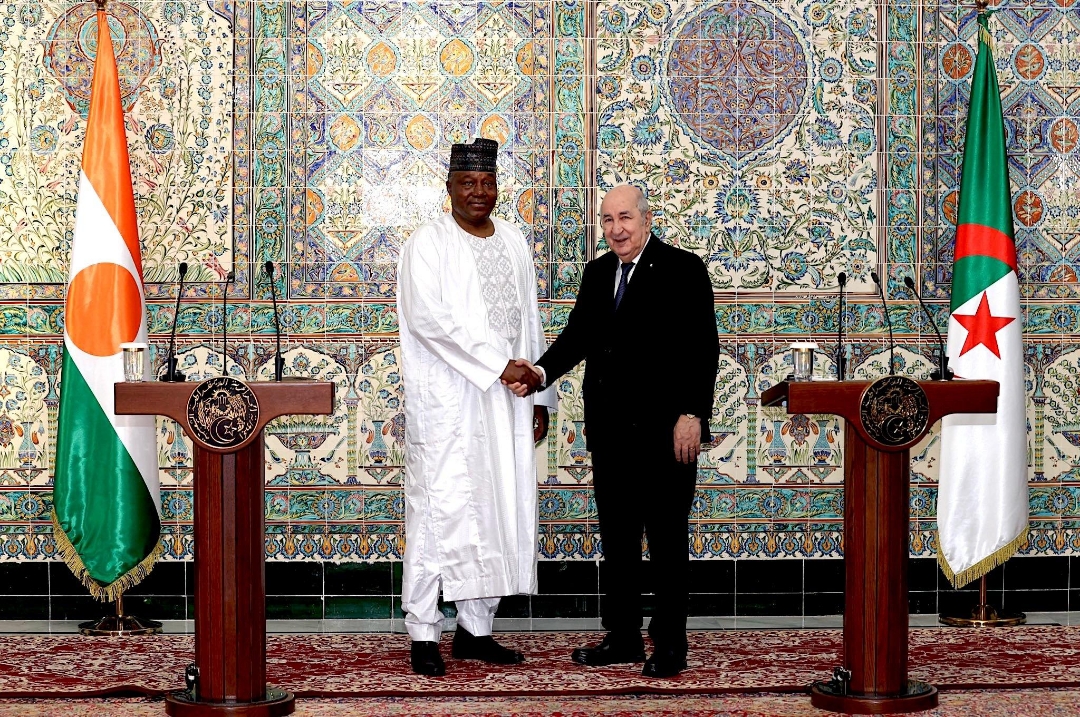
Algeria and Niger are strengthening diplomatic, military and economic relations following months of diplomatic reconciliation, with the deployment of Algerian troops to Niger and expanding energy cooperation marking a significant shift in their partnership and security engagement across the Sahel.
The latest development came when Niger received its first major fuel shipment from Algeria, comprising 53 trucks carrying approximately 1.65 million litres of petroleum products to the northern city of Agadez under military escort. The delivery, involving security personnel from both countries, reflects growing cooperation as Niger faces fuel shortages and seeks more reliable energy supplies.
The shipment followed the arrival of an Algerian military convoy in Niger on October 30, marking Algeria’s first overseas troop deployment since it sent forces to support Egypt during the 1973 Arab-Israeli War.
READ ALSO: China, Nigeria Mark Friendship With Joint Cultural Mural
The deployment followed approval by both chambers of Algeria’s parliament and an authorisation by President Abdelmadjid Tebboune after a request from Nigerien authorities.
The military deployment is intended primarily to protect strategic economic infrastructure, including oil installations and energy projects involving Algeria’s state-owned company, Sonatrach.
Algerian officials have described the mission as a measure to safeguard shared economic interests rather than an operation to wage war in Niger. The number of troops and the duration of their deployment have not been publicly disclosed.
The decision represents a notable development in Algeria’s traditional foreign policy, which has generally emphasised sovereignty, non-interference and reluctance to deploy its armed forces outside its borders. However, a 2020 constitutional amendment allows the president to authorise overseas military deployments with the required parliamentary approval. The current mission is therefore a rare application of that provision.
The deployment also follows earlier military assistance to Niger. In August 2026, Algeria reportedly sent four Sukhoi Su-30 fighter jets, transport and refuelling aircraft to support Nigerien authorities during what Algiers described as an attempt to destabilise the country’s military government. Algeria also provided four military helicopters, while a defence cooperation protocol was signed following a visit by Niger’s Defence Minister, General Salifou Mody, to Algiers in October.
Diplomatic relations between the two countries had previously deteriorated following the April 2025 incident in which Algeria shot down a Malian drone near its border, alleging that the aircraft had violated its airspace.
Mali disputed Algeria’s account, while Niger, Mali and Burkina Faso recalled their ambassadors from Algiers in solidarity with Bamako. Algeria subsequently withdrew its diplomatic representatives, creating a serious diplomatic disagreement with its southern neighbours.
However, relations between Algiers and Niamey began improving in February 2026, when Algeria announced the return of its ambassador to Niger.
A major diplomatic breakthrough followed on February 17, when Niger’s military leader, General Abdourahamane Tiani, visited Algeria and held talks with President Tebboune. Both governments expressed their commitment to restoring strong bilateral relations and addressing regional challenges through cooperation.
Security has since become a central pillar of the renewed partnership. The two countries share an approximately 960-kilometre desert border and face threats from armed groups, including organisations affiliated with al-Qaeda and Islamic State, alongside cross-border trafficking and other criminal activities. Algeria considers instability in Niger and the wider Sahel a direct concern to its national security, while Niger is seeking additional partners to strengthen its defence capabilities.
Economic cooperation, particularly in oil and gas, is another major reason behind the growing relationship. Sonatrach has investments in Niger through its international subsidiary, SIPEX, including exploration activities in the Kafra oil field in northern Niger, close to the Algerian border. The field is considered strategically important, with reported estimates suggesting substantial oil potential. Protecting such investments is among the interests cited in Algeria’s decision to deploy troops.
Another major project is the proposed Trans-Saharan Gas Pipeline, involving Nigeria, Niger and Algeria. The approximately 4,000-kilometre project is designed to transport Nigerian natural gas through Niger into Algeria for onward export to European and other international markets. The pipeline could strengthen energy cooperation among the three African countries, diversify gas supply routes and create economic opportunities along its route. Its progress, however, depends on financing, infrastructure development and sustained security across the Sahel.
Beyond oil and gas, Algeria and Niger are expanding cooperation in mining, transportation and trade. In June 2026, Niger’s Minister of Mines, Commissioner-Colonel Abarchi Ousmane, visited Algeria for discussions on mineral development, investment and joint partnerships. Their wider cooperation agenda also includes improving road transport, border management, commercial exchanges, technical training and electricity supply. Algeria has also inaugurated a 40-megawatt power plant intended to provide electricity to Niamey and surrounding areas.
The renewed relationship is also taking place against the background of changing regional politics following the establishment of the Alliance of Sahel States (AES), comprising Niger, Mali and Burkina Faso. The three military-led governments have developed closer political and security cooperation after their disagreements with the Economic Community of West African States (ECOWAS). Although Algeria has maintained differences with the military governments over certain political and diplomatic issues, it has continued engaging with Niger as part of its efforts to address instability across the Sahel.
The partnership also has implications for Nigeria, which is a central participant in the proposed Trans-Saharan Gas Pipeline. Improved security cooperation between Algeria and Niger could help protect the route through which Nigerian gas is expected to reach Algeria and international markets. Consequently, developments in their bilateral relationship are important to Nigeria’s energy ambitions, regional trade and wider economic cooperation across West Africa and North Africa.
The growing military engagement has attracted attention because of the changing security landscape in the Sahel, particularly following the withdrawal of French and American forces from Niger and the expansion of Russian security cooperation with military-led governments in the region. Algeria’s deployment introduces another security actor into Niger, although the stated mission is focused on protecting strategic economic infrastructure. The development also raises questions about how the different foreign security partnerships will operate alongside one another.