
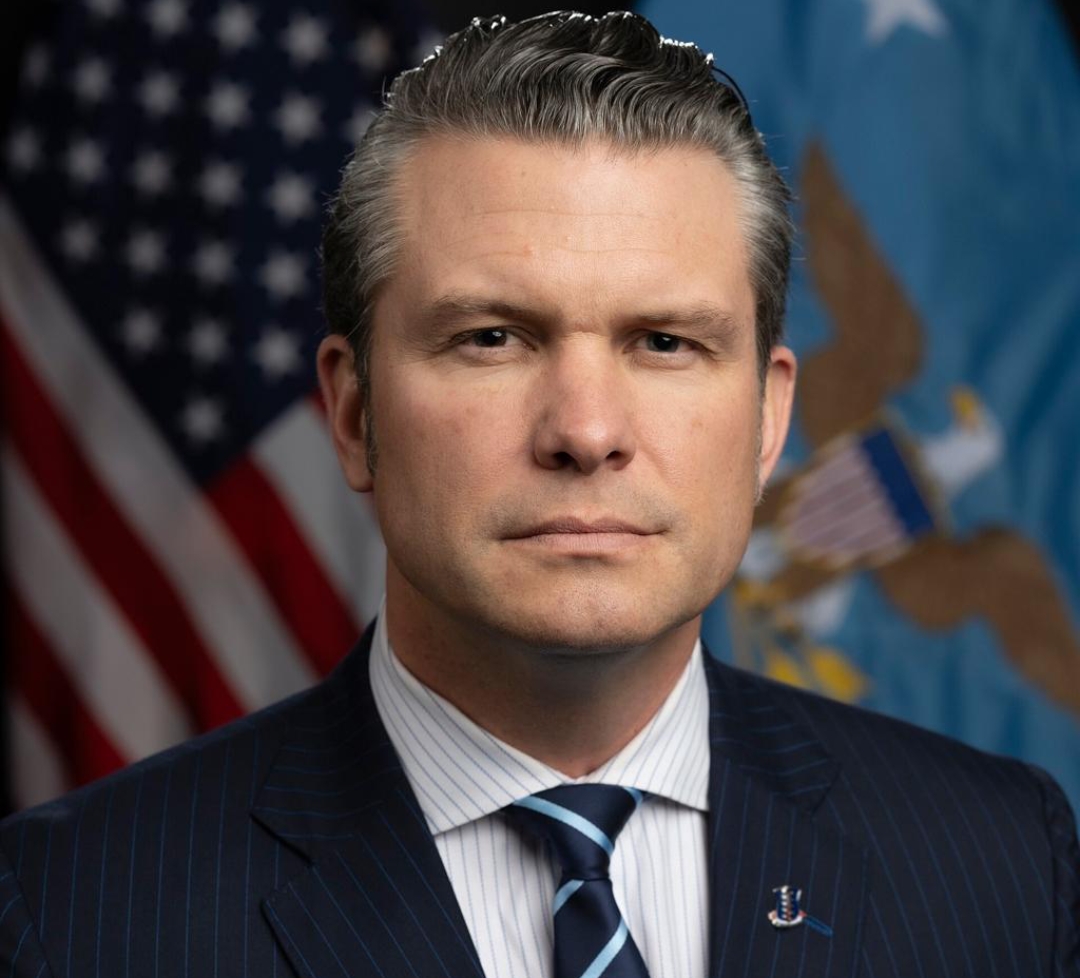
The United States House of Representatives has voted 211–204 to refer an impeachment resolution against Defence Secretary Pete Hegseth to the House Judiciary Committee, effectively blocking an immediate attempt to impeach him over allegations of constitutional violations, abuse of executive authority and controversial American military operations in the Middle East and other parts of the world.
The vote, conducted on Tuesday, November 10, 2026, followed an impeachment initiative introduced by Republican Congressman Thomas Massie of Kentucky, who accused Hegseth of committing serious violations of the US Constitution through his involvement in military operations ordered by President Donald Trump’s administration.
The official congressional voting record showed that 211 lawmakers supported the motion to refer the resolution, while 204 voted against it, with 18 members absent.
READ ALSO: BREAKING: Donald Trump Sworn in as 47th United States President
The voting breakdown showed that 210 Republicans and one independent supported the motion, while 203 Democrats and Republican Congressman Thomas Massie opposed it.
The outcome effectively shelved the impeachment initiative, preventing the House from proceeding immediately to a substantive vote on the eight articles of impeachment against the Pentagon chief. However, the decision does not amount to a judicial determination on the allegations contained in the resolution.
Massie, who introduced the impeachment resolution, accused Hegseth of knowingly executing unlawful military orders and exceeding the authority granted to the executive branch under the American Constitution.
The eight articles of impeachment focus on the Trump administration’s military campaign against Iran, controversial strikes against suspected drug-trafficking vessels in the Caribbean and eastern Pacific, military operations in Yemen and Venezuela, and alleged retaliation against Democratic Senator Mark Kelly over his public comments concerning illegal military orders.
Four of the eight articles concern the American military campaign against Iran. They accuse Hegseth of continuing military operations without the required congressional authorisation, allegedly exceeding the 60-day limit established under the War Powers Resolution of 1973, and failing to obtain a declaration of war or authorisation for the use of military force from Congress.
Another allegation concerns a February 28 military strike on a girls’ school in Minab, Iran, which reportedly killed scores of children and other civilians. The resolution accused the Defence Secretary of failing to maintain adequate safeguards to minimise civilian casualties during military operations.
Two additional articles concern American military activities involving Venezuela. They accuse Hegseth of directing the operation that resulted in the capture of Venezuelan President Nicolás Maduro and authorising controversial military strikes in the Caribbean and Pacific, which lawmakers alleged resulted in unlawful killings.
The allegations also raised questions about the legality of American military intervention in another sovereign country and concerns surrounding the use of military force against suspected drug-trafficking operations without adequate judicial oversight.
Another article focuses on American military operations in Yemen during the 2025 US-British campaign against Houthi fighters. The resolution questioned the legality of the strikes and accused Hegseth of overseeing military actions that resulted in civilian casualties.
The final article concerns alleged retaliation against Democratic Senator Mark Kelly, a former US Navy pilot and astronaut, after he and other lawmakers with military and intelligence backgrounds released a video reminding American service members that they were not required to obey unlawful military orders. Hegseth was accused of pursuing punitive measures against Kelly, including possible prosecution and demotion.
President Donald Trump strongly defended his Defence Secretary and criticised the impeachment initiative, describing it as a politically motivated effort to undermine his administration’s national security policies.
The White House also opposed the resolution, arguing that the president possesses constitutional authority to direct military operations in defence of American national security interests. The administration encouraged lawmakers to support the motion referring the impeachment resolution to committee, a position that ultimately prevailed in the House.
Hegseth also rejected the allegations, describing the impeachment effort as a political spectacle and insisting that he stood behind the military operations conducted under his leadership. Speaking during a Pentagon news conference on November 10, his first in approximately six months, he defended the administration’s military campaign against Iran and other operations, maintaining that the actions were necessary to address threats to American national security.
He also dismissed suggestions that American service members were being encouraged to commit war crimes, insisting that he was proud of the military operations carried out under his authority.
The impeachment controversy has also exposed disagreements within the Republican Party over the Trump administration’s foreign and military policies. Although Massie belongs to the Republican Party, he broke ranks with his party’s leadership by introducing the impeachment resolution against a senior member of the president’s cabinet.
House Republican leaders opposed allowing the impeachment process to advance, while Democratic lawmakers, including House Minority Leader Hakeem Jeffries, supported efforts to hold Hegseth accountable. Senate Democratic Leader Chuck Schumer also backed the initiative, arguing that the Defence Secretary should face an impeachment trial if the House approved the charges.
Meanwhile, Secretary of State Marco Rubio publicly defended Hegseth, describing him as hardworking and praising his performance in the administration. Rubio’s intervention highlighted the divisions between members of Trump’s cabinet and lawmakers seeking greater congressional scrutiny of American military operations abroad.
Under the United States Constitution, the House of Representatives has the authority to impeach federal officials, including cabinet secretaries, through a simple majority vote. However, impeachment does not automatically remove an official from office. If the House had approved the articles against Hegseth, the matter would have proceeded to the Senate, where lawmakers would have conducted an impeachment trial. Conviction and removal from office would have required a two-thirds majority of senators present. The November 10 procedural vote prevented the immediate advancement of that process.
The development has generated wider debate about the constitutional balance of power between the White House and Congress, particularly concerning the president’s authority to initiate military operations without obtaining prior legislative approval.
Critics of the administration argue that the War Powers Resolution requires congressional oversight of prolonged military engagements, while the White House maintains that the president possesses constitutional powers to protect American interests and direct military operations.
The impeachment controversy comes amid growing domestic and international scrutiny of the Trump administration’s military strategy, particularly its confrontation with Iran, operations involving Venezuela and military strikes against suspected drug-trafficking networks.
The dispute has also raised concerns about civilian protection, international humanitarian law and the responsibilities of senior military officials when executing orders from the commander-in-chief.
Although the House vote has effectively blocked the immediate impeachment effort, it has not ended the political controversy surrounding Hegseth. Democratic lawmakers have indicated their intention to revisit the matter when the new Congress assumes office in January 2027. The current outcome, however, leaves Hegseth in office as Defence Secretary, with the Trump administration retaining his services while the political disagreements over military operations and congressional oversight continue.
The unfolding controversy represents another significant test of American democratic institutions and the constitutional limits of executive power, as lawmakers remain divided over whether military decisions taken in the name of national security should be subjected to greater legislative scrutiny.