
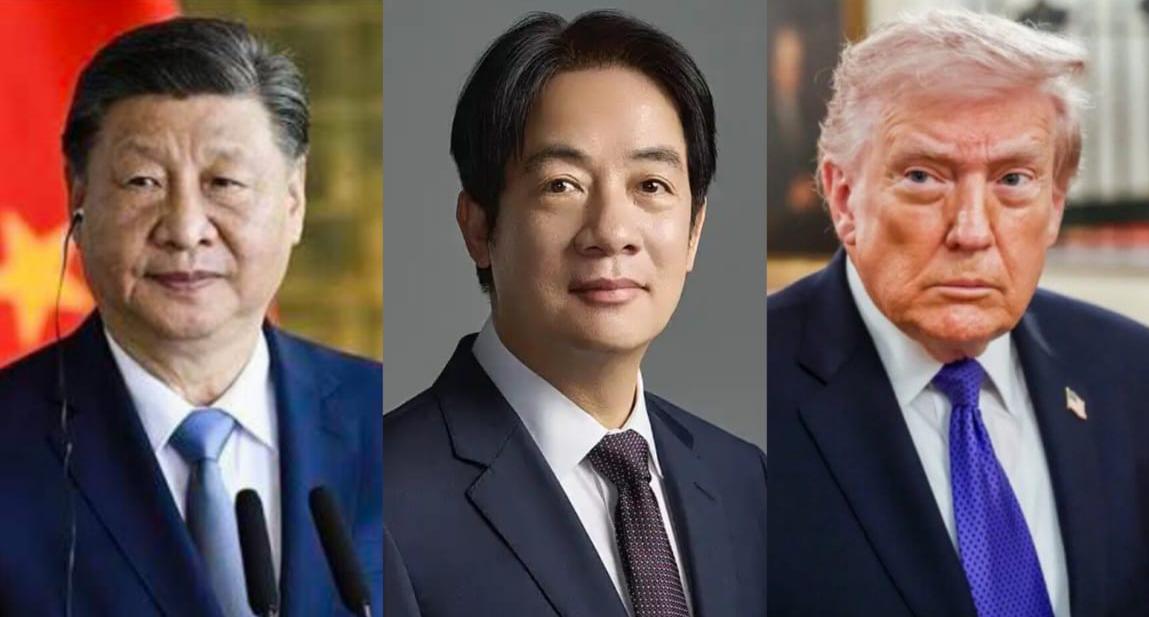
International political observers are increasingly raising concerns that China could intensify moves toward annexing Taiwan following the recent diplomatic engagements between United States President Donald Trump and Chinese President Xi Jinping in Beijing.
The fears emerged amid growing geopolitical speculation that major global powers may be quietly negotiating strategic concessions involving Taiwan, the Ukraine war, Middle East tensions, and global energy security.
Although there is no public evidence of any formal agreement between Washington and Beijing over Taiwan, analysts say China’s increasingly confident posture toward the island suggests Beijing may believe the international environment is gradually becoming more favorable to its long-standing reunification ambitions.
Taiwan remains the most sensitive issue in US–China relations. Beijing considers the self-ruled island an inseparable part of Chinese territory under the “One China” principle and has repeatedly vowed to achieve reunification, by force if necessary.
During the Beijing summit, Xi Jinping reportedly warned that mishandling Taiwan could lead to “clashes and even conflicts,” a statement interpreted by security experts as one of China’s strongest warnings to Washington in recent years.
The summit discussions reportedly focused on trade, artificial intelligence, military tensions, and the escalating Iran crisis, but Taiwan overshadowed all other strategic issues.
Political analysts say Beijing may now attempt to increase pressure through:
- Military drills around Taiwan,
- Air and naval incursions,
- Diplomatic isolation,
- Economic coercion,
- Cyber operations,
- Psychological pressure campaigns.
Speaking on the broader geopolitical implications of recent world events, GLOBAL TRACKER Editor-in-Chief, Sani Magaji Ibrahim, popularly known as GARKO, said current developments resemble historical power-sharing arrangements among global superpowers.
“It is like history would represent itself again,” GARKO said.
The recent Trump–Xi summit to the earlier meeting between Trump and Russian President Vladimir Putin held on August 15, 2025, at Joint Base Elmendorf–Richardson in Anchorage, Alaska.
According to GARKO, geopolitical observers strongly speculated after the Alaska summit that Russia could receive indirect acceptance of its control over captured parts of Ukraine in exchange for broader strategic cooperation with Washington.
“It was strongly believed Russia agreed to allow the United States to arrest Venezuelan President Nicolás Maduro and benefit from Venezuelan oil arrangements, while the US would allow Russia to annex captured parts of Ukraine,” he stated.
However, there is no verified evidence publicly confirming the existence of such an agreement between Washington and Moscow. Reports from the Alaska summit indicated that no formal deal was announced following the Trump–Putin meeting.
GARKO further argued that similar geopolitical bargaining fears are now emerging regarding Taiwan and the ongoing tensions involving Iran.
“It was said that the United States may eventually shun Taiwan and allow the Chinese government to annex Taiwan, while in return China could pressure Iran for more concessions in the Strait of Hormuz and flexibility regarding ceasefire negotiations in the ongoing Iran conflict involving the United States and Israel,” he said.
Again, there is currently no public evidence confirming the existence of any such agreement between Washington and Beijing over Taiwan or Iran.
Nevertheless, the remarks reflect growing international anxiety that major powers may increasingly prioritize strategic deals aimed at preventing wider global conflict and economic disruption.
Taiwan remains one of the world’s most dangerous geopolitical flashpoints because it involves:
- Two nuclear superpowers,
- Global semiconductor supply chains,
- International shipping routes,
- Military alliances across Asia.
Any conflict over Taiwan could severely disrupt the world economy, particularly the global technology sector, as the island hosts Taiwan Semiconductor Manufacturing Company, the world’s leading advanced semiconductor producer.
Despite mounting speculation, experts say a direct Chinese annexation of Taiwan would still carry enormous military, economic, and diplomatic risks.
Taiwan maintains its own democratic government, military, and economic system, while the United States continues unofficial military and political support for Taipei.
Analysts believe Beijing may instead pursue a long-term strategy aimed at weakening Taiwan gradually through economic, diplomatic, and military pressure rather than launching an immediate full-scale invasion.
The future of Taiwan is now increasingly viewed as a defining issue in the emerging global struggle for power between China and the United States, with the outcome expected to shape international politics, security, and economic stability for decades to come.