
Communities across Kano State have contributed an estimated of over ₦100 million in cash and kind to support healthcare facilities during the year under review, as part of efforts to strengthen community participation and improve healthcare service delivery.
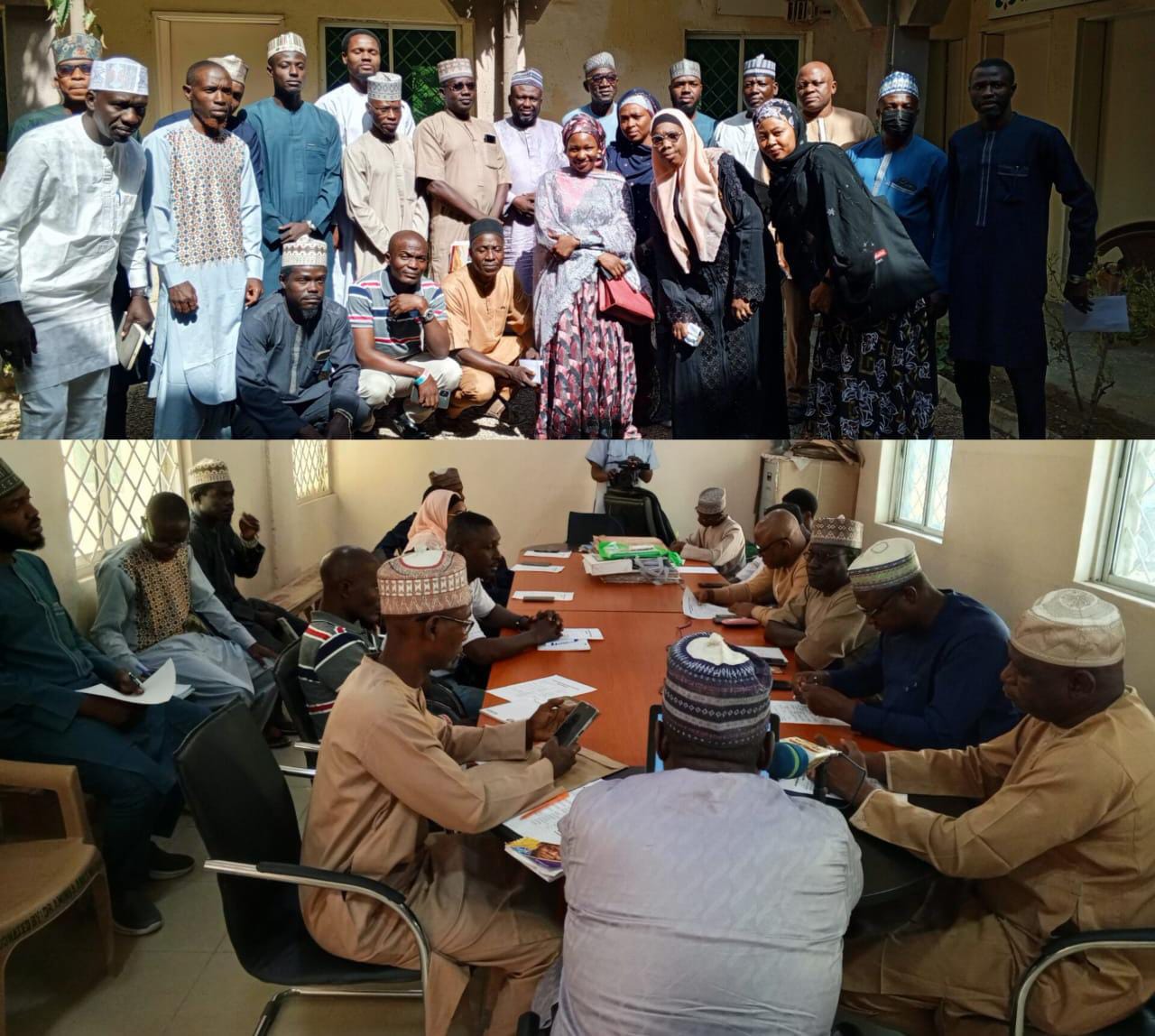
The disclosure was made by the Chairman of the Civil Society in Malaria Immunization and Nutrition (ACOMIN) in Kano State, Dr. Nura Haladu, during the organisation’s quarterly state-level media meeting, where achievements, challenges and recommendations for improving community-led healthcare accountability were presented.
Dr. Haladu explained that the quarterly meeting brings together non-governmental organisations working with ACOMIN to share success stories, identify challenges encountered in implementing their activities and discuss possible ways forward.
READ ALSO: ACOMIN Seeks Stronger Action On HIV, TB, Malaria In Kano
He said ACOMIN operates through the Community-Led Monitoring (CLM) approach, which encourages communities to take ownership of Global Fund-supported healthcare facilities and participate actively in ensuring that available medical commodities and other resources are properly utilised.
According to him, the initiative has focused on sensitising community members across the 13 states where ACOMIN operates on the importance of protecting, maintaining and supporting healthcare facilities within their localities.
He explained that communities had contributed to addressing various challenges in health facilities, including repairing boreholes, providing sitting materials, ensuring proper utilisation of available medical commodities, supplying sanitation materials and reconstructing toilets.
Dr. Haladu further disclosed that communities across the 13 states where ACOMIN operates had contributed more than ₦1.7 billion in cash and kind to support healthcare facilities during the year under review.
He specifically put the value of community contributions in Kano State at approximately ₦100 million, covering both financial donations and material support to health facilities.
The ACOMIN Kano chairman described the contributions as evidence of the importance of community participation in strengthening healthcare delivery and ensuring that health facilities receive support beyond government and donor interventions.
Also speaking, ACOMIN Programme Officer, Malam Sharif Abubakar, highlighted the organisation’s achievements in Kano State, particularly through community-led advocacy, monitoring and stakeholder engagement across Global Fund-supported Local Government Areas and healthcare facilities.
He said ACOMIN had established platforms through its network of Community-Based Organisations (CBOs), Community-Led Monitoring Teams (CLMTs) and Community Accountability Teams (CATs), enabling community members to document challenges affecting healthcare services, engage providers and advocate for corrective actions.
Abubakar explained that the interventions cover monitoring the availability and accessibility of malaria, HIV and tuberculosis services, identifying shortages of essential medicines, medical commodities and diagnostic services, as well as advocating for improved healthcare infrastructure, electricity, water supply and sanitation.
He added that the organisation also engages traditional institutions, religious leaders, community structures and government officials to address identified gaps while promoting feedback mechanisms between healthcare facilities and service users.
According to him, ACOMIN conducts advocacy follow-ups to monitor commitments made by relevant authorities and assess actions taken to resolve challenges identified by community monitoring teams.
He maintained that these interventions had strengthened community voices and positioned Community-Led Monitoring as an important accountability mechanism within Kano State’s healthcare system.
The programme officer stressed that community-led monitoring should not be regarded merely as a donor-funded project activity, but as an effective approach to improving health governance, mobilising domestic resources and ensuring that healthcare services respond to the actual needs of communities.
As the Global Fund Grant Cycle 7 approaches its close-out, Abubakar called on stakeholders to move beyond commitments and take concrete, measurable steps to sustain the gains recorded through the initiative.
He urged the Kano State Government to institutionalized community-led accountability, increase domestic health financing and ensure that evidence generated by communities informs health planning, budgeting and service-delivery improvements.
He also called on Local Government Authorities to strengthen collaboration with healthcare facilities and community structures, while encouraging the private sector and philanthropists to support sustainable healthcare improvements through corporate social responsibility initiatives and targeted partnerships.
The programme officer further urged traditional and religious leaders to mobilise communities and promote healthcare utilisation, while calling on civil society and community-based organisations to sustain engagement, evidence generation, advocacy and budget tracking.
He appealed to development partners to continue providing technical support and promoting locally owned accountability mechanisms, while urging the media to amplify community voices, monitor government commitments and report persistent service-delivery gaps.
Also speaking at the meeting, Hajiya Halima Bala Adamu, Advocacy, Communication and Social Mobilisation Officer under the Kano State Malaria Elimination Programme, commended ACOMIN for its community-focused intervention, describing it as a worthwhile initiative that encourages people to take responsibility for healthcare facilities within their communities.
She said one of the important contributions of ACOMIN was its sensitization activities, which educate communities on how to take ownership of health facilities and contribute financially or through material support to improve services at nearby health posts.
“We are happy with this programme at Kano State Ministry of Health. One of the important aspects of ACOMIN is sensitising the communities on how to take ownership of their health facilities, and how communities can contribute their quota in cash or in kind to support any health post around them,” she said.
Halima also commended the Kano State Commissioner for Health, Dr. Abubakar Labaran Yusuf, and Governor Abba Kabir Yusuf for what she described as their commitment and support to the health sector in the state.
The quarterly media engagement provided an opportunity for ACOMIN and its implementing partners to showcase interventions, discuss challenges and emphasise the importance of community participation in improving healthcare delivery.
The presentations underscored the need for stronger collaboration between government institutions, healthcare providers, civil society organisations, traditional and religious leaders, development partners and community members to ensure that healthcare facilities are adequately supported, accountable and responsive to the needs of the people.