
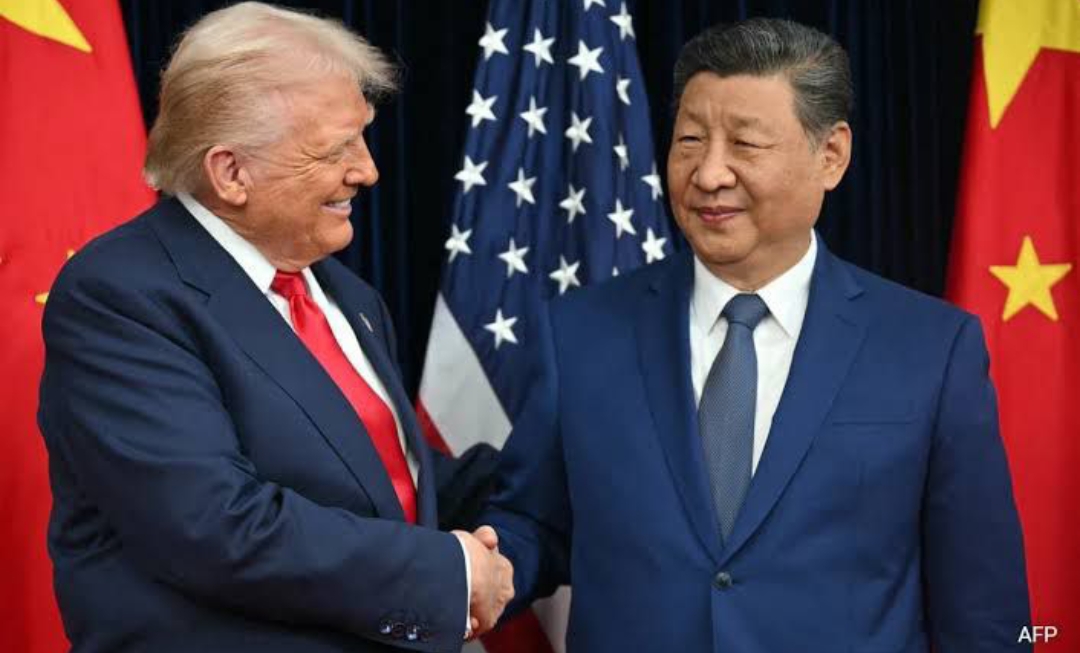
The United States President Donald Trump and Chinese President Xi Jinping on Wednesday opened one of the most closely watched diplomatic meetings in recent years, with trade tensions, the Iran crisis, artificial intelligence, and Taiwan dominating discussions between the world’s two largest powers.
Trump arrived in Chinese capital Beijing for a three-day state visit aimed at stabilizing relations between United States and China amid growing global uncertainty over security and the world economy.
The summit comes at a time when relations between Washington and Beijing remain strained over tariffs, technology restrictions, military rivalry in Asia, and competing influence across the globe.
Speaking during the opening session of the talks, Xi Jinping called for cooperation between both nations and warned against confrontation.
“China and the United States should be partners rather than rivals,” Xi said, describing the relationship between the two countries as “the most important bilateral relationship in the world.”
The Chinese leader further cautioned that mishandling sensitive issues such as Taiwan could trigger “clashes and even conflicts,” in what analysts described as one of Beijing’s strongest warnings to Washington in recent years.
Xi also referenced the “Thucydides Trap,” a geopolitical theory suggesting that war can occur when a rising power challenges an established global power, urging both nations to avoid strategic miscalculations.
President Trump, however, described the talks as “extremely positive and productive,” expressing optimism that both countries could improve economic ties while managing their differences.
According to officials familiar with the discussions, trade and economic cooperation formed the central focus of the summit.
Trump reportedly pressed Beijing to expand purchases of American agricultural products, energy exports, and Boeing aircraft while seeking what he called a “fair and reciprocal” trade relationship.
China, meanwhile, is seeking reduced economic pressure from Washington, including fewer restrictions on Chinese technology firms and improved market access for Chinese companies operating in the United States.
The two leaders are also discussing the growing crisis involving Iran and wider instability in the Middle East.
Washington is reportedly seeking Beijing’s support in reducing regional tensions and protecting global oil supply routes, particularly around the Strait of Hormuz.
China remains a major buyer of Iranian oil and maintains strong diplomatic and economic ties with Tehran, giving Beijing increasing influence in Middle Eastern affairs.
Another major issue dominating the summit is the intensifying global race for technological supremacy. Both countries are competing aggressively in artificial intelligence, semiconductor production, cybersecurity, and quantum computing.
Officials said discussions also covered export controls, AI safety measures, and restrictions affecting advanced computer chips and emerging technologies.
Taiwan remains one of the most sensitive and dangerous flashpoints between the two powers. Beijing considers the island part of Chinese territory and strongly opposes foreign political or military support for Taipei, while Washington continues unofficial security cooperation and arms sales to Taiwan.
Despite the strategic rivalry, analysts say both leaders appear determined to prevent direct confrontation that could destabilize the global economy and international security.
Trump reportedly invited Xi Jinping to visit Washington later this year as part of efforts to maintain direct communication between both governments.
The outcome of the Beijing summit is being closely monitored around the world because decisions taken by the two superpowers could significantly affect global trade, oil prices, technology industries, and geopolitical stability across Asia, Europe, Africa, and the Middle East.