
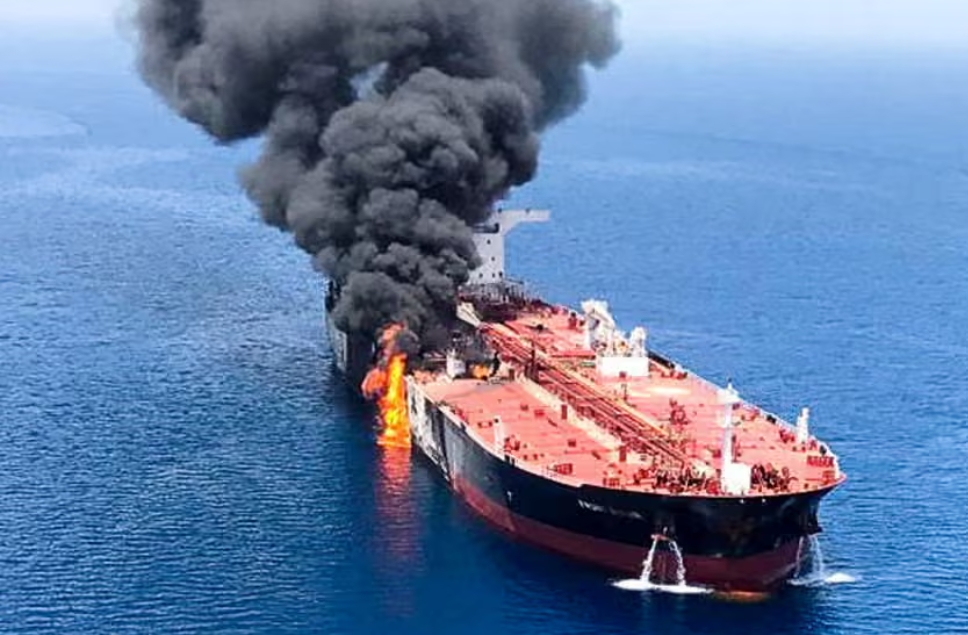
The escalating war involving Iran, the United States, and Israel has entered a dangerous maritime phase after Iran claimed it struck an American oil tanker in the Persian Gulf, even as Russia confirmed that Tehran has not requested military assistance from Moscow.
The Islamic Revolutionary Guard Corps said its naval units targeted a US-linked oil tanker in the northern Gulf, setting the vessel ablaze during a missile strike.
Iranian officials described the attack as part of retaliation against US and Israeli military operations against Iranian territory.
Iranian state media warned that in wartime the country intends to control shipping routes through the nearby Strait of Hormuz, one of the world’s most critical energy corridors through which roughly one-fifth of global oil supplies normally pass.
However, there has been no immediate independent confirmation from Washington or international maritime authorities regarding the tanker strike or the extent of damage to the vessel.
Kremlin: Iran Has Not Asked for Help Yet
As speculation grew over whether Iran’s strategic partners might enter the conflict, the Kremlin moved to clarify Russia’s position.
Kremlin spokesman Dmitry Peskov said Iran has not requested military aid or weapons supplies from Russia despite the ongoing conflict.
“There were no requests from Iran in this case,” Peskov told reporters during a briefing in Moscow.
Russia maintains close relations with Iran, including a 20-year strategic partnership agreement signed in 2025, but the deal does not include a mutual defense clause requiring Moscow to fight alongside Tehran.
Russian officials have instead condemned US and Israeli attacks on Iran and called for an immediate ceasefire, while avoiding direct involvement in the war.
Strategic Calculations
Analysts say Iran’s decision not to formally request Russian support at least for now may reflect Tehran’s desire to keep the conflict from escalating into a broader global confrontation involving major powers.
At the same time, the attack on a tanker in the Persian Gulf signals Iran’s willingness to expand the battlefield beyond land and air strikes to include global energy supply routes, raising fears of a wider economic shock.
Shipping companies have already begun avoiding the Strait of Hormuz, while insurers are reassessing coverage for vessels operating in the region.
Risk to Global Energy Markets
The Gulf’s shipping lanes are a lifeline for international oil and gas trade. Any sustained disruption could sharply increase global energy prices and trigger supply shortages across Asia, Europe, and beyond.
Military analysts warn that attacks on oil tankers could quickly transform the conflict into a global economic crisis, especially if more vessels are targeted or if the Strait of Hormuz becomes effectively closed.