
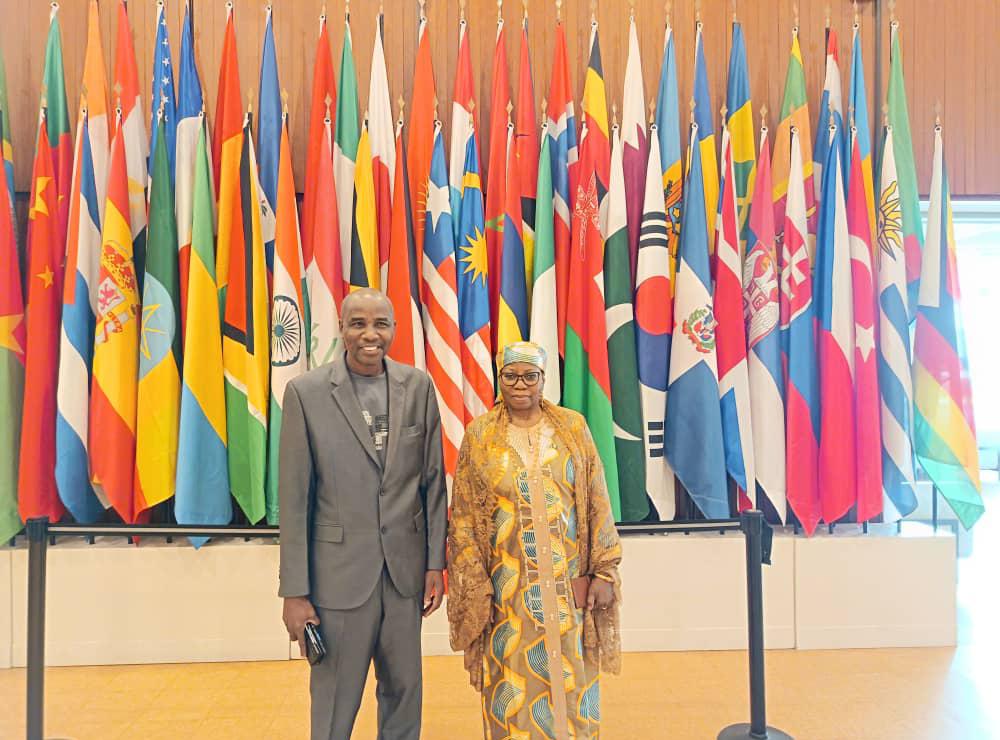
The Commissioner for Education in Kano State, Gwani Ali Haruna Abubakar Makoda, has paid an official visit to the headquarters of the United Nations Educational, Scientific and Cultural Organization (UNESCO) in Paris as part of efforts to strengthen international collaboration in the development of the state’s education sector.
The commissioner was received by Hajjo Sani, Permanent Delegate to UNESCO, during the high-level engagement aimed at advancing sustainable educational opportunities and expanding global partnerships for Kano State.
According to a statement issued by the Director of Public Enlightenment at the Kano State Ministry of Education, Musbahu Aminu Yakasai, discussions during the visit focused on strengthening cooperation between Kano State and UNESCO in critical areas of educational development.
Key issues deliberated upon included:
- Technical and Vocational Education and Training (TVET),
- youth skills acquisition,
- Educational innovation,
- Digital learning,
- Expanding access to quality basic education across the state.
Speaking during the engagement, Commissioner Ali Haruna Abubakar Makoda emphasized the importance of strategic international partnerships in addressing modern educational challenges and preparing young people for economic empowerment and national development.
“Strategic collaboration remains critical in addressing contemporary educational challenges and equipping our youths with relevant skills for economic empowerment and sustainable development,” the commissioner stated.
He reaffirmed the commitment of the administration of Governor Abba Kabir Yusuf toward improving learning outcomes and promoting inclusive, equitable, and quality education across Kano State.
Dr. Makoda further explained that the visit is expected to create new opportunities for technical support, institutional collaboration, and educational innovation that would strengthen ongoing reforms in the state’s education sector.
In her remarks, UNESCO Permanent Delegate Hajjo Sani commended the Kano State Government for prioritizing education and investing in human capital development.
She expressed UNESCO’s readiness to support initiatives aimed at strengthening vocational education, digital learning systems, capacity building, and youth empowerment programmes in the state.
“UNESCO remains committed to supporting initiatives that promote human capital development, particularly in vocational training, digital education, and institutional capacity building,” she stated.
The visit reflects Kano State’s growing engagement with international development institutions in pursuit of educational reforms, workforce development, and improved access to quality learning opportunities for children and youths across the state.
The development also aligns with the state government’s broader education reform agenda, which includes school renovation projects, teacher recruitment, youth skills development, and expansion of access to modern learning infrastructure.