
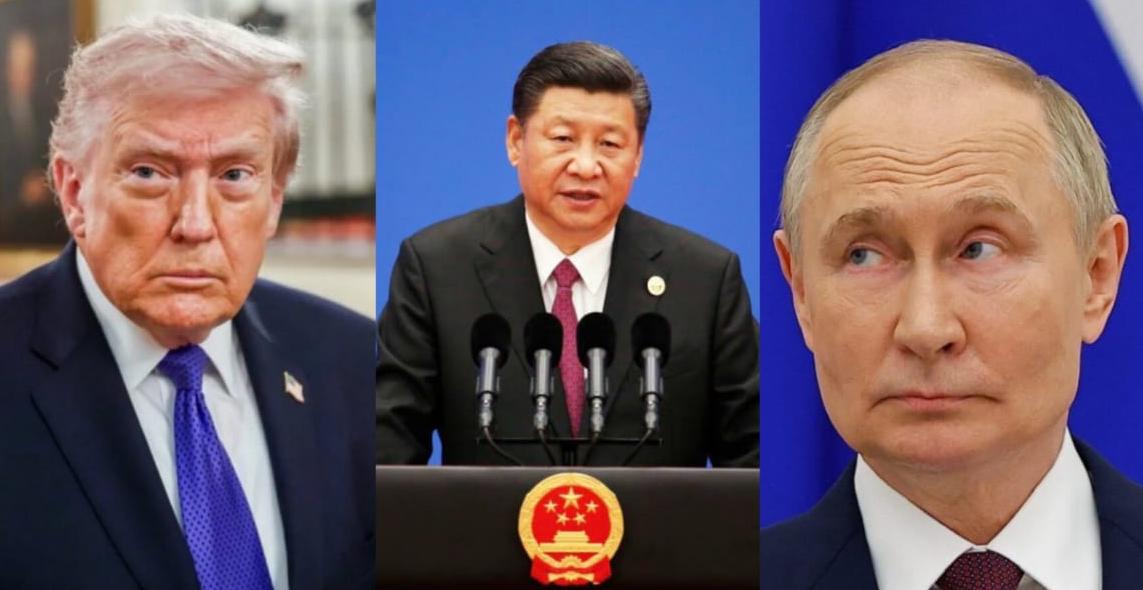
A dramatic new phase in global geopolitics is unfolding as the ongoing Ukraine war, the escalating Iran conflict, and intensifying competition among world powers push nations toward what analysts increasingly describe as a “multipolar world order.”
The rapidly changing international landscape became more visible following consecutive high-level visits to China by United States President Donald Trump and Russian President Vladimir Putin within the same week, signaling Beijing’s growing role at the center of global strategic diplomacy.
The diplomatic engagements highlighted the growing struggle for influence between the United States, Russia, and China, as each power attempts to secure strategic advantages amid mounting global instability.
READ ALSO: China May Annex Taiwan Months After Trump’s Visit — Global Tracker Analysis Revealed
Chinese President Xi Jinping and Putin used their Beijing summit to promote what they described as a more “just and equitable” international order while condemning what they called “hegemonic countercurrents” and irresponsible unilateral policies.
The language reflected growing opposition from Beijing and Moscow toward what they see as decades of Western, particularly American, dominance in international affairs.
Ukraine War Deepens Global Polarization
The ongoing war in Ukraine remains one of the biggest drivers of the emerging geopolitical divide.
Russia’s prolonged military campaign and the sweeping sanctions imposed by Western nations have pushed Moscow into deeper economic and strategic cooperation with China. Analysts say Russia increasingly relies on Beijing for:
- Trade,
- Technology,
- Energy exports,
- Diplomatic backing,
- Financial cooperation.
During Putin’s visit, both countries signed numerous cooperation agreements covering energy, transportation, science, technology, and investment.
China has officially maintained a neutral position on the Ukraine conflict, repeatedly calling for political dialogue rather than openly condemning Russia’s invasion.
However, Western governments continue to view Beijing as providing Moscow with critical economic lifelines that help Russia withstand international sanctions.
Despite their close ties, analysts note that the China–Russia partnership also contains underlying tensions, particularly regarding energy pricing, growing economic imbalance, and Russia’s increasing dependence on Chinese markets.
Iran War Expands Global Strategic Competition
At the same time, the worsening conflict involving Iran, the United States, and Israel has further complicated global diplomacy.
The war and the prolonged instability around the Strait of Hormuz, a vital global oil shipping route have intensified fears of worldwide economic disruption.
Trump’s Beijing summit with Xi reportedly focused heavily on the Iran crisis, with Washington seeking Chinese assistance in pressuring Tehran toward ceasefire flexibility and reopening energy routes.
China holds significant leverage because it remains one of Iran’s largest oil customers and maintains close economic and diplomatic ties with Tehran.
During Putin’s subsequent visit to Beijing, Xi reportedly stressed the need to stop the conflict in the Middle East, describing the global environment as “complex and volatile” while warning against “unilateral hegemony running rampant.”
The overlapping crises in Ukraine and Iran are increasingly linking Europe, the Middle East, and Asia into one interconnected geopolitical struggle.
China Positions Itself As Global Power Broker
The back-to-back summits involving Trump and Putin demonstrated China’s growing diplomatic importance.
Analysts say Beijing is attempting to position itself as:
- A global mediator,
- An economic stabilizer,
- A strategic balancing force,
- And a leading architect of the emerging world order.
While Trump’s visit focused largely on trade negotiations, Taiwan tensions, and the Iran crisis, Putin’s summit produced broader strategic coordination and deeper political agreements between Beijing and Moscow.
Xi’s diplomacy appears aimed at balancing relations with Washington while simultaneously strengthening long-term strategic cooperation with Russia.
Taiwan Adds To Global Tensions
The issue of Taiwan continues to overshadow relations between China and the United States.
During the Trump–Xi summit, Beijing reportedly warned Washington against increasing support for Taiwan, which China considers part of its territory.
Analysts say Taiwan remains one of the world’s most dangerous geopolitical flashpoints because any confrontation there could trigger direct conflict between major powers while disrupting global semiconductor supply chains and international trade.
Emergence Of A Multipolar World
Political observers say the simultaneous crises involving Ukraine, Iran, Taiwan, and global trade are accelerating the decline of a unipolar world dominated by a single superpower.
Instead, nations such as China and Russia are increasingly promoting a multipolar international system in which global influence is distributed among several major powers rather than centered primarily around Washington.
Global Tracker Editor-in-Chief Sani Magaji Ibrahim, popularly known as GARKO, described the current geopolitical moment as a historic turning point.
“It is like history would represent itself again,” GARKO said while reflecting on the growing negotiations and strategic alignments among world powers.
He argued that the simultaneous diplomacy involving Washington, Beijing, and Moscow resembles earlier eras in which major powers negotiated spheres of influence during periods of intense global tension.
Although analysts differ on how the new global order will evolve, there is growing consensus that the Ukraine war, the Iran conflict, and the rise of China are fundamentally reshaping international politics.
The outcome of these interconnected crises is expected to influence global security, energy markets, trade relations, and military alliances for decades to come.