
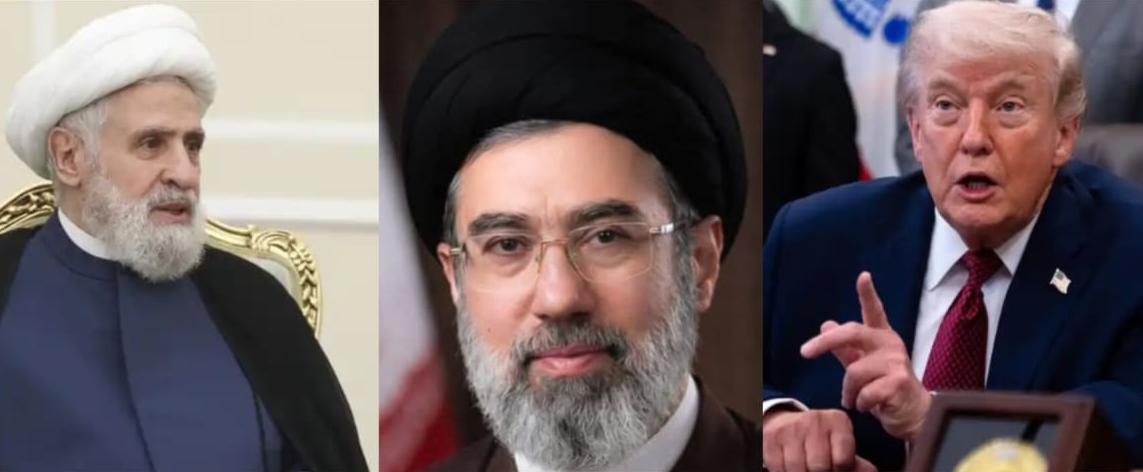
The fragile ceasefire between the United States and Iran faced growing uncertainty on Saturday as military confrontations, diplomatic accusations and expanding Israeli operations in Lebanon pushed the Middle East closer to a wider regional crisis despite ongoing international peace efforts.
Tensions escalated sharply after Iran accused Washington of violating the memorandum of understanding (MoU) designed to end the war, while Hezbollah declared the Israel-Lebanon framework agreement “null and void” and vowed to continue armed resistance against Israeli forces.
The developments come only days after Pakistan announced that the United States and Iran had agreed to a ceasefire and broader peace framework following intensive diplomatic mediation aimed at ending months of conflict that shook global energy markets and threatened regional stability.
READ ALSO: BREAKING: ‘No More Naval Blockade Against Iran After Concessions’ — Trump
However, the truce now appears increasingly fragile as fighting and political tensions continue across several fronts.
Iran’s Foreign Ministry accused the United States of breaching the ceasefire agreement after reported American air strikes targeted positions along Iran’s southern coast near the strategically vital Strait of Hormuz.
Tehran said its military responded by striking targets linked to US forces, insisting the retaliation was a legitimate response to what it described as American aggression and a violation of commitments made under the peace framework.
The latest accusations emerged shortly after US President Donald Trump announced that Washington would abandon plans for a naval blockade against Iran following what he described as “major concessions” made by Tehran during negotiations.
Trump’s remarks were viewed internationally as a major signal of de-escalation because fears of a blockade in the Strait of Hormuz had rattled global oil and shipping markets throughout the conflict.
The narrow waterway remains one of the world’s most critical maritime energy corridors, carrying a substantial share of global crude oil, gas and petrochemical exports.
Meanwhile, regional tensions deepened further after Qatar, United Arab Emirates and Kuwait condemned alleged Iranian attacks targeting Bahrain, warning that continued escalation could destabilize the Gulf region and threaten international energy security.
The Gulf states expressed solidarity with Bahrain and called for restraint and renewed diplomacy, amid growing fears that the ceasefire could collapse before a final peace accord is formally signed.
Bahrain occupies a particularly sensitive strategic position because it hosts the headquarters of the U.S. Fifth Fleet, making it central to American naval operations in the Gulf.
At the same time, the conflict in Lebanon has become one of the most volatile fronts in the wider regional confrontation.
Israeli forces have expanded military operations deep inside southern Lebanon, including offensives around Beaufort Ridge, Wadi al-Salouqi and areas north of the Litani River.
Israeli Prime Minister Benjamin Netanyahu has defended the operations as necessary to weaken Hezbollah and secure Israel’s northern border following months of cross-border fighting.
But Hezbollah’s leadership has rejected Israeli and international diplomatic efforts tied to the conflict.
Naim Qassem declared that the framework agreement between Israel and Lebanon was now “null and void,” arguing that continued Israeli military presence inside Lebanese territory invalidated the arrangement.
Qassem also insisted Hezbollah “will not abandon” armed resistance, signaling that the group intends to continue military operations unless Israeli forces fully withdraw from Lebanese territory.
The statement aligns closely with Iran’s broader regional position.
Iran’s Islamic Revolutionary Guard Corps has repeatedly stated that no lasting peace can exist in the region without Israeli withdrawal from Lebanon and a halt to attacks on Lebanese civilians.
The continuing war has also inflicted severe humanitarian and economic consequences across the region.
In Lebanon, Israeli strikes and military operations have reportedly killed hundreds of civilians and medical workers, destroyed infrastructure and displaced thousands of residents from southern towns and villages.
International human rights organizations and United Nations officials have repeatedly expressed concern over civilian casualties and the destruction of hospitals and humanitarian facilities during the fighting.
At the same time, the conflict severely disrupted Iran’s energy infrastructure and petrochemical exports.
Iranian officials now say emergency reconstruction efforts have restored large sections of damaged refining and petrochemical facilities, with authorities targeting up to 80 percent recovery within two months.
The reopening of Iranian energy facilities has begun easing fears of a prolonged global energy shock after months of market volatility linked to attacks on oil and petrochemical infrastructure.
Analysts say the future of the ceasefire may now depend on whether diplomatic negotiations can outpace the rapidly escalating military developments across Lebanon, the Gulf and Iran itself.
While Washington and Tehran continue to publicly support ongoing talks, deep mistrust remains on all sides.
The United States accuses Iran and its allies of destabilizing the region through missile and drone attacks, while Iran insists American and Israeli military actions are undermining peace efforts and violating ceasefire commitments.
With Israeli forces advancing deeper into Lebanon, Hezbollah refusing to disarm, Gulf states fearing wider instability and Iran warning against further attacks, the Middle East now faces one of its most dangerous and unpredictable moments in recent years.
Diplomats and world powers are racing to preserve the fragile ceasefire before the region slides into a broader war that could threaten global energy supplies, maritime security and international stability far beyond the Middle East.