
BY: IBRAHIM ABUBAKAR JOMBALI
There are moments when governance transcends the routine implementation of policies and becomes a genuine partnership built on trust, shared responsibility and a common vision for the future.
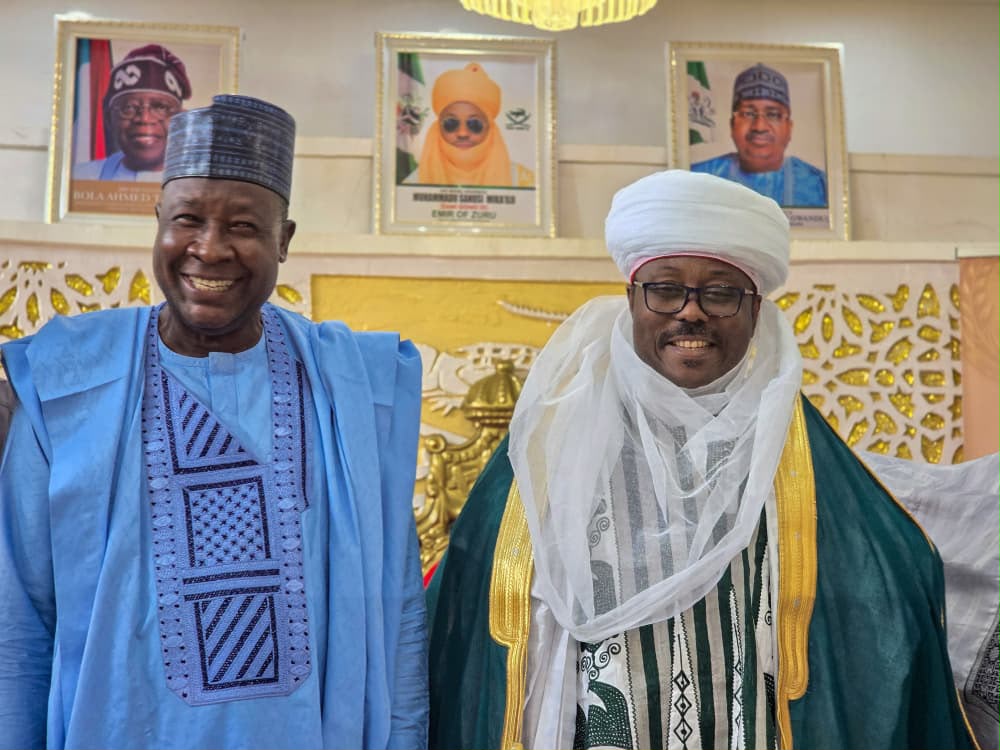
Such was the essence of the recent engagement between the Kebbi State Government’s media team and the traditional institutions of the Zuru Emirate—an interaction that demonstrated how government and traditional leadership can work together to advance peace, security and sustainable development.
Far from being an ordinary stakeholders’ meeting, the engagement reaffirmed the enduring relevance of traditional institutions as indispensable partners in governance.
It underscored the reality that meaningful development is best achieved when elected leaders and traditional rulers work in harmony to address the needs and aspirations of the people.
Leading the discussion, the Emir of Zuru, His Royal Highness Muhammad Sanusi Mikailu, Sami Gomo III, commended Governor Nasir Idris for what he described as a people-centred approach to governance.
According to the monarch, the administration’s investments in infrastructure are gradually transforming the socio-economic landscape of the emirate.
Among the projects highlighted was the ongoing Dabai–Mahuta–Koko Road, which the Emir described as a strategic investment capable of improving connectivity, stimulating commerce, promoting rural development and strengthening unity among communities across the state.
Beyond infrastructure, the Emir acknowledged the significant improvement in security across the emirate. He noted that renewed peace has restored public confidence, revived economic activities and enabled communities previously affected by insecurity to resume their normal lives.
The monarch also praised Governor Idris for adopting a consultative style of leadership that gives traditional rulers a voice in decisions affecting their communities. By engaging emirs, district heads and other community leaders, the administration has reinforced the important role of traditional institutions as partners in governance rather than mere custodians of culture.
The Emir further commended the government’s renovation of palaces across the emirate’s chiefdoms, describing the initiative as an investment in preserving the dignity and effectiveness of traditional leadership.
He also lauded the provision of Sport Utility Vehicles (SUVs) to traditional rulers, noting that the vehicles have enhanced their mobility and improved their ability to respond to the needs of their communities.
Security featured prominently during the discussions. The Emir applauded the construction of a Mobile Police Barracks and the establishment of Forward Operating Bases in strategic locations, saying the initiatives have strengthened the emirate’s security architecture and created a safer environment for residents and investors.
Perhaps the most significant contribution came from the traditional rulers of Wasagu and Dabai chiefdoms, who advocated stronger institutional collaboration between security agencies and traditional authorities.
While acknowledging the government’s achievements, they argued that traditional rulers possess invaluable local knowledge that can significantly improve intelligence gathering and early warning systems. As custodians of their communities, they are often the first to detect unusual movements, identify emerging threats and understand local dynamics before security challenges escalate.
Their recommendation highlighted an important truth: sustainable peace cannot be achieved through military deployments alone. Effective security also depends on community participation, trust and collaboration between government institutions and local leaders. Every district head, village chief and traditional council represents a vital source of information capable of strengthening preventive policing and enhancing public safety.
By the end of the engagement, it was evident that the meeting had achieved far more than an exchange of commendations. It reinforced a governance philosophy rooted in consultation, inclusion and shared responsibility. The discussions reflected an administration that recognises that development is more sustainable when communities are actively involved in shaping policies that affect their lives.
The Zuru Emirate engagement therefore stands as a compelling example of how government and traditional institutions can work together to promote peace, strengthen security and accelerate development.
It demonstrated that while infrastructure connects communities physically, trust and cooperation remain the enduring foundations of lasting progress.
In Zuru, the partnership between the throne and the government has evolved into a model of inclusive governance—one that offers valuable lessons for other states seeking to deepen community participation in development.
Governor Nasir Idris’ administration has, through this collaborative approach, inspired renewed confidence among the people and created opportunities for growth across communities.
The positive relationship between the state government and the traditional institution reflects a shared determination to build a more peaceful, prosperous and united Kebbi State.