
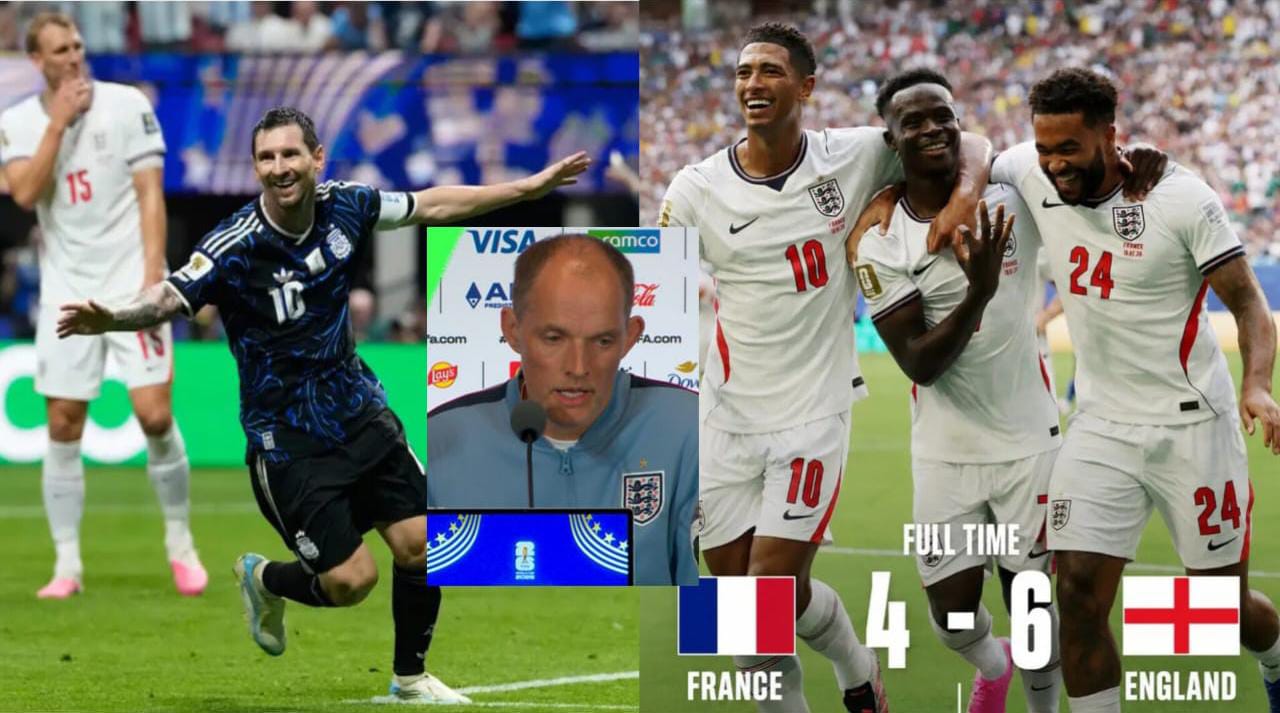
England’s dramatic 6-4 victory over France in the 2026 FIFA World Cup third-place playoff has reignited debate over one of the tournament’s biggest tactical questions:
Why did head coach Thomas Tuchel abandon his attacking approach and adopt a defensive strategy after England took a 1-0 lead against Argentina in the semi-final?
While Tuchel has not publicly linked the two matches, many football analysts believe England’s astonishing collapse against France provides a compelling explanation for the German tactician’s conservative approach in the semi-final.
READ ALSO: Who Is The 2026 World Cup Final Referee? Meet Slavko Vinčić
Against France, England looked unstoppable during the opening 45 minutes. The Three Lions produced one of their finest first-half displays of the tournament, racing into a commanding 4-0 lead through fast-paced attacking football, clinical finishing and relentless pressure.
At that stage, the contest appeared effectively over.
However, football once again proved its unpredictability.
Within just 21 minutes of the second half, France mounted a remarkable comeback, scoring three unanswered goals to reduce the deficit to 4-3. Suddenly, a match that seemed comfortably under England’s control became a tense battle for survival.
Although England eventually regained their composure, scoring twice more to secure a thrilling 6-4 victory and claim the World Cup bronze medal, the defensive collapse exposed serious weaknesses in the team’s ability to manage matches after establishing a commanding lead.
For many analysts, those frantic 21 minutes may now fundamentally shaped Tuchel’s tactical thinking.
The England manager entered the semi-final against Argentina determined not to make some mistakes that would cost them a change of winning the World Cup. That is why when England broke the deadlock in the 55th minute to take a 1-0 lead, Tuchel appeared to change the team’s approach. Rather than continuing to press high up the pitch in search of a second goal, England gradually retreated into a more compact defensive shape, prioritising organisation over attacking ambition.
Supporters of Tuchel’s strategy argue that the decision was entirely understandable.
However, critics believed that facing Argentina, one of the tournament favourites and a team renowned for punishing defensive mistakes, the England manager may have believed that reducing attacking risks offered the safest route to the World Cup final.
Football history contains numerous examples of coaches becoming more cautious after experiencing dramatic collapses.
Many elite managers have adjusted their tactical philosophy following painful lessons, choosing defensive stability over attacking adventure when protecting narrow advantages in high-stakes matches.
However, not everyone agrees with Tuchel’s apparent approach.
Critics argue that England’s defensive mindset against Argentina ultimately played into the South Americans’ hands.
By sitting deeper and surrendering possession, England invited sustained pressure from Argentina’s talented attackers, allowing wave after wave of attacks to develop.
Many tactical experts insist that the best way to defend a lead is not to retreat, but to continue attacking with controlled aggression.
Maintaining possession higher up the field, pressing opponents quickly and forcing them to defend can often reduce pressure far more effectively than defending deep inside one’s own half.
This philosophy has long been embraced by many of football’s most successful managers, who believe that allowing opponents complete control of possession inevitably increases the likelihood of conceding.
Whether Tuchel’s tactical adjustment was directly influenced by England’s experience against France remains impossible to confirm unless the manager himself addresses the issue publicly.
Nevertheless, the similarities between the two matches have fuelled widespread discussion among supporters, former players and football analysts.
The debate reflects one of football’s oldest tactical dilemmas: Should a team continue attacking after taking the lead, or should it protect its advantage through disciplined defending? There is no universally accepted answer to this.
History has produced countless examples where defensive caution has delivered famous victories. Equally, there are numerous occasions when retreating has invited unnecessary pressure and costly defeats.
For England, the contrasting narratives of the France and Argentina matches may become valuable lessons as they continue building towards future international tournaments.
While the thrilling victory over France ultimately earned the Three Lions a bronze medal, the tactical questions raised by those two matches are likely to remain part of football discussions for years to come.
Whether Tuchel’s cautious approach was an intelligent response to a painful lesson or an overly defensive strategy that cost England a place in the World Cup final is a debate that may never be settled.
What is certain, however, is that the events of both matches have provided football supporters with another fascinating example of how quickly momentum, confidence and tactical decisions can shape the outcome of games at the highest level.