
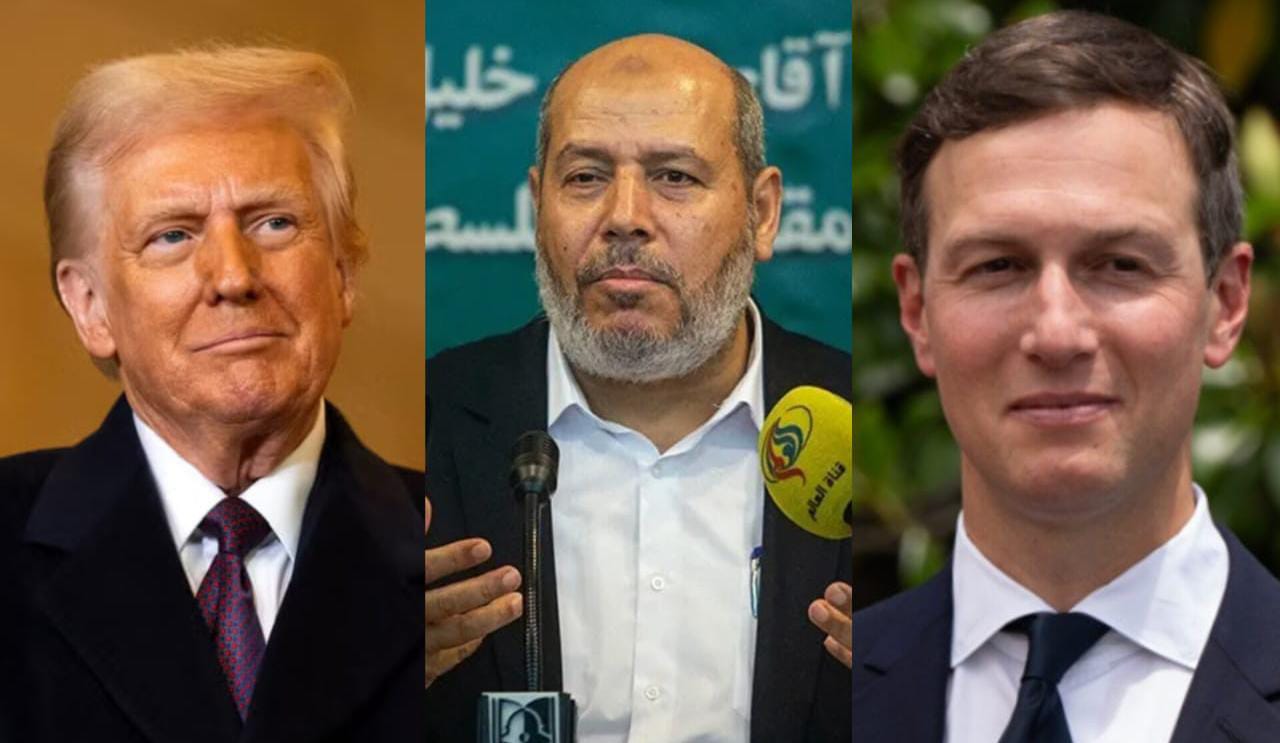
The United States President Donald Trump’s son-in-law and Middle East envoy, Jared Kushner, has held a rare direct meeting with Hamas political leader Khalil al-Hayya in Egypt as Washington intensifies efforts to revive a stalled Gaza peace roadmap and bridge widening differences between Israel and Hamas.
The meeting, held on Sunday, August 16, 2026, forms part of a renewed diplomatic push by the Trump administration to implement its proposed 15-point plan for ending the Gaza conflict, amid continuing Israeli military operations and disagreement over the sequence in which Hamas should disarm and Israeli forces should withdraw from the territory.
Kushner’s engagement with al-Hayya is particularly significant because direct American contacts with Hamas are highly sensitive.
READ ALSO: Hamas Pushes Long-Term Peace Proposal as Cairo Talks Offer New Hope for Gaza Ceasefire
The United States designates Hamas as a terrorist organisation, making face-to-face negotiations between senior US officials and the group’s leadership an unusual diplomatic development.
The meeting took place in Egypt as Kushner and other US-backed peace officials held discussions with Egyptian, Qatari and Turkish mediators. Kushner also met Egyptian President Abdel Fattah el-Sisi as part of the diplomatic effort.
Push To Break Gaza Deadlock
The immediate objective of the Cairo discussions was to find a way to move Trump’s Gaza roadmap from the negotiating table towards implementation.
The plan calls for the disarmament of Hamas, an Israeli military withdrawal from Gaza, the establishment of a new Palestinian civilian administration and the deployment of an international stabilisation mechanism to help maintain security.
But implementation has stalled because Hamas and Israel disagree fundamentally over which step should come first.
Hamas has indicated conditional acceptance of the latest US-backed roadmap, while insisting that Israeli military operations and occupation-related measures must end as part of the process.
Israel, however, has demanded guarantees that Hamas will be fully and verifiably disarmed before any comprehensive Israeli withdrawal from Gaza.
Prime Minister Benjamin Netanyahu has publicly rejected the roadmap in its current form.
The disagreement has left Washington attempting to persuade both sides to accept a phased process in which security and political commitments are implemented simultaneously and monitored by international actors.
What Kushner Discussed With Hamas
The Cairo meeting reportedly focused on the practical steps required to implement the US-backed roadmap.
Among the central issues were Hamas’ weapons and military capabilities, an Israeli withdrawal from Gaza, continued ceasefire arrangements, humanitarian access and the future administration of the territory.
Kushner was also seeking concrete and verifiable commitments from Hamas concerning its willingness to surrender its weapons and accept a new political and security arrangement for Gaza.
Hamas, meanwhile, raised its concerns over Israeli actions and what it regards as violations of the ceasefire framework, while maintaining that Israel must also fulfil its commitments under any agreement.
The negotiations therefore reflect a difficult balancing act: Washington wants Hamas to make irreversible security concessions, while Hamas wants guarantees that Israel will withdraw and end military operations rather than use disarmament negotiations to secure unilateral concessions.
Kushner Then Meets Netanyahu
Following the Cairo discussions, Kushner travelled to Jerusalem on Monday for talks with Israeli Prime Minister Benjamin Netanyahu.
The sequence of the meetings was significant: the US envoy first engaged Hamas and then went directly to Israel in an attempt to narrow the gap between the two sides.
Kushner was accompanied by Nickolay Mladenov, a senior figure involved in Trump’s Gaza peace initiative. Their meeting with Netanyahu focused on the same roadmap that Washington is attempting to rescue.
Netanyahu, however, has maintained that Israel cannot accept an arrangement that allows Hamas to retain its military capabilities.
According to reports, the Israeli position remains that Hamas must be genuinely and completely disarmed before Israel undertakes a full military withdrawal.
That position represents one of the biggest obstacles confronting Trump’s peace initiative.
Hamas’ Position
Hamas has indicated that it is prepared to work towards disarmament under an agreed framework, but it has linked the issue to broader political and security arrangements.
The group wants guarantees concerning the end of Israeli military operations, Israeli withdrawal, humanitarian access and the future governance of Gaza.
Hamas also wants Gaza to be administered by Palestinians rather than remain under direct Israeli military control.
The proposed US roadmap envisages a Palestinian technocratic administration taking responsibility for day-to-day governance while an international mechanism assists with security and reconstruction.
This would represent a major transformation of Gaza’s political structure, particularly if Hamas relinquishes its armed capabilities and no longer controls the territory’s administration.
Trump Under Pressure To Deliver
The renewed diplomatic mission reflects Trump’s desire to demonstrate progress towards ending the Gaza conflict.
The US administration is facing the difficult task of reconciling two positions that remain far apart.
Hamas has accepted the broad framework of the latest roadmap but wants reciprocal Israeli commitments.
Netanyahu’s government, meanwhile, wants Hamas’ military infrastructure dismantled before Israel makes major concessions.
Trump’s envoys are therefore attempting to construct a phased arrangement that could satisfy both sides without requiring either Israel or Hamas to make all of its concessions at the beginning of the process.
The proposal for monitored disarmament followed by Israeli withdrawal is intended to create confidence between the parties and prevent either side from exploiting the transition.
International Mediators Involved
Egypt remains central to the negotiations because of its geographic position and its longstanding role in Gaza diplomacy.
Qatar and Türkiye are also involved in the mediation effort, while the United States is using its political influence with Israel and its channels with Palestinian actors to push the negotiations forward.
The participation of multiple mediators reflects the complexity of the conflict and the difficulty of securing an agreement acceptable to Israel, Hamas and the broader Arab world.
Gaza Violence Continues
The diplomatic initiative comes against the backdrop of continuing violence in Gaza.
Israeli forces continue to carry out strikes against targets they say are linked to Hamas, while Palestinian officials and international organisations continue to warn about the humanitarian consequences of the conflict.
The continued violence has increased pressure on negotiators to reach an agreement capable of converting the existing ceasefire framework into a more durable settlement.
The situation has also generated growing regional concern, with Arab governments pressing Washington to ensure that the peace process produces a genuine end to hostilities rather than another temporary pause.
Why The Kushner-Hamas Meeting Matters
Kushner’s meeting with al-Hayya is significant beyond the immediate negotiations.
It demonstrates that Washington is prepared to engage directly with Hamas when the administration believes such contact is necessary to achieve a political settlement.
It also underscores the importance of al-Hayya in the current Hamas leadership.
The meeting gives the United States a direct channel through which to communicate its demands to Hamas while allowing Hamas to present its conditions directly to a senior American representative.
For Israel, however, direct US engagement with Hamas could be politically sensitive, particularly if Washington begins pressing Netanyahu’s government to accept compromises it has previously rejected.
A Difficult Road Ahead
Despite the diplomatic activity, a final agreement remains far from certain.
The central dispute—whether Hamas should disarm before an Israeli withdrawal or whether disarmament and withdrawal should occur simultaneously in phases—has not been resolved.
Netanyahu’s political calculations also complicate the negotiations, while Hamas faces pressure over whether surrendering its weapons could leave it without meaningful guarantees regarding Gaza’s future.
The success of Trump’s initiative will therefore depend on whether the United States and its international partners can create a credible mechanism for monitoring disarmament, Israeli withdrawal, Palestinian governance and humanitarian assistance.
For now, Kushner’s Cairo meeting with Khalil al-Hayya, followed by his Jerusalem meeting with Netanyahu, represents one of the most significant diplomatic attempts in recent months to break the Gaza deadlock.
It also places Washington at the centre of an extraordinarily difficult negotiation in which the United States must persuade Hamas to surrender its military capabilities, Israel to withdraw its forces, and both sides to trust an international mechanism to enforce their commitments.
Whether the Kushner mission becomes the beginning of a durable Gaza settlement or another unsuccessful attempt at ending the conflict will depend largely on what comes next at the negotiating table.