
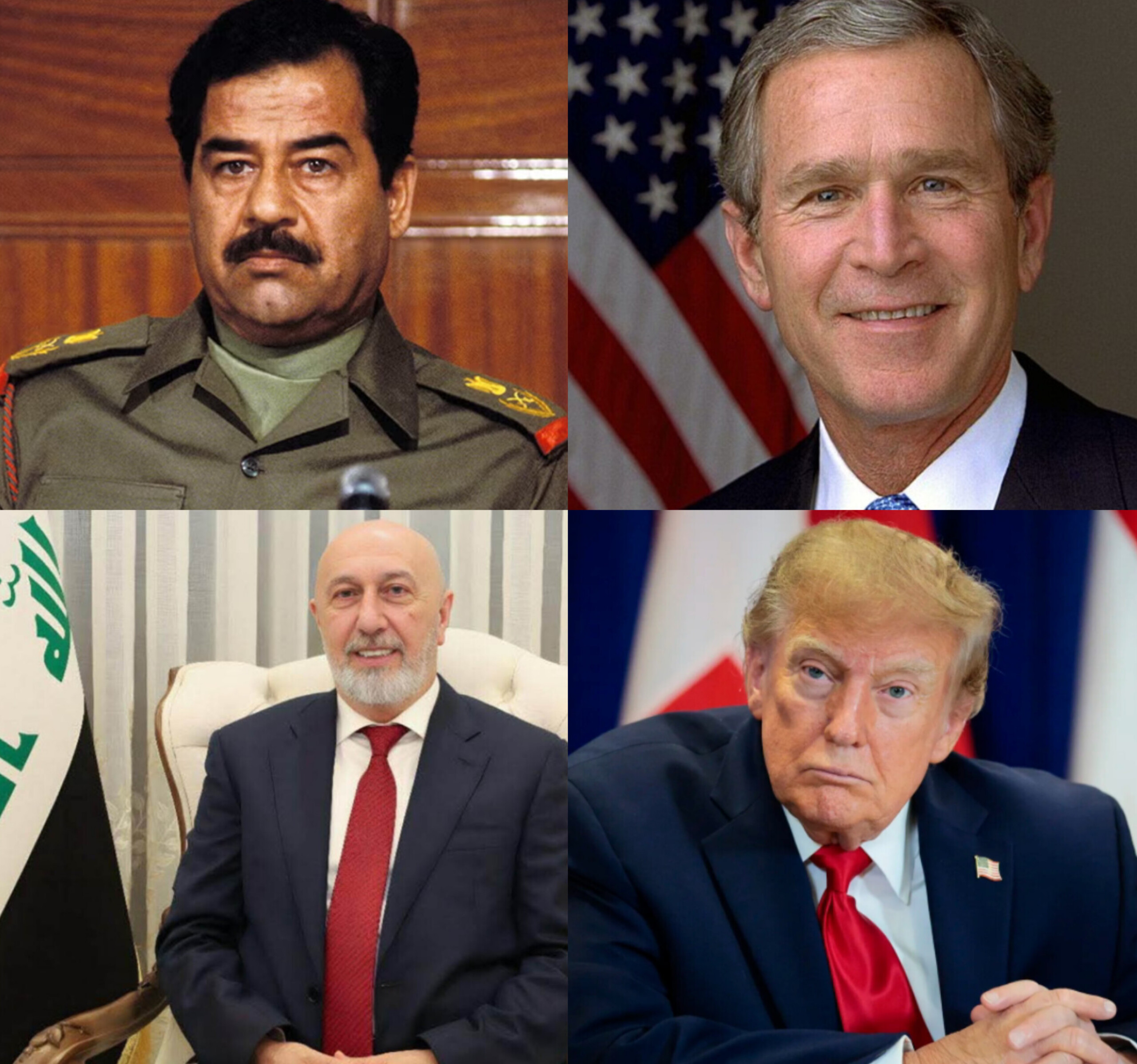
The United States has formally completed the withdrawal of its military forces from Iraq, bringing to an end more than two decades of American military presence in a country whose 2003 invasion transformed its political order and reshaped the wider Middle East.
The final US troops and equipment departed an air base in northern Iraq’s semi-autonomous Kurdistan region on Wednesday, September 30, 2026, ending the 12-year US-led military mission against the Islamic State group, ISIS.
The withdrawal was carried out under a 2024 agreement between Washington and Baghdad and marks the end of the latest phase of a US military involvement that began with the invasion of Iraq in March 2003.
READ ALSO: BREAKING: Iran-backed Group in Iraq Lunches Attacks on Israel
READ ALSO: PCACC Arrests Suspect Over Alleged Illegal Sale, Leasing Of Kano Govt Horse Stable
The Pentagon said the departure represented an orderly transition from a wartime coalition mission to an Iraqi-led security effort, while security cooperation between the two countries is expected to continue on a bilateral basis.
The end of the US military mission closes one of the longest and most consequential chapters of American intervention in the Middle East, but its human, political and strategic consequences remain deeply embedded in Iraq and the wider region.
The 2003 invasion, launched under President George W. Bush after Washington accused Saddam Hussein’s government of possessing weapons of mass destruction and having links to terrorism, quickly toppled Saddam’s government.
US forces entered Baghdad in April 2003, beginning an occupation that was followed by an insurgency, sectarian violence, the rise of Al-Qaeda in Iraq and, eventually, the emergence of ISIS.
The United States formally ended its original combat operation in 2010 and withdrew its remaining combat forces in December 2011.
But the security situation deteriorated dramatically after ISIS seized Mosul and large areas of northern and western Iraq in 2014. At Baghdad’s request, Washington returned with a new international coalition to fight the extremist organisation.
The coalition helped Iraqi forces retake territory controlled by ISIS, including Mosul in 2017. Iraq declared the territorial defeat of ISIS later that year, although the organisation continued to operate through dispersed cells.
The US-led combat mission formally ended in 2021, with American forces remaining primarily for training, advising and intelligence support until the final withdrawal in 2026.
The Human Cost of the Conflict Has Been Enormous.
The Iraq Body Count project currently records about 300,000 violent deaths in Iraq following the 2003 invasion, including civilians and combatants. Its documented civilian death toll stands at between 200,065 and 226,628. The organisation says its figures are compiled from cross-checked media, hospital, morgue, NGO and official records.
On the American side, the US Department of Defense records 4,418 military deaths under Operation Iraqi Freedom, comprising 3,481 hostile and 937 non-hostile deaths. It also records 31,994 wounded in action.
The casualty figures vary among databases because organisations use different definitions, time periods and methodologies.
Some broader studies put the total US military death toll from the Iraq war higher when later phases and related operations are included. The central picture, however, is undisputed: the war produced a massive loss of life among Iraqis and thousands of American military casualties.
Beyond the battlefield, the invasion dismantled Saddam Hussein’s political system and triggered years of instability that altered Iraq’s internal balance of power.
The weakening of state institutions, the insurgency and sectarian conflict contributed to the growth of armed political and religious groups, while Iran expanded its influence through political allies and armed organisations operating inside Iraq.
The US-Iran rivalry subsequently became one of the defining features of Iraq’s post-2003 political and security environment.
That rivalry was dramatically exposed in January 2020 when a US drone strike near Baghdad International Airport killed Iranian Quds Force commander Qassem Soleimani and Iraqi militia commander Abu Mahdi al-Muhandis, further escalating tensions between Washington, Tehran and armed groups in Iraq.
The final US withdrawal now removes the American military presence that had remained in Iraq following the defeat of ISIS’s territorial caliphate.
However, the withdrawal does not mean the end of US-Iraq security relations. The Pentagon has described the new phase as a normal bilateral security relationship, while Iraqi forces are expected to take primary responsibility for confronting remaining ISIS cells and other security threats.
The departure also comes at a sensitive moment for Iraq.
The Iraqi government had sought to link the withdrawal with efforts to disarm non-state armed groups, but some of the country’s most powerful Iran-aligned militias have resisted surrendering their weapons. Earlier reports indicated that the disarmament process faced significant obstacles.
For Iraq’s Kurdish region, the end of the American military presence has also generated security concerns, particularly following the removal of US air-defence capabilities and amid wider regional tensions.
The US withdrawal therefore represents both the conclusion of a military era and the beginning of a new security arrangement in which Baghdad is expected to exercise greater responsibility for the country’s defence.
For Washington, the departure ends a military engagement that began with the invasion of 2003, survived the insurgency and sectarian conflict, was followed by a complete withdrawal in 2011, and then returned three years later to confront ISIS.
For Iraq, however, the consequences of those 23 years extend far beyond the departure of the last American soldier.
The war transformed the country’s political structure, contributed to the rise and fall of armed movements, altered the regional balance of power and left hundreds of thousands dead.
As the last US forces leave Iraqi soil, Baghdad now enters a new phase in which its security institutions must confront the remaining ISIS threat, manage powerful armed groups and navigate relations among the United States, Iran and other regional powers without the direct presence of American troops.
The withdrawal thus closes the chapter of America’s military occupation and subsequent counter-ISIS deployment, but the political and strategic consequences of the Iraq war continue to shape the Middle East.