
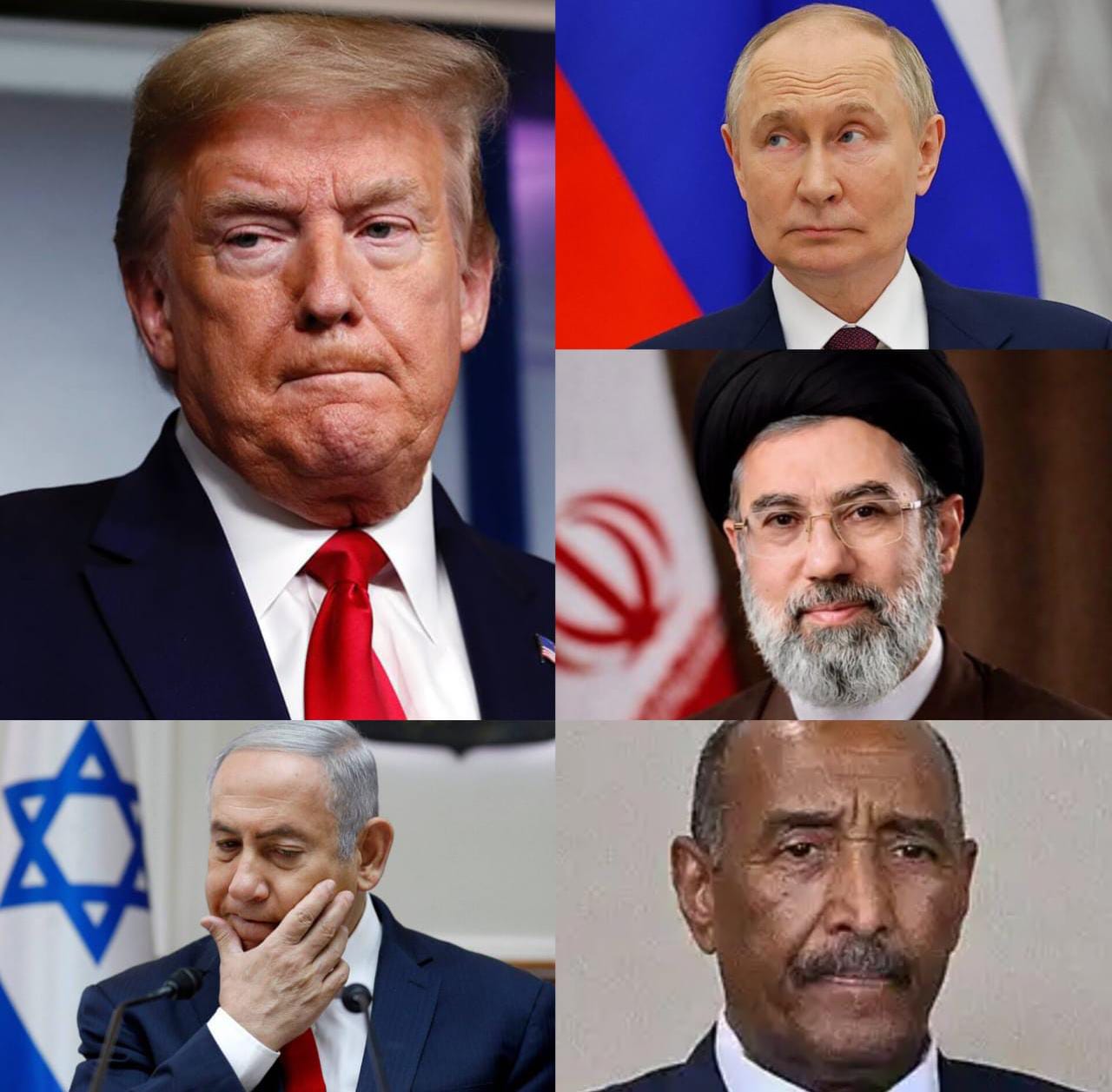
Four major wars and conflicts involving the United States and Iran, Israel and Hamas in Gaza, Russia and Ukraine, and Sudan’s warring parties have taken centre-stage as world leaders gather in New York for the 81st session of the United Nations General Assembly.
The high-level General Debate, which opened on Tuesday, September 22, has brought heads of state, heads of government and other senior representatives from around the world to the UN headquarters amid mounting international concerns over armed conflicts, civilian casualties and worsening humanitarian crises.
Although the Assembly’s agenda covers a broad range of global issues, including climate change, artificial intelligence, development, health and UN reform, the four wars are commanding substantial diplomatic attention because of their scale, international implications and humanitarian consequences.
READ ALSO: Iran, Houthis Reject Saudi Claim Of Makkah Drone Attack
US-IRAN WAR
The war between the United States and Iran is one of the most immediate crises confronting world leaders at the Assembly.
United States President Donald Trump used his address to defend Washington’s military campaign against Iran and warned that further action could follow if a diplomatic settlement is not reached.
At the same time, Trump indicated that the United States remains open to negotiations with Tehran, creating a parallel diplomatic track at a gathering attended by senior Iranian officials.
Iranian President Masoud Pezeshkian is also expected to present Tehran’s position, providing the two sides with major international platforms to advance competing accounts of the conflict.
The confrontation has implications far beyond the battlefield, particularly for security in the Middle East, global oil markets and international shipping.
The Strait of Hormuz has become a major concern because of its importance to global energy supplies. Any prolonged disruption could have consequences for oil prices, trade and economies far beyond the region.
The central UNGA questions include whether diplomacy can stop further escalation, the future of Iran’s nuclear programme, regional security and the humanitarian consequences of the war.
ISRAEL GENOCIDAL WAR ON GAZA
The Gaza war is another major conflict commanding international attention at the Assembly, particularly because of the scale of Palestinian casualties, destruction and the continuing dispute over Israel’s conduct of the war.
More than 73,000 Palestinians have been killed in Gaza since October 2023, according to Palestinian health officials cited in current international reporting. The figure does not distinguish between civilians and combatants.
The humanitarian crisis has also become a central international concern, with widespread displacement, destruction of homes and critical infrastructure and severe pressure on humanitarian services.
The conflict has generated allegations of war crimes and genocide against Israel. A UN Independent International Commission of Inquiry has previously concluded that Israel committed genocide in Gaza, a finding that Israel rejects.
Israeli Prime Minister Benjamin Netanyahu is expected to address the General Assembly and defend Israel’s position, while Palestinian President Mahmoud Abbas is expected to address the Assembly by video after the United States denied him a visa to attend in person.
The Gaza debate also encompasses Palestinian statehood, the two-state solution, humanitarian access, reconstruction and accountability under international law.
RUSSIA-UKRAINE WAR
The Russia-Ukraine war is also occupying a prominent place in UNGA diplomacy, with efforts to find a path towards ending the conflict continuing alongside renewed fighting.
Ukrainian President Volodymyr Zelenskyy is in New York seeking international support and holding discussions with world leaders, including US President Donald Trump.
Trump has called for an end to the war, while Zelenskyy has been pressing for stronger security guarantees and measures to protect Ukraine’s civilian and energy infrastructure.
The diplomatic efforts are taking place as Russian and Ukrainian forces continue exchanging missile and drone attacks.
The war has also become a wider international security issue, affecting relations between Russia, the United States and European countries, as well as sanctions, energy security, Black Sea shipping and global food supplies.
For the UN, the conflict remains a major test of its capacity to promote peaceful settlement of disputes and uphold the principles of the UN Charter.
SUDAN WAR
In Africa, Sudan’s devastating war is also receiving significant attention as world leaders confront what the UN describes as one of the world’s largest humanitarian crises.
The conflict between the Sudanese Armed Forces and the Rapid Support Forces began in April 2023 and has killed and displaced huge numbers of people.
UN-linked estimates have put the reported death toll at more than 150,000, although establishing the exact number remains difficult because many areas affected by the fighting are inaccessible.
About 33.7 million people require humanitarian assistance, while millions have been forced from their homes.
The conflict has produced widespread hunger, severe food insecurity, disease outbreaks and the collapse of essential health and social services in many parts of the country.
UN officials have also raised concerns over the supply of weapons and military support to the rival forces, warning that external assistance is helping prolong the conflict.
Diplomatic discussions at UNGA are therefore focused on an immediate ceasefire, protection of civilians, humanitarian access, accountability for alleged abuses and a political process capable of ending the war.
Four Wars, One Global Crisis
The four conflicts have different causes and actors, but their consequences are increasingly global.
The US-Iran war threatens wider Middle Eastern stability and international energy supplies.
The Gaza war remains a major humanitarian and international-law crisis while keeping Palestinian statehood at the centre of diplomatic discussions.
The Russia-Ukraine war continues to reshape European security and global relations while affecting energy and food markets.
The Sudan war has produced mass displacement, hunger and a humanitarian emergency affecting millions of Africans.
Their prominence at UNGA 81 comes as the United Nations seeks to demonstrate that diplomacy and multilateral cooperation can still address major international crises.
Secretary-General António Guterres, who is attending his final General Assembly before leaving office at the end of 2026, has repeatedly urged countries to pursue diplomacy, respect international law and protect civilians.
While climate change, artificial intelligence, sustainable development, health, rising sea levels and reform of the international system remain important items on the Assembly’s agenda, the continuing wars have ensured that peace, security, civilian protection and humanitarian action remain at the heart of the 81st UN General Assembly in New York.