
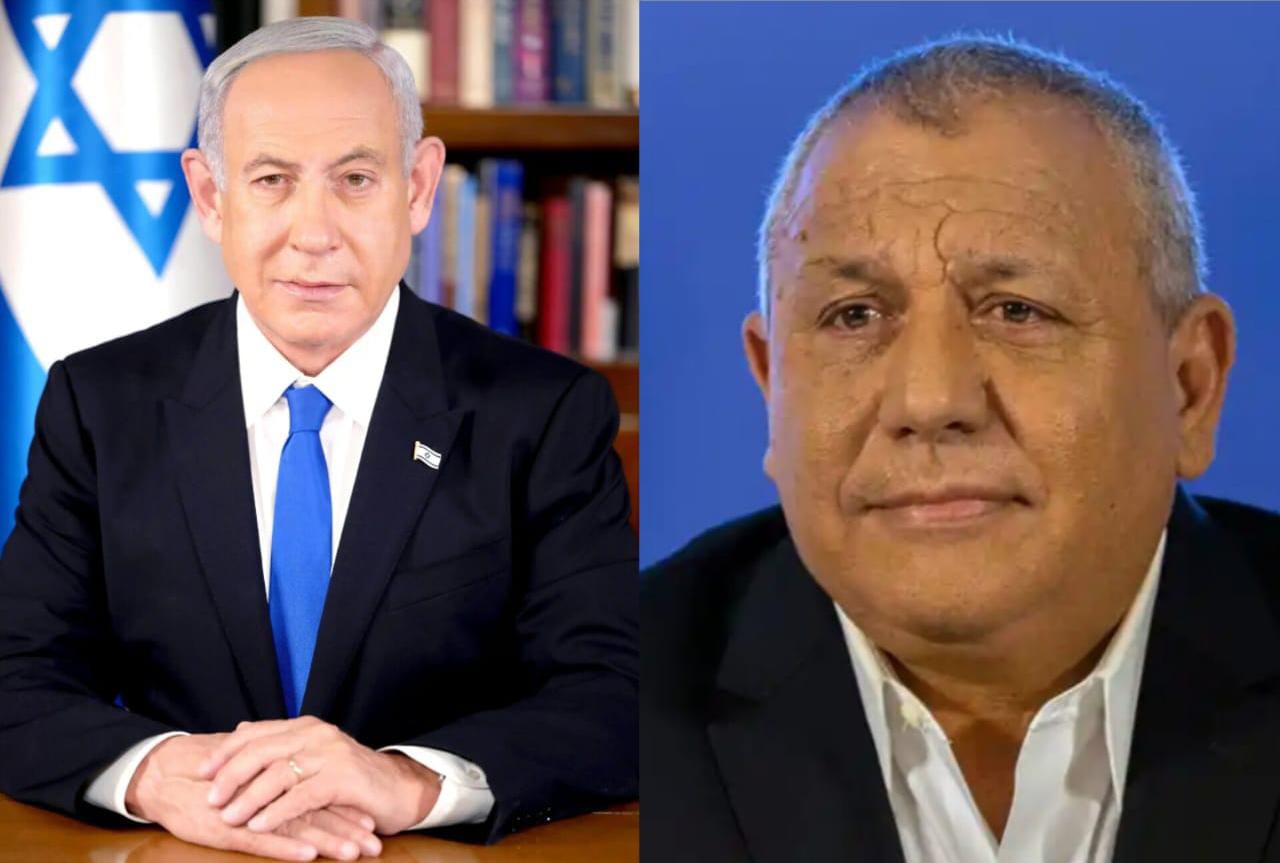
Israeli Prime Minister Benjamin Netanyahu is facing an uncertain political future after the October 27 parliamentary election left his right-wing bloc short of the majority needed to form a government, while Arab-led parties recorded a historic electoral breakthrough.
Provisional results released by Israel’s Central Elections Committee on Thursday showed Netanyahu’s bloc projected to secure 53 seats in the 120-member Knesset, against 48 seats for the opposition grouping led by former military chief Gadi Eisenkot.
Arab-led parties were projected to win a combined 19 seats, potentially giving them a decisive role in determining who governs the country.
Neither major political bloc has secured the 61 seats required for a parliamentary majority, leaving Israel facing weeks of potentially difficult negotiations as political parties explore alliances, minority-government arrangements or the possibility of another election.
The outstanding ballots, including votes cast by soldiers and diplomats, are not expected to substantially change the overall balance, although the final official results are still being processed.
The outcome represents a significant challenge for Netanyahu, whose Likud-led coalition currently has a larger parliamentary presence than its projected result in the next Knesset.
Despite emerging as the largest political bloc, his allies remain eight seats short of the threshold required to govern independently.
Eisenkot and his allies face a different challenge. Although their combined projected seats are insufficient to form a government alone, cooperation with Arab-led parties could potentially provide the numbers needed to remove Netanyahu from power.
However, such an arrangement remains politically complicated because several opposition leaders have previously rejected joining a government dependent on Arab-party support.
Yair Golan, leader of the centre-left Democrats party, has urged opposition leaders to consider cooperation with Arab parties. He is expected to participate in discussions with Eisenkot and other opposition figures as efforts begin to explore whether an alternative government can be assembled.
Yousef Jabareen, head of the Arab-majority Joint List, has indicated a willingness to cooperate with an opposition-led government seeking to replace Netanyahu, while making clear that cooperation does not necessarily mean joining the coalition itself. Such support could potentially sustain a minority government, although its long-term stability would remain uncertain.
The Arab-led parties’ projected 19 seats mark a record combined representation and place them in a potentially influential position in the post-election negotiations. Their gains also highlight the importance of turnout among Palestinian citizens of Israel, whose votes could shape the balance of power in parliament.
Netanyahu, however, has continued to signal his preference for a right-wing government and has pledged to remain aligned with far-right partners, including National Security Minister Itamar Ben-Gvir and Finance Minister Bezalel Smotrich. His position could make a broader unity government more difficult to negotiate, while the opposition must overcome internal disagreements about working with Arab parties.
Netanyahu’s Likud party has also alleged that Arab-led parties compromised the integrity of the election, claims that have not been substantiated by publicly established evidence in the reports available so far. The Central Elections Committee is examining the complaint through the post-election process.
Israeli President Isaac Herzog is expected to play a central role in the next stage of the process. Once the official results are confirmed, he will consult political factions and determine which candidate has the strongest chance of forming a government.
Herzog has urged party leaders to approach negotiations with an open mind and make every effort to avoid another election. The process could involve competing candidates seeking parliamentary recommendations and negotiating agreements with smaller parties.
If no candidate can assemble a viable government after the constitutionally prescribed attempts, Israel could be forced into another election, potentially extending the country’s political uncertainty into next year.
Until a new government is formed, Netanyahu is expected to remain caretaker prime minister, retaining important responsibilities over national security and foreign policy.
The election was held amid deep divisions over Netanyahu’s leadership, the wars and security challenges confronting Israel, accountability for the Hamas-led October 7, 2023 attacks, and exemptions from military service for ultra-Orthodox Jewish men.
Security concerns remain central to Israeli politics, while the question of how the next government will approach Gaza, relations with the Palestinians and regional tensions is likely to influence coalition negotiations.
Any change in leadership would not automatically produce a major shift in policy, as the composition and priorities of a new coalition would determine its direction.
The United Nations human rights chief, Volker Türk, has expressed hope that Israel’s next government will change course and respect international law, adding another international dimension to the debate over the country’s future direction.
The election has therefore produced neither a decisive victory for Netanyahu nor a clear path to power for his opponents. Instead, it has created a political contest in which coalition arithmetic, relations with Arab-led parties and the willingness of rival factions to compromise may prove more important than which bloc finishes ahead.