
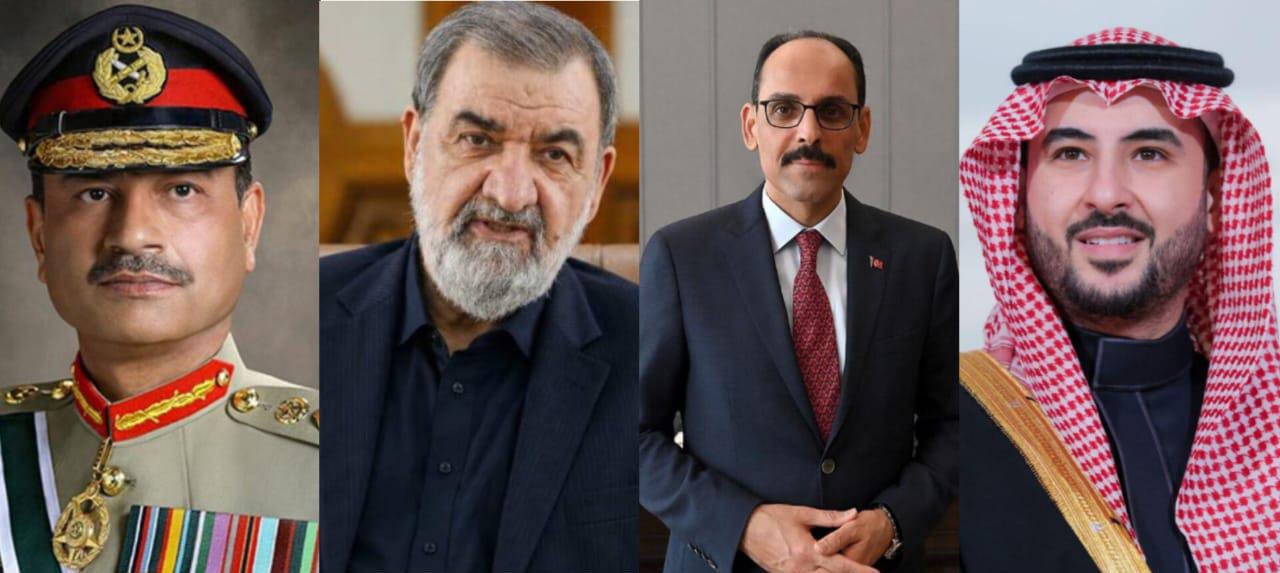
Saudi Arabia, Pakistan and Türkiye have held high-level talks with Iranian officials in Tehran to prevent renewed fighting involving Iran, the United States and Israel, as US President Donald Trump weighs whether to pursue diplomacy or resume military action.
The meeting on Monday, October 26, brought together Saudi Defence Minister Prince Khalid bin Salman, Pakistan’s army chief, Field Marshal Asim Munir, and Türkiye’s intelligence chief, Ibrahim Kalin, alongside Iranian officials. Discussions focused on regional security, reviving US-Iran negotiations, the Strait of Hormuz crisis and escalating Houthi attacks on Saudi Arabia.
Trump said on Sunday that he was considering whether to reach an agreement with Iran or order further military strikes. “I have a decision to make: Do I finish it off, which would be very easy to do, or do I make a deal?” he said, highlighting the uncertainty surrounding Washington’s next move.
READ ALSO: Iran-US Ceasefire Talks Still Ongoing Despite Diplomatic Impasse — Qatar
Iran has indicated its willingness to negotiate but accused Washington of imposing unacceptable conditions. As of Monday, no comprehensive peace agreement or new round of direct US-Iran talks had been officially confirmed. There was also no verified White House statement specifically endorsing the four-country meeting.
The Strait of Hormuz remains a major obstacle to a settlement. Iran wants Washington to lift its naval blockade of Iranian ports and ease restrictions affecting its oil exports, while the United States is seeking secure international shipping and progress on Iran’s nuclear programme.
The waterway carries a substantial share of global oil and gas shipments, making prolonged disruption a threat to international energy supplies and trade. Brent crude was trading around $115 per barrel early Monday amid concerns over supply disruptions and regional instability.
The talks also follow renewed attacks claimed by Yemen’s Iran-aligned Houthi movement against Saudi Arabia. The Houthis said Monday they had targeted Saudi oil-pumping stations and Riyadh airport, although Saudi authorities had not immediately confirmed those specific claims. Saudi Arabia has reported intercepting missiles and drones during the wider conflict.
Saudi Arabia is seeking to protect its territory and critical infrastructure while preventing further escalation. The security situation has gained significance since Saudi Arabia, Pakistan and Türkiye signed the Mecca Joint Defence Agreement in August. Iran is not a member of that arrangement, and the Tehran meeting does not constitute a new military alliance.
Qatar is separately supporting diplomatic efforts between Washington and Tehran, while Pakistan has emerged as an important intermediary, relaying messages between the two sides. Qatari mediators have visited Tehran as part of efforts to reduce tensions, while Pakistan helped facilitate previous negotiations, including an interim arrangement reached in June that later collapsed after hostilities resumed.
The latest initiative seeks to revive diplomacy, but disagreements over sanctions, the blockade, shipping security and Iran’s nuclear programme continue to complicate negotiations.
The expected immediate outcome is continued regional dialogue and an attempt to create conditions for renewed US-Iran negotiations. The participating countries also want to address threats to Saudi Arabia and prevent the conflict from drawing additional regional powers into military confrontation.
However, no comprehensive ceasefire or final peace agreement has been announced. Iran continues to demand relief from the US blockade and sanctions, while Washington is pressing for shipping guarantees and progress on the nuclear issue.
The diplomatic effort is unfolding alongside Israel’s October 27 election and the November 3 US midterm elections, adding to the political uncertainty surrounding the conflict.