
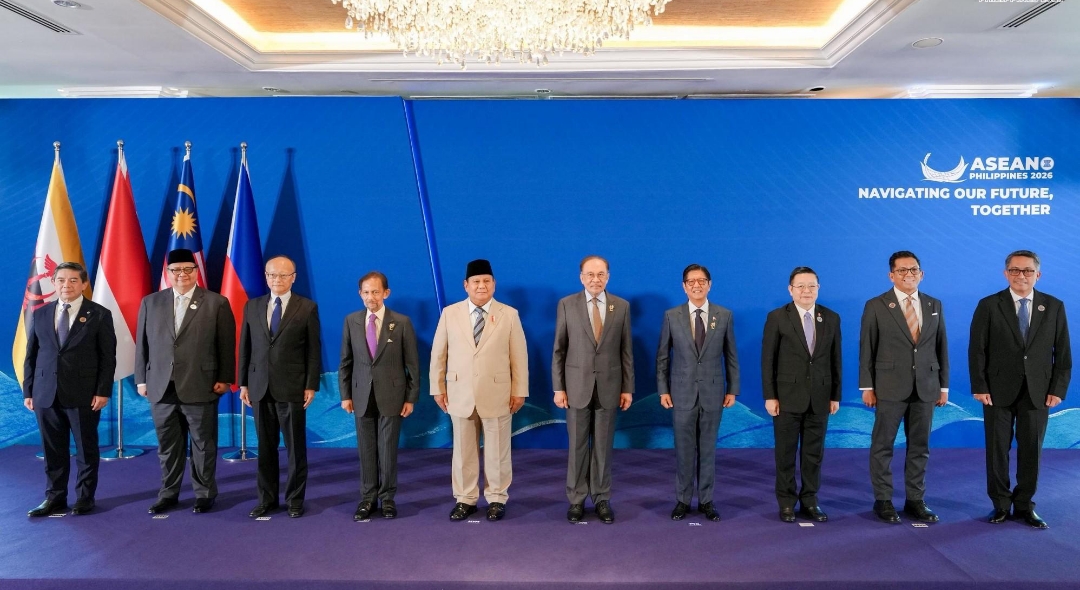
The 49th Association of Southeast Asian Nations (ASEAN) Summit and Related Summits have opened in Manila, Philippines, bringing together Southeast Asian leaders and representatives of major international powers to discuss regional security, economic cooperation, maritime disputes and growing geopolitical tensions.
The summit, chaired by Philippine President Ferdinand Marcos Jr., is taking place from November 15 to 17, 2026, under the theme, “Navigating Our Future, Together.” The gathering comes amid increasing competition between the United States and China, international conflicts and security challenges affecting Southeast Asia.
One of the major developments is the confirmed participation of United States President Donald Trump, who is expected to arrive in Manila on November 17 for the ASEAN-US Special Summit.
READ ALSO: BREAKING: Car Bomb Kills Russian General in Moscow
He is also expected to hold bilateral discussions with Philippine President Ferdinand Marcos Jr. and participate in engagements involving the United States, Japan, Australia and India under the Quadrilateral Security Dialogue (Quad).
Meanwhile, Chinese Premier Li Qiang has participated in discussions with ASEAN leaders ahead of Trump’s expected arrival, highlighting the importance of US-China relations to the summit’s diplomatic agenda.
The South China Sea territorial disputes remain among the most important issues, particularly disagreements involving China, the Philippines, Vietnam, Malaysia and Brunei. Leaders are discussing maritime security, freedom of navigation and negotiations towards a regional Code of Conduct between ASEAN and China. Philippine Foreign Affairs Secretary Maria Theresa Lazaro reported that approximately 80 per cent of the draft agreement had been agreed, although important disagreements remain.
The continuing political and humanitarian crisis in Myanmar is another major concern, with leaders reviewing the implementation of ASEAN’s Five-Point Consensus aimed at ending violence, facilitating humanitarian assistance and promoting inclusive political dialogue.
Energy and food security, regional trade, investment and digital transformation are also prominent on the agenda.
Leaders are discussing ways to protect regional economies against international energy disruptions, particularly those linked to instability in the Middle East, while strengthening agricultural production, electricity connectivity and regional supply chains.
Other priorities include artificial intelligence, cybersecurity, digital trade, maritime security, human trafficking, online fraud, drug smuggling and environmental protection. Several initiatives have emerged from the meetings, including declarations on artificial intelligence, digital talent, critical minerals, creative industries and support for small businesses.
The Philippines is expected to hand over the ASEAN chairmanship to Singapore on November 17, bringing its 2026 leadership of the organisation to a close.
Timor-Leste, ASEAN’s 11th member since 2025, has been designated to chair the organisation in 2029, following Singapore in 2027 and Thailand in 2028.
The Manila summit is taking place at a critical moment for Southeast Asia, with the South China Sea disputes, Myanmar’s conflict, international energy insecurity and US-China strategic competition shaping regional diplomacy.
The success of the gathering will depend on the ability of member states and their international partners to translate diplomatic commitments into practical solutions for regional peace, security and economic development.