
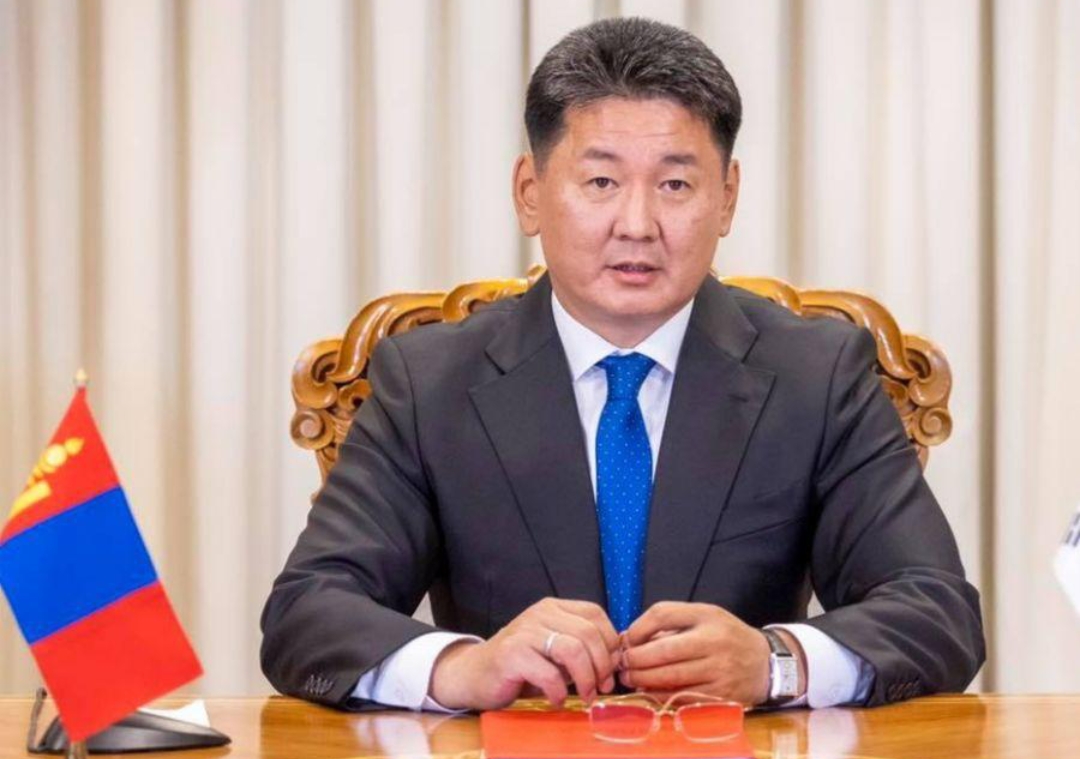
Mongolia’s President, Ukhnaagiin Khurelsukh, has announced his intention to resign amid allegations of a $25 million bribe linked to a major government railway project, as the country’s parliament prepares to decide whether to approve his departure from office.
Khurelsukh announced his decision on Tuesday, November 17, 2026, during an address in Ulaanbaatar, following accusations that he received $25 million in connection with the award of a railway construction contract in 2019, when he was serving as prime minister.
The allegations were raised by former Ulaanbaatar mayor Khishgee Nyambaatar, a member of a different faction of the ruling Mongolian People’s Party (MPP). He alleged that the president benefited from the contract awarded to Bodi International for the construction of the Tavantolgoi–Gashuunsukhait railway.
READ ALSO: Cape Verde President Neves Wins Second Term With 64 Per Cent As Opposition Concedes Defeat
The controversy centres on claims that the contract was awarded without a competitive bidding process and that financial benefits were allegedly transferred to influential political figures. However, the allegations have not been established, and Khurelsukh has strongly denied any involvement in corruption.
In his response, the president said he had never stolen from the Mongolian people or the state, insisting that the accusations were damaging to his reputation. He pledged to cooperate with investigations and explained that stepping aside would allow the allegations to be examined and his honour restored.
Despite the announcement, Khurelsukh has not automatically ceased to be president.
Under Mongolia’s constitutional process, his resignation must be considered and approved by the country’s 126-member unicameral parliament, the State Great Khural.
As of November 17, parliament had neither approved nor rejected the resignation. The matter was expected to pass through the relevant parliamentary committee before consideration by the full chamber later in the week. Until lawmakers formally accept it, Khurelsukh remains the country’s president.
If the parliament approves the resignation, Speaker Sandag Byambatsogt is expected to assume presidential duties temporarily, while a presidential election would be required within four months.
The railway project at the centre of the controversy is valued at approximately $1.28 billion and is considered strategically important to Mongolia’s economy.
It is designed to connect the Tavan Tolgoi coal-producing region with the Gashuunsukhait border crossing into China, improving the transportation of coal to one of Mongolia’s largest export markets.
According to figures reported from an International Monetary Fund assessment, the project’s financing arrangement included approximately $386 million in cash payments and about $896 million to be settled through coal deliveries from the state-owned Erdenes Tavan Tolgoi mining company.
Bodi International, the company awarded the railway contract, has rejected allegations that it paid bribes to government officials, describing the accusations as defamatory. The company has denied wrongdoing in connection with the project.
The controversy has also drawn attention to other senior officials, including Deputy Minister of Justice and Home Affairs Munkh-Erdene Dembereltseren and Cabinet Secretariat head Enkhbayar Battumur, whose names were mentioned in the allegations. Both officials also announced their intention to resign.
Meanwhile, Mongolia’s opposition Democratic Party has called for accountability and investigations into the alleged corruption.
Its lawmakers have also demanded greater transparency over coal offtake agreements involving the state-owned Erdenes Tavan Tolgoi company.
The development comes amid political instability within Mongolia’s ruling party, which has experienced internal divisions and leadership disputes. The country has had three prime ministers within nine months, reflecting continuing political tensions and disagreements among influential political groups.
Mangolia’s dependence on mineral exports, particularly coal shipments to China, makes the railway project economically significant. The controversy has therefore raised broader questions about public procurement, the management of state resources and transparency in major infrastructure contracts.
Khurelsukh’s announcement has placed parliament at the centre of the unfolding political situation. Its decision will determine whether he formally leaves office and whether the country begins the constitutional process for selecting a new president.