
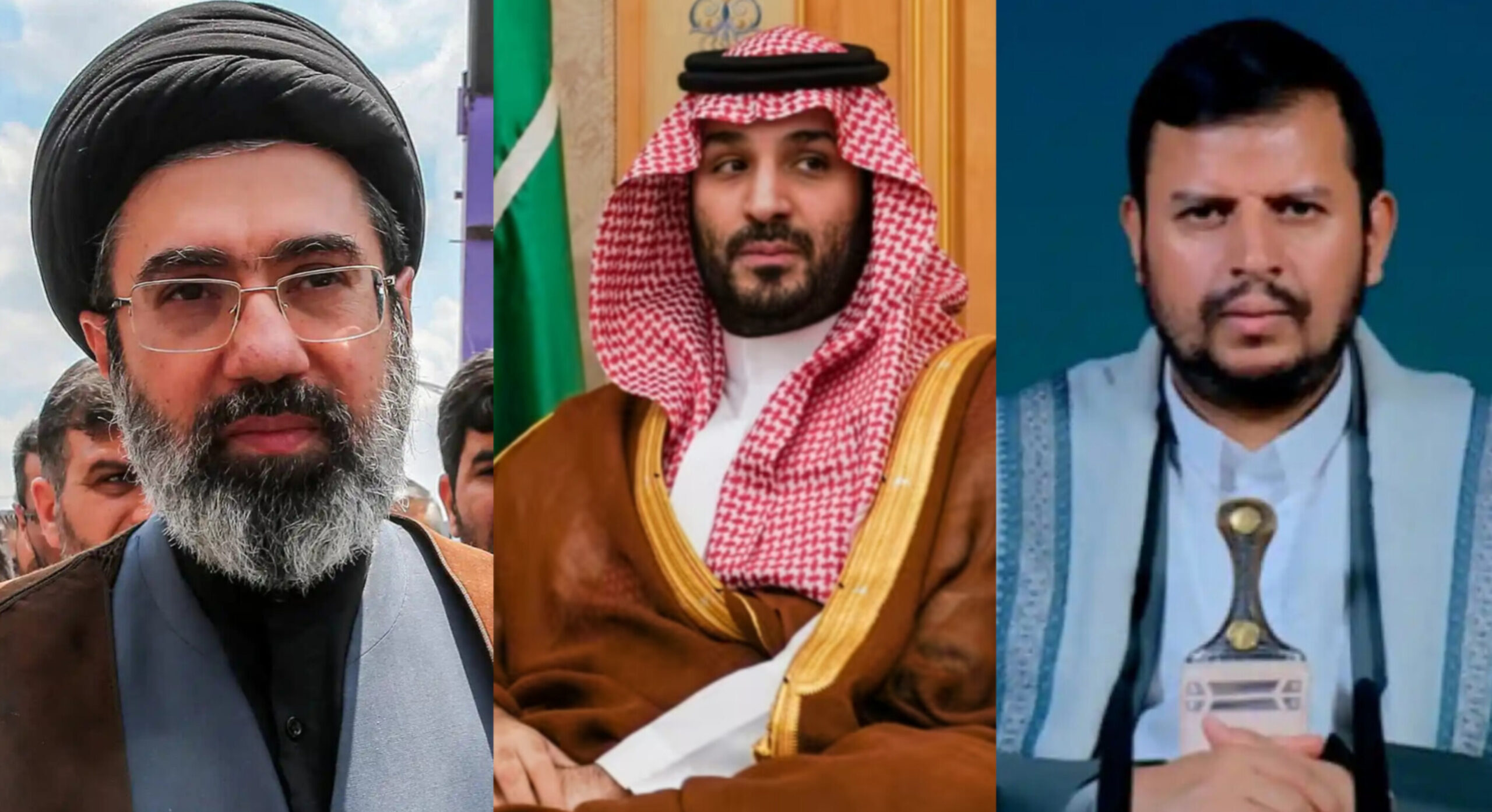
The Islamic Republic of Iran and Yemen’s Houthi movement have rejected Saudi Arabia’s accusation that the group attempted to target the Islamic holy city of Makkah with a drone, with Tehran condemning any aggression against Islamic holy sites while the Houthis said their operations are directed at Saudi military and oil facilities.
Saudi Arabia said its air defences intercepted and destroyed a Houthi drone south of Makkah on Tuesday before it entered the restricted airspace over the holy city.
Saudi-led coalition spokesman Maj. Gen. Turki Al-Malki described the security of Makkah, the Two Holy Mosques and pilgrims as a “red line”, warning that the coalition would take necessary measures against what it called hostile Houthi activity.
The allegation has been strongly denied by the Houthis.
Houthi political bureau member Mohammed Al-Farah described the accusation that the group targeted Makkah as an “outright lie”, while military spokesman Yahya Saree said Houthi operations target Saudi oil facilities and military bases, which he said are far removed from Islamic holy sites.
The Houthis have also maintained that they do not target Islamic holy sites, insisting that their attacks are directed at what they regard as Saudi military and economic targets.
The dispute comes amid a sharp escalation in the long-running Yemen conflict, with the Houthis recently intensifying missile and drone attacks against Saudi Arabia and making significant territorial gains along Yemen’s Red Sea coast.
Reuters reported that the group has developed into a powerful regional force capable of striking Saudi energy infrastructure and disrupting international shipping, while its recent advances have brought it closer to the strategic Bab el-Mandeb Strait.
The Houthis have openly threatened Saudi military and economic infrastructure as fighting intensifies. Their recent attacks have included claimed strikes against energy and military targets in southern Saudi Arabia.
The escalation has also affected Saudi oil infrastructure. Riyadh recently shut its 1,200-kilometre East-West oil pipeline after an aerial attack that Saudi Arabia and Iraq said originated in Iraq, where Iranian-backed militias operate. The pipeline had become particularly important because it allows Saudi Arabia to bypass shipping disruptions in the Strait of Hormuz.
The Makkah allegation has added a highly sensitive religious dimension to the conflict.
Iranian Foreign Ministry spokesman Esmaeil Baqaei said Tehran condemns any aggression against Islamic holy sites, particularly Makkah, Madinah and Al-Aqsa Mosque, as well as threats to pilgrims and neighbouring communities.
However, Baqaei argued that the mere interception of a drone does not by itself establish who launched it, especially because the Houthi-led Yemeni authorities had explicitly denied targeting Makkah.
He also urged countries to prevent the issue of holy-site security from being politicised or used to inflame regional tensions, calling for caution over unverified accusations.
Saudi Arabia, however, has maintained that the drone was Houthi and that its destruction prevented it from entering Makkah’s prohibited airspace. The Organisation of Islamic Cooperation condemned what it described as attacks threatening Makkah and the Madinah region, while several Muslim-majority countries also expressed support for Saudi Arabia.
The incident has not been independently established as a deliberate Houthi attempt to strike the holy city. The available accounts remain sharply contradictory, with Saudi Arabia attributing the drone to the Houthis and the group denying that Makkah was its target.
The controversy comes as the wider Saudi-Houthi confrontation threatens to merge with the broader regional crisis involving Iran, the United States and the security of major Middle Eastern waterways.
The Houthis’ growing presence along Yemen’s Red Sea coast has increased pressure around Bab el-Mandeb, while the continuing disruption of the Strait of Hormuz has already affected global energy and shipping markets.
With Saudi Arabia facing attacks against military and economic targets, the Houthis expanding their territorial control in Yemen and Iran publicly rejecting the Makkah accusation, the latest dispute risks adding a dangerous religious dimension to an already widening regional conflict.