
BY: MUHAMMAD BELLO ABDULLAHI
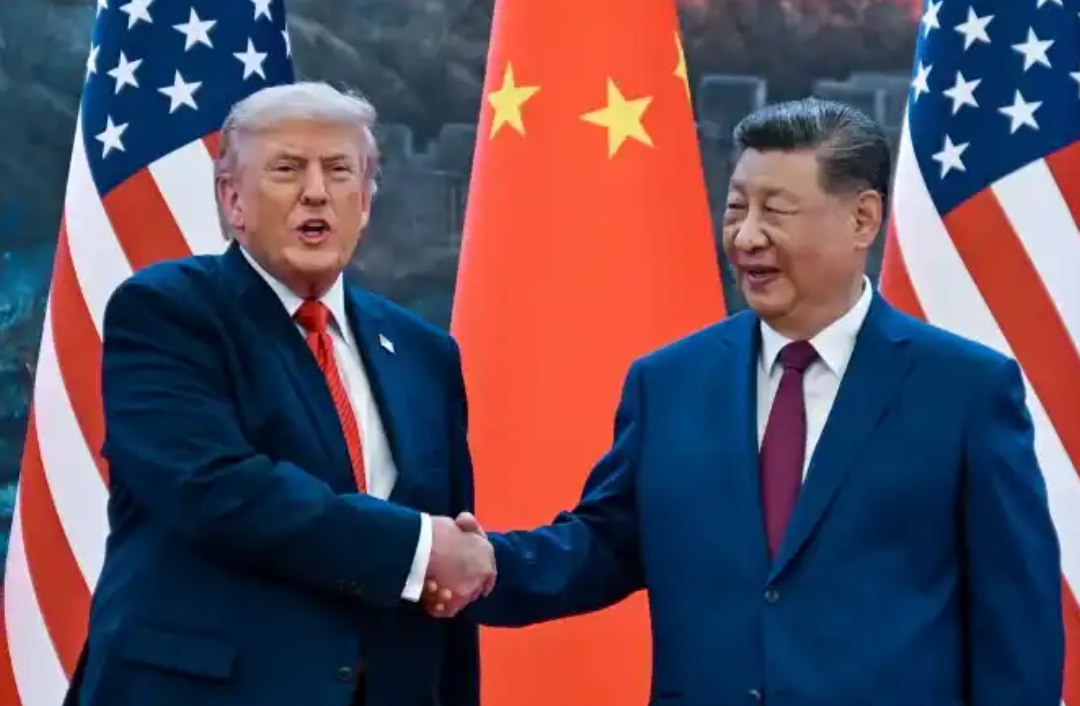
The meeting between Chinese President Xi Jinping and U.S. President Donald Trump in Washington on September 24, 2026, was more than another diplomatic encounter between two powerful leaders. It was a revealing moment in the transformation of the international system—one in which global power is increasingly being contested not only through armies and weapons, but through trade, technology, finance, critical minerals, artificial intelligence and diplomatic influence.
For much of the modern era, the United States occupied the commanding position in the global order. China, however, has spent decades building economic and technological strength while expanding its diplomatic reach. The result is not necessarily a world moving toward direct confrontation, but one increasingly characterized by competition without open war.
The meeting of two different visions.
Trump and Xi represent competing approaches to international power.
Washington continues to defend an international system in which American economic, technological and security influence remains central. Beijing, meanwhile, is seeking greater influence over the rules, institutions and economic relationships that shape the global system.
Recent analysis has described China as increasingly acting not merely as a participant in the international order but as an architect of an alternative vision of global power.
Yet neither Washington nor Beijing appears to have an interest in allowing their rivalry to become an uncontrolled military confrontation.
That explains the importance of repeated leader-to-leader diplomacy.
Xi’s September visit was his first trip to Washington in more than a decade and followed Trump’s visit to Beijing in May. Chinese officials have described the rapid succession of reciprocal visits as historically significant.
Power is moving from the battlefield to the bargaining table.
The most important lesson from the Trump-Xi relationship is that the definition of power has changed.
In the 20th century, military strength was often the clearest measure of national power. In the 21st century, power is increasingly multidimensional.
Who controls advanced semiconductors ?
Who dominates artificial intelligence ?
Who controls critical minerals and supply chains ?
Who possesses financial leverage ?
Who can influence energy markets ?
Who can persuade developing countries to join its economic and diplomatic networks ?
These questions may ultimately matter as much as the size of a country’s military.
The United States retains enormous advantages, particularly in technology, finance, military capabilities and global alliances. China, however, possesses enormous manufacturing capacity, a huge domestic market, extensive trade relationships and significant influence over critical mineral supply chains.
The competition therefore does not need to produce a conventional war to reshape the world.
Trade has become a weapon of statecraft.
The recent U.S.-China trade confrontation demonstrated how economic policy can become an instrument of geopolitical power.
Tariffs, export controls, technology restrictions and access to critical minerals have all become bargaining tools.
The September summit produced an extension of the existing trade truce, but Reuters reported that the extension was only for two months, leaving fundamental disputes over tariffs, rare earths, technology restrictions and Chinese purchases unresolved.
That is significant.
The meeting did not eliminate competition. Instead, it demonstrated a different way of managing competition: negotiate, pause, bargain, pressure and negotiate again.
THAT IS POWER WITHOUT WAR !!!
Artificial intelligence may become the next battlefield.
Perhaps the most consequential area of U.S.-China competition is artificial intelligence.
AI is no longer simply a commercial technology. It is increasingly connected to economic productivity, military capabilities, intelligence, cybersecurity and national security.
Both Washington and Beijing therefore have strong incentives to dominate the technology while simultaneously attempting to prevent uncontrolled escalation.
The two governments have discussed AI risk management, even as Washington continues to seek technological advantages over China.
The paradox is striking: the same technology that could intensify rivalry may also require cooperation to prevent catastrophic consequences.
Taiwan remains the dangerous fault line.
Behind the diplomatic smiles and economic negotiations lies the most sensitive issue in the relationship: Taiwan.
Beijing regards Taiwan as part of China and opposes moves toward formal independence. Washington maintains significant unofficial relations with Taiwan and has continued arms sales, although Trump’s approach has included describing U.S. weapons as negotiating leverage with Beijing.
This makes Taiwan fundamentally different from a normal trade dispute.
Tariffs can be renegotiated.
Aircraft orders can be postponed.
Rare-earth restrictions can be relaxed.
But a military confrontation over Taiwan could fundamentally change the international system.
This is why Xi’s call for cooperation and avoidance of a “Thucydides trap”—a situation in which rivalry between an established and rising power ends in war—was significant.
A multipolar world is emerging.
The deeper significance of the Trump-Xi meeting goes beyond Washington and Beijing.
Europe, Russia, India, the Middle East, Africa and other regions are increasingly seeking room to pursue their own strategic interests rather than simply choosing between two superpowers.
BRICS expansion, China’s Belt and Road relationships, U.S. alliances and partnerships, India’s strategic autonomy and the growing importance of Gulf states all point toward a more complicated international system.
The emerging order may therefore not be a simple replacement of American dominance with Chinese dominance.
It may instead be a multipolar system in which several major powers compete, cooperate and bargain simultaneously.
Africa must understand the changing game.
For Africa, including Nigeria, the consequences are enormous.
A world dominated by economic and technological competition creates both opportunities and risks.
African countries possess resources that major powers increasingly need—energy, critical minerals, agricultural products and strategic markets. But Africa must avoid becoming merely the arena where external powers compete for influence.
The continent’s governments will need to negotiate from a position of greater strategic confidence.
Nigeria, as Africa’s largest economy by population and a major energy producer, has particular reasons to watch the transformation carefully. The emerging competition between Washington and Beijing could affect investment, infrastructure, technology, energy, trade and diplomatic relationships across Africa.
The central question should not be whether Africa chooses America or China.
It should be whether Africa can build enough economic and institutional strength to negotiate effectively with both.
The beginning of a different kind of great-power competition
The Trump-Xi meeting does not prove that a new world order has already been completed. Nor does it mean that U.S.-China rivalry has ended.
Quite the opposite.
The evidence points toward continuing competition accompanied by efforts to establish boundaries that prevent competition from becoming war. Analysts at Carnegie have noted that the real test may come after the leaders leave the room, because conceptual agreements still have to be translated into concrete results.
That may ultimately be the defining feature of the emerging international order.
The world’s most powerful states may increasingly fight for influence without fighting each other.
They will compete through technology rather than tanks, sanctions rather than invasions, supply chains rather than blockades, investment rather than occupation, diplomacy rather than conquest, and economic leverage rather than conventional warfare.
The meeting between Xi and Trump therefore deserves to be viewed not simply as another summit, but as a snapshot of a changing global system.
The question for the coming decade is no longer simply who has the biggest army?
It is increasingly:
Who controls the technology, capital, resources, markets, institutions and diplomatic relationships that determine the future?
That is where the next struggle for global power may be decided—and it may happen largely without a war between the great powers.