
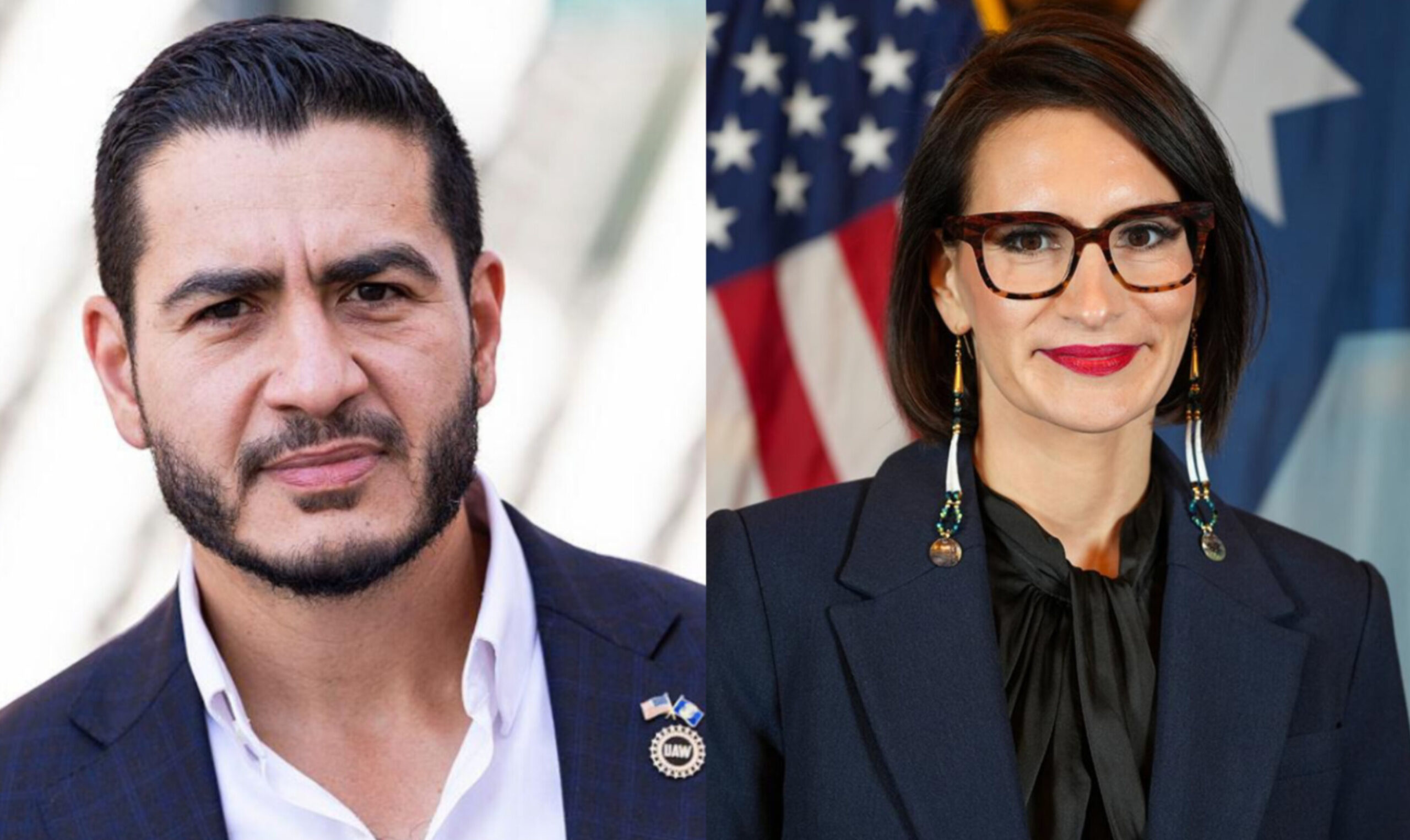
The 2026 United States midterm elections have produced a major political shake-up, with Democrats winning control of both the House of Representatives and the Senate, ending Republican dominance of Congress and delivering a significant setback to President Donald Trump.
The victories give Democrats control of the legislative agenda for the remaining two years of Trump’s presidency and the power to lead congressional committees, investigate the administration and scrutinise its policies.
One of the most historic outcomes was the election of Abdul El-Sayed in Michigan, making him the first Muslim ever elected to the United States Senate. The 42-year-old Democrat, a physician and former public health official, defeated Republican candidate Mike Rogers.
READ ALSO: Iran War: Saudi Arabia, Pakistan, Türkiye Hold Tehran Talks As Trump Weighs Military Action
READ ALSO: ALKALANCI Trains Women Religious Leaders To Combat Fake News, Misinformation Ahead of 2027 Elections
El-Sayed campaigned on healthcare reform, reducing living costs, tackling economic inequality and limiting corporate influence in politics. He has also criticised American military assistance to Israel and described its military operations in Gaza as genocide.
His campaign faced attacks from political opponents over alleged links to extremist organisations, including claims of connections to the Muslim Brotherhood, which he denied. Democratic supporters described some of the accusations as Islamophobic.
Another historic victory came in Minnesota, where Democrat Peggy Flanagan became the first Native American woman elected to the US Senate. A member of the White Earth Band of Ojibwe, Flanagan previously served as Minnesota’s lieutenant governor.
Her election represents a major milestone for Indigenous representation in American politics. However, she is the first Native American woman elected to the Senate, not the first Native American to serve in the chamber.
Democrats also recorded significant victories in several traditionally Republican states. In Texas, James Talarico defeated Ken Paxton, while Adam Hamilton defeated incumbent Roger Marshall in Kansas, marking the first Democratic Senate victory in the state since 1932.
Other Democratic victories included Troy Jackson in Maine, Annie Andrews in South Carolina, Sherrod Brown in Ohio, Josh Turek in Iowa and Roy Cooper in North Carolina, further strengthening the party’s position in the Senate.
The election also produced historic outcomes in gubernatorial contests. Keisha Lance Bottoms became the first Black woman elected governor of a US state, while Deb Haaland made history as the first Native American woman elected governor. Gina Hinojosa also became Texas’s first Latina governor.
The Democratic victories were widely attributed to public dissatisfaction with the cost of living, inflation, tariffs, the administration’s handling of the Iran war and concerns about corruption and the direction of the country.
Exit polls indicated widespread dissatisfaction among voters, with many describing the election as a rejection of Trump’s leadership and calling for stronger congressional checks on presidential power.
Trump acknowledged the outcome, congratulated Democratic winners and expressed willingness to work with the opposition on some issues, although he warned that he would veto what he described as unacceptable legislation.
The Democratic takeover is expected to reshape Washington’s political landscape, particularly on foreign policy, immigration, trade, healthcare, government spending and military engagements abroad.
The new Congress is expected to assume office in January 2027. Although Trump will retain executive powers and the authority to veto legislation, Democratic control of both chambers will significantly increase congressional scrutiny of his administration.
The election has therefore become one of the most consequential midterm contests in recent American political history, combining a major opposition-party victory with historic breakthroughs in religious, racial and Indigenous representation.